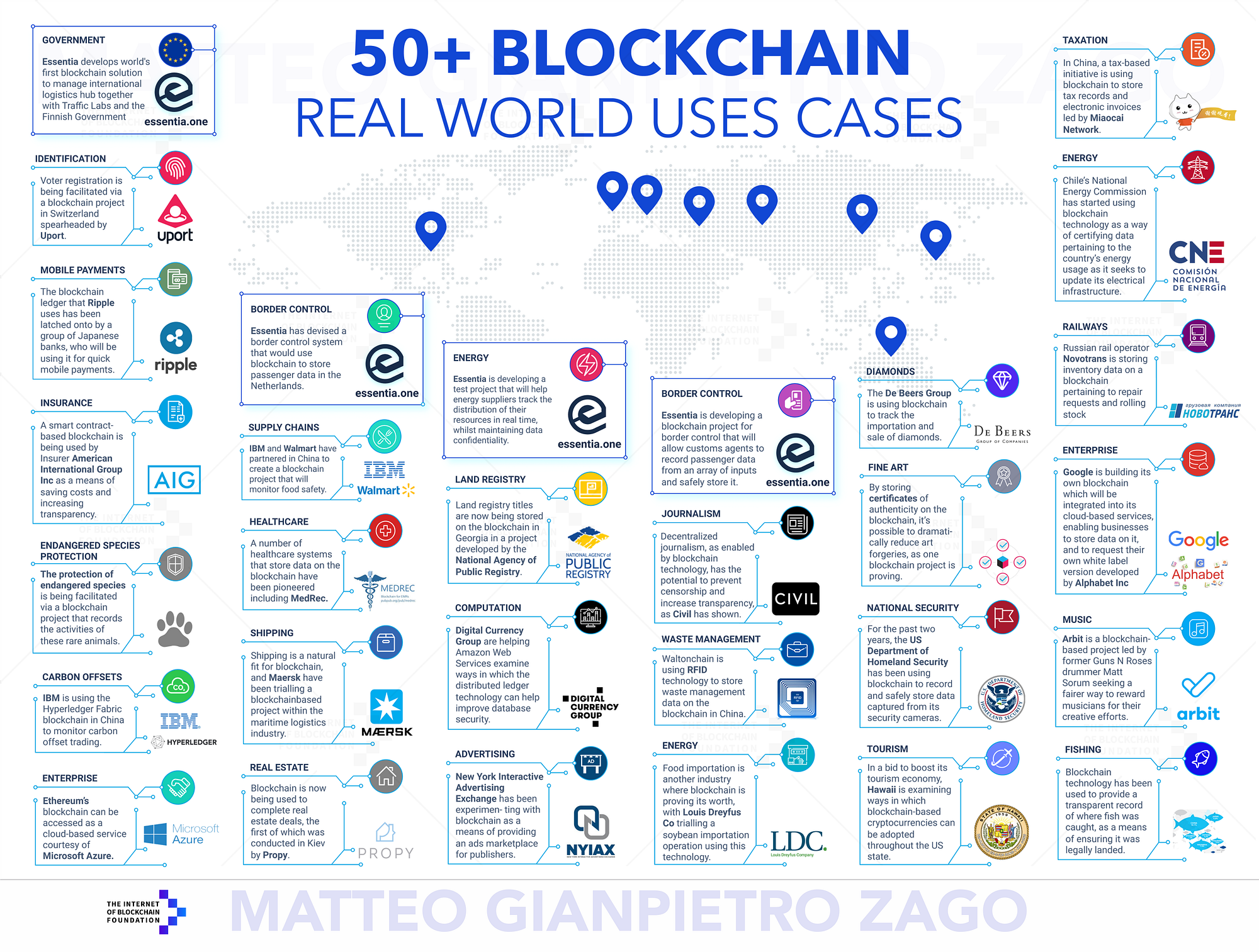
Almost all of these would have been possible without a blockchain. Either through a web of trust or even simple cryptographically signed messages with timestamps stored in a normal DB. Some of these aren't even "real world use cases" like Hawaii trying to boost tourism by something-something blockchain. Civil is a notable exception, though I'm not unconvinced that it couldn't be done without one. In the end though, i…
50+ real world use cases built on blockchain architecture
41–44 of 44 posts
Re: 50+ real world use cases built on blockchain architecture
#42Re: 50+ real world use cases built on blockchain architecture
#43I'm shocked IOTA isn't on this list. Companies like Bosch and Fujitsu are already creating uses for it in IoT. There're already a few IOTA-powered electric vehicle charging stations in Europe. It's instant and fee-free, with very little overhead (no power consumption problem). Since it cannot be mined via PoW, there are already efforts to create "mining pools" were universities can rent CPU/GPU power from "miners" us…
Plus the IRI is written in Java, that's totally rock the socks off the IoT world, right?
Re: 50+ real world use cases built on blockchain architecture
#44Earlier quoted context omitted.
If my cloud provider is bad, I can switch to another one or self-host. You can't switch from the ICANN, no matter which domain you chose, it depends on them, they effectively have a monopoly. I want to self host my domain name.
There's a fair point to be made there. But then I would ask which solution is best: lobbying hard enough to democratize the organizational structure of ICANN, creating a competitive ecosystem, or resorting exclusively to a ledger of entries with no capacity to be modified according to legalities, attacks, or otherwise? What if someone spams the ledger with too many names? What if someone takes domains that should be…
> What if someone spams the ledger with too many names
You need to pay in coins to register a namecoin domain so this attack won't work.
> What if someone takes domains that should be illegal for them to possess?
This should be up to courts to decide if the name is illegal and handle it over, not to some random organisation like the ICANN which has no legal basis.
> What if someone takes someone else's private key?
Same as if some gets access to your registrar password right now, nothing changes with that.
> What if an organization gets their private key stolen?
Again, same as before, nothing is improved or changed by a blockchain here.