Live data from Hacker News

Building the Commodore computer that should have existed

blog.snapeda.com

41–50 of 61 posts

Re: Building the Commodore computer that should have existed

#41
post #7

I would hope it runs something other than BASIC. BASIC is a terrible language, and the only reason it became popular is that there was a book published with a lot of games written in that language. People buying a home computer wanted games, and the commercial game market was initially nonexistent, so people wanted a computer with BASIC, since then they assumed they could play those games. The designers of this new c…

Err no it wasn't because of a book! Its because most of the early machines had basic and normally the ones by Microsoft.

You might not know that is where Microsoft made its initial $

Re: Building the Commodore computer that should have existed

#42
post #7

I would hope it runs something other than BASIC. BASIC is a terrible language, and the only reason it became popular is that there was a book published with a lot of games written in that language. People buying a home computer wanted games, and the commercial game market was initially nonexistent, so people wanted a computer with BASIC, since then they assumed they could play those games. The designers of this new c…

Almost all of the 8-bit micros came with some dialect of BASIC built-in. The only one that I know of that had Forth out of the box, was the Jupiter Ace.

Also, Occam?! That is a concurrent programming language... I'm not sure it would have done too well on the machines of the day.

Re: Building the Commodore computer that should have existed

#43
post #30

Earlier quoted context omitted.

There was a brief discussion on an Acorn forum semi-recently about "If there had been another BBC Micro, what would it have looked like?" And the consensus was, probably it would have looked like the Acorn Archimedes. Acorn really got it right, and they got it right shockingly early.

The BBC successor was the Acorn Archimedes, really - the only thing it lacked was the branding. Fit the same educational niche, spoke Econet, it even ran BBC basic.

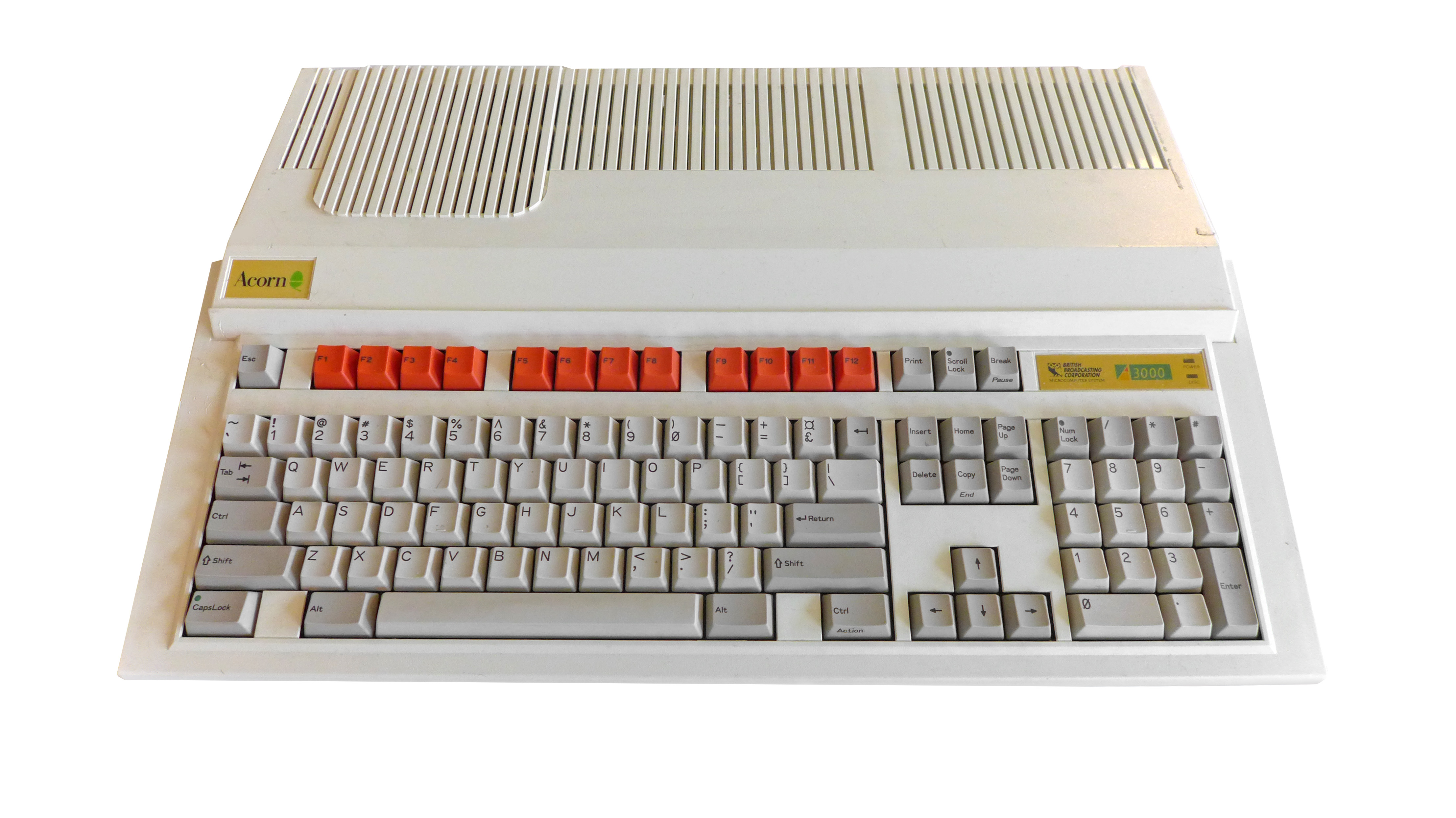
One of the first ones didn’t even lack the branding. The A3000 was a “BBC Micro”. Even had red function keys.

https://upload.wikimedia.org/wikipedia/commons/1/11/Acorn_A3...

Re: Building the Commodore computer that should have existed

#44
post #7

I would hope it runs something other than BASIC. BASIC is a terrible language, and the only reason it became popular is that there was a book published with a lot of games written in that language. People buying a home computer wanted games, and the commercial game market was initially nonexistent, so people wanted a computer with BASIC, since then they assumed they could play those games. The designers of this new c…

the c64 supported k&r c via the abacus c compiler. I learned c on my c64, in fact. a skill I still use 32 years later. you can download the manual courtesy of archive.org: https://archive.org/details/Super-C_1986_Abacus

I had that. I interned at NASA as a high schooler, got exposed to C, and suddenly found BASIC lacking. SO I tracked down Abacus C at, as I recall, a JC Penney electronics section.

It didn't support then entire K&R standard though. No function pointers.

Re: Building the Commodore computer that should have existed

#45

I wonder if Ms. Allaire knows about the C65[1]. Her initial sketch of specs[2] is not too far off from that. IMHO Commodore was right to kill the C65 when they were already making the Amiga 1000. The end of all the 8-bit systems was pretty obvious by '89, when rumors of the c65 started going around - the Mac had been out for five years, the Amiga and Atari ST for four. It would have suffered a fate almost as ignomini…

Yes, I am aware of the Mega65.

Two different computer from 2 different visions...

My take on it, in a nutshell, is really to come up with a bridge in between the C128 and the Amiga500... With the design restriction of the time. At least as much as I can with the resources I have. I won't go about creating a new mold... Cheers!

Re: Building the Commodore computer that should have existed

#46

Earlier quoted context omitted.

the c64 supported k&r c via the abacus c compiler. I learned c on my c64, in fact. a skill I still use 32 years later. you can download the manual courtesy of archive.org: https://archive.org/details/Super-C_1986_Abacus

I had that. I interned at NASA as a high schooler, got exposed to C, and suddenly found BASIC lacking. SO I tracked down Abacus C at, as I recall, a JC Penney electronics section. It didn't support then entire K&R standard though. No function pointers.

no, I had to learn about function pointers through my work with MUDs, had a nice curiosity to go along with it, and an excitement when I figured out how powerful they were.

mine came from a small software store that was a bed store the last time I drove by.

Re: Building the Commodore computer that should have existed

#47

Earlier quoted context omitted.

> The Amiga would have been more responsive What was the problem with Amiga responsiveness? Never heard about this. Interrupt response? What? For several years, it had the best games. The bitplane-based graphics system became a hindrance with FPS-games but that was never about the CPU.

If you go back and look at those games again, the frame rate, it's not that great. Many of the 8-bit machines actually had better responsiveness and frame rates. Yes, the Amiga was awesome. It was not perfect. Also, as far as 68000-based machines goes, the X68000 kicks the Amiga's ass.

The Amiga chipset used DMA very extensively, so the CPU's memory access speed is not as important as on other machines. There were other architectural constraints, like the fact that the CPU had to compete with such chips for access to the same memory. So-called Fast memory was not a default setup for years. And the true solution, dual-ported RAM would have been too expensive.

Which games do you think were constrained by the CPU? I can think of other factors first:

- sloppy ports

- it was a more complex system to tame than most of those that preceded it

- the sprites were simply too limited, so you had to use the Blitter a lot

- unlike a lot of chips of the era, Denise had no tile or character generator so, again, you had to use the Blitter

- the CPU was clocked at 7.14MHz to align with the PAL/NTSC clock even if it could run at 8MHz

- if you used more than four bitplanes in low resolution, the Agnus chip would let Denise starve the CPU even on cycles where the latter would normally have access (if you set the right bit, the Blitter could be allowed to win, too)

I don't see how a different CPU would have helped with any of the above. In a time period during which memory wasn't typically the limit, the Amiga was one of the first systems where the CPU starved for it.

The X68000 was better, sure, but it came out later and, being in the same mold as the arcade systems of the era, it had dedicated video RAM, tiles and more powerful, actually useful sprites.
Re: Building the Commodore computer that should have existed

#48
post #34

Earlier quoted context omitted.

Zarch : https://en.wikipedia.org/wiki/Zarch , 1987 Zeewolf : https://en.wikipedia.org/wiki/Zeewolf , 1994

The visuals look very similar, but I can't see any continuity in the wikipeadia article. OTOH, the sqare grid terrain can be traced to at least https://en.wikipedia.org/wiki/Return_Fire although that was a sequel to a completely different game

Zarch was out out 1988, the port of Zarch, Virus, came out on Atari/Amiga a bit later, this came out 1995...

Re: Building the Commodore computer that should have existed

#49
post #7

I would hope it runs something other than BASIC. BASIC is a terrible language, and the only reason it became popular is that there was a book published with a lot of games written in that language. People buying a home computer wanted games, and the commercial game market was initially nonexistent, so people wanted a computer with BASIC, since then they assumed they could play those games. The designers of this new c…

> BASIC is a terrible language... I would assume that something like Forth or Occam would be much better for this, and both are also age-appropriate.

BASIC had a couple huge advantages in that it ran in minimal memory and had a reasonable infix syntax. The infix syntax was a particular advantage in educational scenarios where it matched (roughly) with the way math was taught. (Which was never in pre or postfix notation.)

The cross-platform nature of BASIC was also useful. If you knew one microcomputer, it made it more likely that you could sit down at another and get it to do useful things.

It's easy to second-guess, but even in hindsight I think BASIC was a reasonable choice for the time, goals, and hardware limitations.

Re: Building the Commodore computer that should have existed

#50

I wonder if Ms. Allaire knows about the C65[1]. Her initial sketch of specs[2] is not too far off from that. IMHO Commodore was right to kill the C65 when they were already making the Amiga 1000. The end of all the 8-bit systems was pretty obvious by '89, when rumors of the c65 started going around - the Mac had been out for five years, the Amiga and Atari ST for four. It would have suffered a fate almost as ignomini…

Yes, the death of 8-bit systems was obvious by 89, but so was the death of the 68000. Motorola was already pushing the failed 88000 by the late 80s. And the 68000 itself was killed off only a couple years later. So I don't really agree with you here. The 68000 was as big of a dead end, and IMHO was a terrible CPU for home computers and gaming machines. It was fast for 16 and 32 bit integer arithmetic, so basically go…

> Yes, the death of 8-bit systems was obvious by 89, but so was the death of the 68000. Motorola was already pushing the failed 88000 by the late 80s. And the 68000 itself was killed off only a couple years later.

You may be overstating the death of the 68000... the 68060 was introduced in 1994, and I remember doing embedded work on 68000 based designs in 1999-2000. (In fact, some of the processors are still available, although not recommended for new designs.)

Post reply on HN