Live data from Hacker News

Startup Ideas We'd Like to Fund (2008)

old.ycombinator.com

41–50 of 184 posts

Re: Startup Ideas We'd Like to Fund (2008)

#41

I solved #16! If you are "searching" for a food or recipe based on it's nutritional contents (for example: I want foods/recipes high in potassium and selenium, but low in sodium), check out https://kale.world/c You can search by over 20 different nutrient types, weight them, and filter them to your hearts content.

I have until now always used http://nutritiondata.self.com/tools/nutrient-search which has lots and lots of variables.

Re: Startup Ideas We'd Like to Fund (2008)

#42

I would love it if someone tackled the auctions market better. Ebay continues to focus more on being a marketplace, and promoting buy it nows. A real auction house should extend the time limit as long as people are putting in bids.

I'm amazed auctions have not taken over live show tickets. Scalpers skim off millions of dollars every year that events/middleman startup could capture themselves if only someone designed a proper live show ticket auction.

Re: Startup Ideas We'd Like to Fund (2008)

#43
I've been working on something related to 7. Something your company needs that doesn't exist.

I built FormAPI [1] because I used to work at a company that needed to fill out a lot of forms. (Gusto [2])

Turns out there's not a huge number of programmers that need to fill out PDFs. But there's a big market for things like online forms and electronic signatures, so I'm looking into some different directions. But I think 7. is a great place to start.

[1] https://formapi.io/

[2] https://gusto.com/

Re: Startup Ideas We'd Like to Fund (2008)

#44

I would love it if someone tackled the auctions market better. Ebay continues to focus more on being a marketplace, and promoting buy it nows. A real auction house should extend the time limit as long as people are putting in bids.

eBay has become actively hostile for individuals selling. All their policies now heavily favour the buyer, and the scope for getting scammed is too high to make it worth the bother. Little wonder it's becoming more a marketplace.

Oh and not forgetting their 10% + Paypal fees, which makes them damn expensive.

Think there is a lot of scope for someone to do it better.

Re: Startup Ideas We'd Like to Fund (2008)

#45
No 1 isn't a startup problem: it's regular political corruption. An industry cartel looking to preserve or expand on billions in revenue paid politicians to ensure that with stronger copyright laws. That's on top of their business practices they control. The combination keeps them rich on monopolies in an industry they control rather than the artists the laws are supposedly there for. Similar claims can be made for US patent system as well with big companies suppressing innovation with them or trolls draining the economy. Similar concepts. The people did nothing to counter these with many not even knowing companies were paying for these laws or with what effects. One result among many on copyright side is the legitimate buyers of content might have to deal with the experience in the link below since it can be a felony to do otherwise.

http://4.bp.blogspot.com/-1ToS1gYD3wQ/TlxUHSp-uKI/AAAAAAAAFw...

So, the solution to this very political problem might be one of the following:

1. Creating non-profit organizations that collect dues to lobby on behalf of voters against corporate interests. They'll need to have focused legislation and marketing to reach a lot of people. They'll need a lot of money to outspend the plutocrats who have piles of money. The competition will at least be happening where the root problem is to eliminate some things like bans on reverse engineering, the severity of punishment for filesharing, or changes to copyright itself that limits labels control over business models. The rest will follow after root causes are solved at level of corrupt politicians introducing them.

2. They eliminate all politicians doing that in ways that cause consumers harm. This might take a combo of political campaigns for replacements plus media campaigns about harms predecessors were/are doing. Copyright/patent system would be but one. Might also try to get the new politicians to pass laws limiting donations by private parties with corporate ones eliminated entirely. Taxpayers themselves will pay whoever wins a fortune plus subsidize various stages of the election process so they work for us. Bribes will be felonies leading to life in prison.

This is all kind of like how we say certain things like governments banning encryption are political rather than technical problems. The people's action in legal system and media are needed to solve them. Lawmakers that will constantly do what's in incumbents' interests, even imprisoning innovators making alternatives, have to be fought at their level for best results. I mean, do combine as many methods of resistance as possible. Just startups or tech alone aren't the solution if problem starts with laws paid for with bribes.

Re: Startup Ideas We'd Like to Fund (2008)

#46
My take (just the first five):

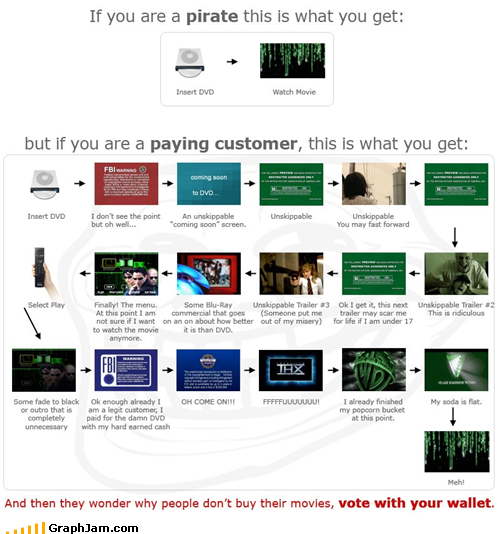
1. A cure for the disease of which the RIAA is a symptom.

Spotify & Apple Music. Pay $10/mo for unlimited access to most music. Took the wind out of music piracy. (TV & film are undergoing a similar transition to subscription models, more slowly.)

2. Simplified browsing...Grandparents and small children don't want the full web...

Apps. Remember this list is from just one year after the iPhone launched, so everything was still "the web". It was almost unthinkable that native, installed apps would have such a resurgence. But the iPad is exactly this, a simplified computer that young kids and grandparents love to use.

3. New news.

Still in flux. Nobody has figured out a business model. Over the past century consumers were trained to expect free, ad-supported news. Surprisingly, online ads have not worked out well for publishers.

4. Outsourced IT. & 5. Enterprise software 2.0.

AWS. There's a lot of higher-level SaaS packaged services too and it sounds like that's what pg was envisioning. But the real hero here is AWS and its "primitives"-based, bottom-up approach to outsourcing all computing.
Re: Startup Ideas We'd Like to Fund (2008)

#47

Earlier quoted context omitted.

Next step to make it more efficient is to accept rank lists and to federate, solving the matchmaking problem globally.

No, the next step is to tie in with DNA and ancestry services like 23andMe to help find a real mate for long term relationships and bearing children, and not just short flings or one night stands.

The DNA thing sounds dystopian. Maybe that’s where we’re heading, anyway, but it doesn’t feel right.

Re: Startup Ideas We'd Like to Fund (2008)

#48
post #10

It's interesting to read the list and contemplate among other things the ideas that have arguably been solved (or at least partially solved) but in ways that weren't obvious. For example, #1 about RIAA, I'd argue that it was never solved but with streaming stations in particular, it's just not such a pressing issue today. Some certainly haven't happened (e.g. fixing news). The list also seems to assume a lot more rep…

Regarding the RIAA one: I find it interesting how similar the streaming services are to the system of Voluntary Collective Licensing advocated by the EFF starting in 2003 [0]. Video content is moving in another direction with more walled gardens supported by original content. Maybe it's because of the costs required to produce quality content, or the size of the total library. Maybe it has something to do with how we…

There was also a fairly long-standing set of licensing and royalty practices in the music industry that you could more or less use whatever you want so long as you pay the appropriate royalties for it. Of course, this could have all broken down with the shift to digital but it didn't. I expect the market position and determination of Apple and Steve Jobs played at least some role in this.

Of course, the dollar amounts involved are a matter of ongoing debate. But, for the most part, if you want to setup a music streaming service or store, you could probably get access to at least a very large library at rates comparable to your competition.

The basic problem with video seems to be that the content owners by and large aren't jumping to broadly license content, even much of their back catalog, at rates that would support an all-you-can-eat subscription service. So all the services are basically doing original content that they pad out with the mostly mediocre stuff that they can license for a reasonable rate.

Re: Startup Ideas We'd Like to Fund (2008)

#49

I would love it if someone tackled the auctions market better. Ebay continues to focus more on being a marketplace, and promoting buy it nows. A real auction house should extend the time limit as long as people are putting in bids.

The trick here is to make auctions seem _fair_. Every economist loves the idea of an auction because it is inherently more fair to sell a good at the price convergence of what someone is willing to pay with the scarcity of the object. The problem is that it often leaves all of the buyers unhappy. Either you got outbid and are annoyed that you need to keep looking for that good, or you won the auction and potentially feel buyers remorse that you overpaid for that good.

I think the problem here is that Ebay doesn't give any metrics on how frequent an item comes to market, nor does it give any pricing history for how much an object typically sells for. Instead of tackling those problems, they just opted for the "buy it now" button.

Post reply on HN