The correct term is “disrupt”.
Tesla’s promises don’t compute with current physics and economics of batteries
41–50 of 131 posts
Re: Tesla’s promises don’t compute with current physics and economics of batteries
#42The Tesla superchargers currently charge at around 2% a minute up until about 80% which is 40 minutes to hit 80%. Tesla is advertising 400 miles in 30 minutes which is 80% of the 500 mile capacity. What is so hard to believe about a 33% improvement over a couple year old tech that is a couple years from release? Here are current industrial/transportation/residential electric prices in US [0]. They think Tesla will pa…
Look at charging rates in watts (watt hours per hour) instead of in percentage; those semis have much larger capacity batteries, so they need a higher charging rate in W to charge 80% in 30 minutes than a vehicle with a smaller battery.
I would imagine that the difficulty in charging is proportional to the cell's capacity, so charging 2*n cell shouldn't be any harder than charging n cells, as long as the cell's capacity is the same. If you increase the capacity of a cell, then you might have to innovate.
Re: Tesla’s promises don’t compute with current physics and economics of batteries
#43If this were any other company making such unsubstantiated claims that didn't have any basis in the reality of the underlying technology, they'd be getting roasted here.
You may be right. But there's nothing wrong with it. Tesla has done amazing things, and so has SpaceX. Yes, they're in the habit of being late. But neither has, as far as I can remember, ever produced "vapourware" they didn't eventually start selling.
For a nice reference: see this comment sceptical of Tesla's capability to deliver this 100MW battery in Australia in 100 days. Which was just recently completed on time. The tone reads surprisingly similar to the Bloomberg article ("To say nothing of the near 50 degree weather beating down on old infrastructre that spans thousands of very sparse kilometers.") https://news.ycombinator.com/item?id=13838355
People, and companies, have reputations. Those have to be taken into account when judging their claims.
Note also that all of the claims of the article are in the "this is hard" territory, not any actual "this is perpetual motion" sort of impossibility as the title alludes to.
The example that seems easiest to judge is doubling the capacity of the roadster battery: The current Model S battery is a rather thin sheet underneath the car. I have absolutely no doubt that you can fit twice the volume into the same frame. It gets only easier if there are any advances in battery density, or if car grows only slightly in every dimension.
Re: Tesla’s promises don’t compute with current physics and economics of batteries
#44I think most people are in agreement that the lithium ion battery is less-than-ideal technology that's due for replacement. And we have a number of innovations in battery technology vying for the opportunity.
It's starting to feel a bit like Tesla's massive investments are only serving to further entrench the existing battery model. He's basically working to replace Big Oil with Big Lithium. There's no denying the benefits of breaking our addiction to fossil fuels, but we need to be mindful of the obstacles to tomorrow's progress we're erecting in the name of today's.
Re: Tesla’s promises don’t compute with current physics and economics of batteries
#45> To meet Tesla’s claim of 400 miles in 30 minutes for a semi carrying 80,000 pounds would require its new Megachargers to achieve output of more than 1200 kW 1200 kw is a lot of power. That's the average amount of power used by 600 homes, or half of the output of a large wind turbine here in the Midwest, to charge a single truck. If they use a 440 V supply to charge it, that'd be over 2700 amps.
Sounds like their existing chargers are already 480V. [https://en.wikipedia.org/wiki/Tesla_Supercharger]
Re: Tesla’s promises don’t compute with current physics and economics of batteries
#46" Tesla offers free electricity to most of its Model S and Model X customers while paying almost $1 per kilowatt hour to produce it, Morsy said. That amounts to a subsidy of as much as $1,000 per car in 2017. " I realize that most people believe that Tesla and Uber will be able to continue subsidising their operations indefinitely, but it makes me very nervous.
I can't take this author seriously. There is no way that Tesla is paying $1/kw. That is way past the retail rate, and I bet that they are paying much less than the retail rate in many of their markets.
They would if they were pulling straight from the grid. Go to your power company and ask how much it would cost to surge a mega watt of power at peak times. Those kinds of surges are really expensive to handle. Of course Tesla uses storage and solar to smooth their demand so that they can pay normal rates.
Re: Tesla’s promises don’t compute with current physics and economics of batteries
#47Earlier quoted context omitted.
I am shocked to see this number. It seems insanely high. Is it really possible they pay anywhere near that for electricity?
Perhaps it includes a portion of the capital cost for the chargers along with the associated operational costs?
That must be the case, but we don't know what numbers they used to come to this cost. The number was just thrown out there without anything backing it up and is an order of magnitude off from what would be expected.
Re: Tesla’s promises don’t compute with current physics and economics of batteries
#48The Tesla superchargers currently charge at around 2% a minute up until about 80% which is 40 minutes to hit 80%. Tesla is advertising 400 miles in 30 minutes which is 80% of the 500 mile capacity. What is so hard to believe about a 33% improvement over a couple year old tech that is a couple years from release? Here are current industrial/transportation/residential electric prices in US [0]. They think Tesla will pa…
All these EVs use roughly the same small cells, right? Essentially thousands of the same cells used in hobbyist RC aircraft (with which I’m fairly familiar)?
Unless I’m mistaken, each little cell should theoretically be chargeable in parallel, limited only by heat, massively parallel wiring, and the one massive input carrying ridiculous current.
In theory, if one cell takes 30 minutes to charge, all cells could be charged in parallel in 30 minutes. Obviously this is ignoring the challenges I mentioned, which generally don’t apply to the relatively small RC aircraft with which I have experience.
Re: Tesla’s promises don’t compute with current physics and economics of batteries
#49What would prevent the battery from having a segmented design so that multiple segments can be charged in parallel? Is there something about the chemistry that requires the entire vehicle battery to be a single unit?
That is how they work today. This is Tesla's current state of the art (larger) battery. As you might image in takes more than 1-2 to run a car.
https://i.ytimg.com/vi/ga4L1w66AbU/maxresdefault.jpg
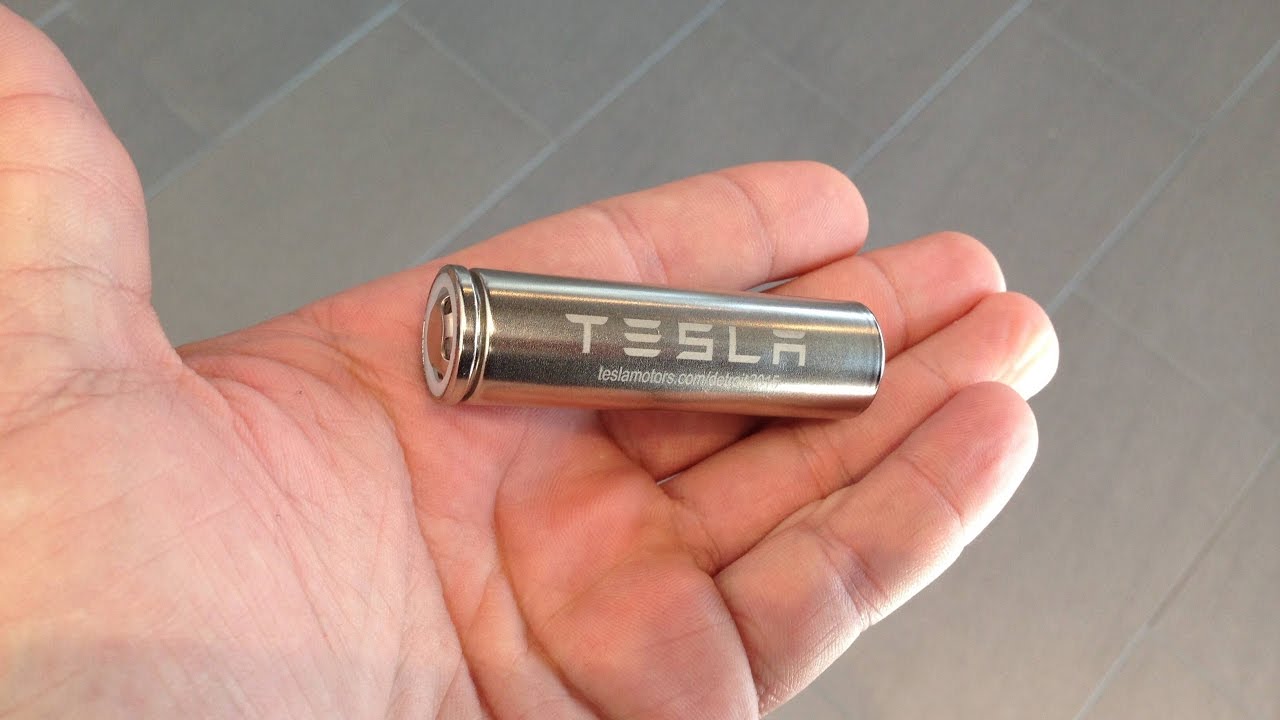
The problem is disgustingly parallel.
Re: Tesla’s promises don’t compute with current physics and economics of batteries
#50The Tesla superchargers currently charge at around 2% a minute up until about 80% which is 40 minutes to hit 80%. Tesla is advertising 400 miles in 30 minutes which is 80% of the 500 mile capacity. What is so hard to believe about a 33% improvement over a couple year old tech that is a couple years from release? Here are current industrial/transportation/residential electric prices in US [0]. They think Tesla will pa…
It's typical anti-Tesla propaganda.