Live data from Hacker News

Corporations in the Age of Inequality

hbr.org

41–50 of 75 posts

Re: Corporations in the Age of Inequality

#41

Earlier quoted context omitted.

In a global economy, workers have no leverage. If a group tries to form a union, the work goes elsewhere. Globalism exploits the fact that there are people willing to work for $1/hr, and leads to many of the problems of capitalism predicted by Marx and friends in the early 1900s. As long as globalization is allowed to continue, inequality within the US will just grow worse.

Meanwhile, global inequality has gone down, because desperately poor Indians and Chinese have grown significantly wealthier. https://s3.amazonaws.com/content.washingtonexaminer.biz/web-... I feel so bad for those rich westerners with a house, running water, 24/7 electricity, free schools, etc.

> I feel so bad for those rich westerners with a house, running water, 24/7 electricity, free schools, etc.

Yeah, until western countries have fallen to the level of the worst parts of Somalia, we really shouldn't complain.

Re: Corporations in the Age of Inequality

#42
>> Why are some firms paying better than others? It could be that some are just more generous — paying their workers higher amounts than other firms pay for the same work — although that would surprise economists

I'm not an economist, but as someone who has worked for many different companies in the software industry, I don't find this 'generosity' hypothesis surprising at all. Managers usually don't have a clue who to promote so they just promote their friends or those who are liked by the rest of the team (for reasons unrelated to skill).

Re: Corporations in the Age of Inequality

#43

Earlier quoted context omitted.

Meanwhile, global inequality has gone down, because desperately poor Indians and Chinese have grown significantly wealthier. https://s3.amazonaws.com/content.washingtonexaminer.biz/web-... I feel so bad for those rich westerners with a house, running water, 24/7 electricity, free schools, etc.

> I feel so bad for those rich westerners with a house, running water, 24/7 electricity, free schools, etc. Yeah, until western countries have fallen to the level of the worst parts of Somalia, we really shouldn't complain.
If you think things are so bad, surely you can name a single good or service that westerners have less of today than they had in 1970. What is that good or service?

Re: Corporations in the Age of Inequality

#44
Maybe it's time to enforce a maximum wage similar to how we enforce a minimum wage? Maybe maximum = 10000 * minimum? This won't stop people from amassing assets and power (i.e. we aren't enforcing a maximum number of expensive art you can own, or senators you can call), but might curb the inequality among wage workers and CEOs.

Re: Corporations in the Age of Inequality

#45
post #44

Maybe it's time to enforce a maximum wage similar to how we enforce a minimum wage? Maybe maximum = 10000 * minimum? This won't stop people from amassing assets and power (i.e. we aren't enforcing a maximum number of expensive art you can own, or senators you can call), but might curb the inequality among wage workers and CEOs.

I've thought about this, and very nearly would agree with you, but it would take some things away. The hope of lottery winnings and the escapist dreams that come with it, for example. Would that be excluded?

If some bloke comes up with a cure for 20% of the world's most common cancers, do I care if he's filthy rich? Would Gates be able to do his charity work if he didn't once make a load of money?

Furthermore, do I care if the person at the top is getting rich so long as the folks at the bottom aren't struggling and miserable?

The answer to the last one is: Not really. I do prefer that there be less difference between the CEO and the janitors. I'd prefer to set a standard of living that is higher than the poverty guidelines in the US and encourage companies to pay enough to meet this (at least for a single person to live independently and be a part of society). I just don't see how the maximum would help this more than it'd hurt other things.

Re: Corporations in the Age of Inequality

#46

Earlier quoted context omitted.

> I feel so bad for those rich westerners with a house, running water, 24/7 electricity, free schools, etc. Yeah, until western countries have fallen to the level of the worst parts of Somalia, we really shouldn't complain.

If you think things are so bad, surely you can name a single good or service that westerners have less of today than they had in 1970. What is that good or service?

Housing.

In the UK home ownership is lower for people under 45 than it was (for people of the same ages) in 1981.

For example 62.1% of 25-34 year olds owned a home in 1981. In 2012 42.8% of 25-34 year olds owned a home.

Re: Corporations in the Age of Inequality

#47

Earlier quoted context omitted.

> I feel so bad for those rich westerners with a house, running water, 24/7 electricity, free schools, etc. Yeah, until western countries have fallen to the level of the worst parts of Somalia, we really shouldn't complain.

If you think things are so bad, surely you can name a single good or service that westerners have less of today than they had in 1970. What is that good or service?

Education: http://www.huffingtonpost.com/2013/06/14/college-costs-media...

Healthcare: http://www.huffingtonpost.com/2013/10/03/health-care-costs-_...

Housing: http://www.jparsons.net/housingbubble/ - compared to the rise in wages, this cost increase has been much more moderate, but it's still an increase.

All while productivity has grown: http://blogs.reuters.com/macroscope/2012/05/04/the-u-s-produ...

Re: Corporations in the Age of Inequality

#48
post #22

Earlier quoted context omitted.

Please don't cite that 3.5 billion number, it's entirely based on total assets, which means that: My 16 year old self with $3000 in the bank saved up from summer jobs was also wealthier than a few billion or so people combined, because they were counted as having $0 or negative net worth. And if you don't think that's already a reductio, then bear in mind that you're also calling an 18 year old working minimum wage w…

I am aware what that 3.5 billion number means, but others may not be, so thanks for that. Only last year, the number was 62 people owning as much wealth as the poorest half the world, the year before that was around 87 I think. It's a good number to keep an eye on. In a discussion about inequality, the number is very relevant, and far from meaningless.

>...the number is very relevant, and far from meaningless

How closely coupled are those numbers though? Do changes in the wealth of the richest few dozen people directly affect the wealth of the poorest few billion? If a new Mark Zuckerberg founds an internet company and becomes a billionaire what effect does that have on poverty in Africa? What changes in policy concerning the economics of billionaires do you think would benefit the poorest people in the world?

Re: Corporations in the Age of Inequality

#49

Earlier quoted context omitted.

If you think things are so bad, surely you can name a single good or service that westerners have less of today than they had in 1970. What is that good or service?

Education: http://www.huffingtonpost.com/2013/06/14/college-costs-media... Healthcare: http://www.huffingtonpost.com/2013/10/03/health-care-costs-_... Housing: http://www.jparsons.net/housingbubble/ - compared to the rise in wages, this cost increase has been much more moderate, but it's still an increase. All while productivity has grown: http://blogs.reuters.com/macroscope/2012/05/04/the-u-s-produ...

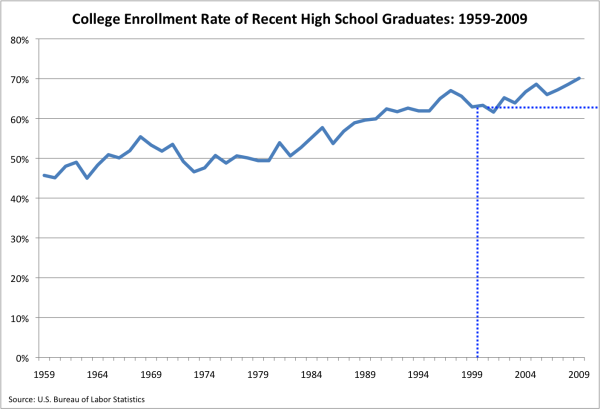
Nope. College enrollment has never been higher. Your source claims it is less "affordable", but clearly far more people can afford it. Weird.

http://www.mybudget360.com/wp-content/uploads/2012/04/colleg... http://www.mybudget360.com/wp-content/uploads/2014/11/Enroll...

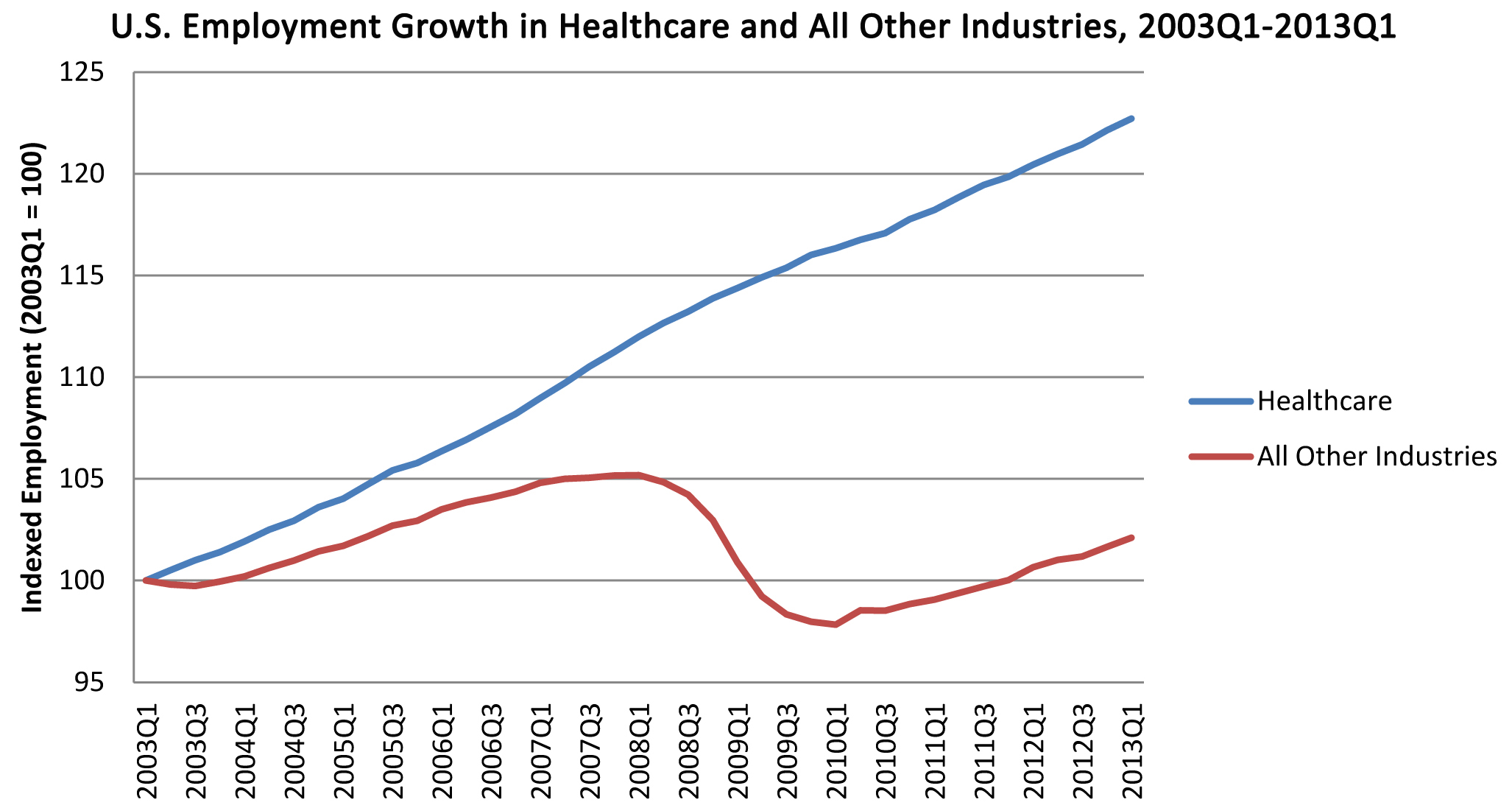
Your second article says health care is more expensive than other countries, not that fewer people consume it than some past period. Looking at real resources (e.g. # of health care employees) suggests more people consume it, not less.

https://cdn.theatlantic.com/assets/media/img/3rdparty/2013/7...

Your third source does not claim fewer people consume housing than at some past point. In fact, people consume more housing than ever before - houses have nearly doubled in size since 1973, even as # of people in the household decreased.

https://www.nar.realtor/RMODaily.nsf/pages/News2007032701?Op...

Or if you prefer primary sources: https://www2.census.gov/prod2/ahsscan/h150-80e.pdf https://www2.census.gov/programs-surveys/ahs/2013/factsheets...

Care to try again?

Re: Corporations in the Age of Inequality

#50
Corporate world is just another market for me, driven by supply and demand. You cannot "force" oranges to have the same price in their production land and the same price in their export targets. Don't forget that equality IS NOT about equal number as many think, its about EQUAL chances and fair trade.
Post reply on HN