Earlier quoted context omitted.
But an autonomous truck can just go slower, no? It never gets tired, so unless there is a logistic pressure, it would be reasonable to trade speed for safety.
No one will tolerate self-driving trucks that are limited to lower speed than human-driven trucks. Since human drivers have time limits by law, they need to be able to move relatively quickly. Human drivers attempting to move around super slow autonomous trucks is a guarantee for a lot more accidents, more than erasing whatever safety benefits self driving would get in the first place. Also, slow trucks would not be…
> Also, slow trucks would not be preferred by the logistics managers that arrange truck delivery in the first place. So self driving trucks would have to be a lot cheaper to be competitive.
Why would they "not be preferred" to such an extent? For short trips it might be an hour difference, is that such a big deal? As you approach a full shift of driving, a human driver spends up to 20% of that shift not driving, so the difference isn't as much as you'd expect. And as soon as you go past 11 hours at human driving speed, the self-driving truck gets there much sooner.
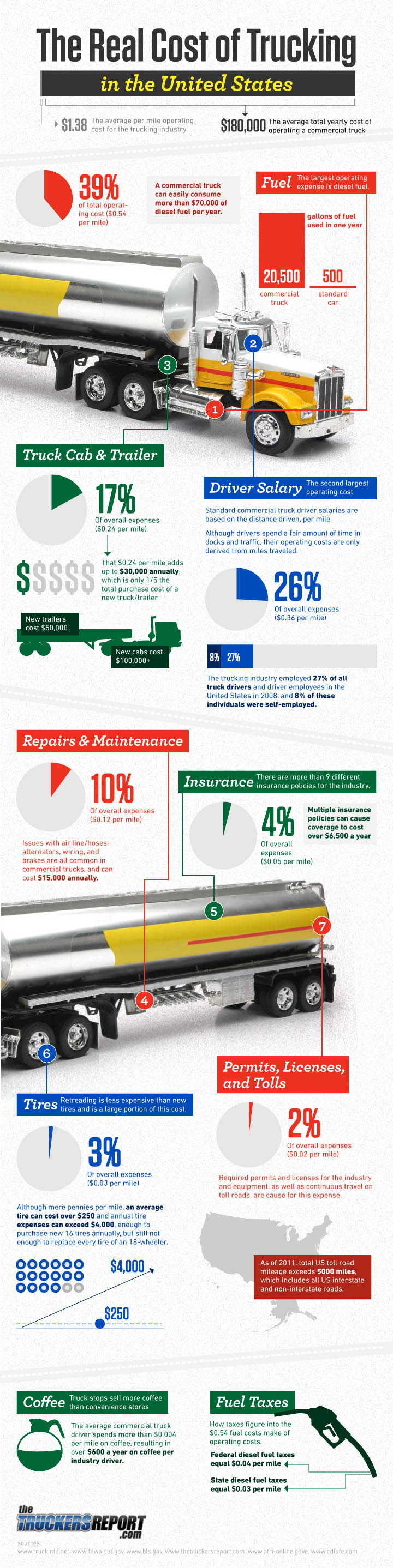
> I don't think labor is 90% of the cost of a truck delivery.
If we go by https://www.thetruckersreport.com/images/costoftrucking.jpg it's 26%, but also if you can vastly increase the mileage per year then an electric model goes from "maybe" to "massive savings".