The article reminds me of a story from a friend that was an engineer at a major water heater company. Modern electric water heaters are already fairly efficient, but every model gets tested by the government to be given an efficiency rating. The test consists of replacing the anode with a rod that has a series of temperature probes to measure the water at different levels in the water heater. Since water would form l…
Serious question, how is this different from what VW did? There was a lot of talk about complicit engineers vs. shady management in that discussion. Did this ever make it to production?
How well do cars do in crash tests they're not optimized for?
341–350 of 352 posts
Re: How well do cars do in crash tests they're not optimized for?
#342One of the more morbid yet profound aphorisms that I know is: Safety regulations are written in blood. FAA regulations are often based on finding a new way to break an airplane that they hadn't diagnosed before. Safety ratchets up as new failure modes are discovered. If cars keep showing up pancaked it a particular way, then guidelines change. Until those failure modes are regulatory capture, at least. In the 90's th…
The "pancaking" is designed, modern cars are made to "crush" and absorb the energy of an impact.
A pancake is flat. There is no room in a pancake for a viable human. The car is all but obliterated.
Re: How well do cars do in crash tests they're not optimized for?
#343Earlier quoted context omitted.
This phenomenon also appears in the testing of crash helmets. The DOT (US government) helmet standard is easy to game since it's very strict on how and where the helmets are tested. The Snell Foundation standard is a bit better since the humans testing the helmets are allowed to look for weak points to target for anvil drops. The new FIM standard adds more variability to the tests to better simulate the varying angle…
Crash test dummies have basically this problem also. They're designed for realism in certain very narrow ways, and then the very small number of approved dummies are used for testing car safety. The industry has made a bit of progress, surprisingly unprompted by regulations - female and child dummies came into circulation before they were required in tests. But overall, testing is still run against a tiny handful of…
Re: How well do cars do in crash tests they're not optimized for?
#344Earlier quoted context omitted.
Crash test dummies have basically this problem also. They're designed for realism in certain very narrow ways, and then the very small number of approved dummies are used for testing car safety. The industry has made a bit of progress, surprisingly unprompted by regulations - female and child dummies came into circulation before they were required in tests. But overall, testing is still run against a tiny handful of…
I think some of this falls into the simulation paradox: the more accurate the simulation, the closer the simulation is to the thing being modelled. But it's a quadratic relationship in most cases, so at some point meaningful increases in simulation accuracy cease to be economically viable.
The main reason the DOT standard is so bad is because its mired in bureaucracy and managed by a severely underfunded organization.
Re: How well do cars do in crash tests they're not optimized for?
#345Earlier quoted context omitted.
> If the water heater engineers designed the water heater to never turn on and keep the water at room temperature while being tested I think the difference between what they did and this is only a difference in degree and not kind though, right?
It is a difference in kind: VW dynamically detected and adapted behavior to the test. It would never operate in that way under normal conditions. The water heater example was completely static: it always behaved the same way, under test or not.
In both cases there was an intentional design change to deliberately changed mislead a measurement, and the final product does not match the intended thing. Both adversarially directly cause the consumer's purchase to not be the intended item; no one gets a car that has emissions measured and no one gets a heater that has the efficiency measured.
Re: How well do cars do in crash tests they're not optimized for?
#346Earlier quoted context omitted.
> If the heating elements aren't at the bottom, specifically for this reason, how come they aren't? There are typically two heating elements, one near the bottom and one further up. You can use the higher one if you only need a half-tank of hot water. I'm not sure if this is the complete answer to your other question, or if sometimes conditions are such that convection occurs extremely slowly despite a substantial te…
I think perversely it's not the density profile in the vertical dimension that drives convection but the horizontal dimension. A hotter thus lower density but perfectly flat homogeneous layer can't displace the colder denser layer above it because the pressure between the two layers is uniform.
It's your claim "the water at the level of the heating elements gets hotter and hotter and the water away from it gets cold" which is surprising me; water being quite a good conductor of heat, and "efficient boiler" suggesting that the tank will be insulated so not much heat is lost to the outside world, so the water away from the element should warm up by conduction from the other water faster than it gets cold from losing heat through the insulation (in my head). OK maybe I can imagine that in a fixed pressure with no room for expansion, the warm water cannot be less dense, so there can't be much convection - but then won't the heat radiate and conduct outwards in a "sphere" from the heating element including up and down, and not make any layers?
And here[2] is a video of Thunderf00t putting an infra-red thermal camera on a closed water bottle with a peltier cooler attatched to the side of it, and showing that the cold water does sink, there is some convection happening with a cold "heating element" halfway up the "tank" on one side. (But there is compressible air in the top).
Maybe it's that you don't want to run a boiler long enough for all the water to get to a uniform temperature before you can get warm water out of it, and if you don't then you risk getting super hot and cold water unmixed from "impatience" more than anything else?
[1] https://ae01.alicdn.com/kf/HTB1_U_RSpXXXXbYapXXq6xXFXXXy/DC-...
Re: How well do cars do in crash tests they're not optimized for?
#347Earlier quoted context omitted.
The "pancaking" is designed, modern cars are made to "crush" and absorb the energy of an impact.
You might want to talk to someone about your pancake making skills. A pancake is flat. There is no room in a pancake for a viable human. The car is all but obliterated.
Re: How well do cars do in crash tests they're not optimized for?
#348Earlier quoted context omitted.
You might want to talk to someone about your pancake making skills. A pancake is flat. There is no room in a pancake for a viable human. The car is all but obliterated.
The front pancakes. The cabin does not.
Re: How well do cars do in crash tests they're not optimized for?
#349Earlier quoted context omitted.
I think perversely it's not the density profile in the vertical dimension that drives convection but the horizontal dimension. A hotter thus lower density but perfectly flat homogeneous layer can't displace the colder denser layer above it because the pressure between the two layers is uniform.
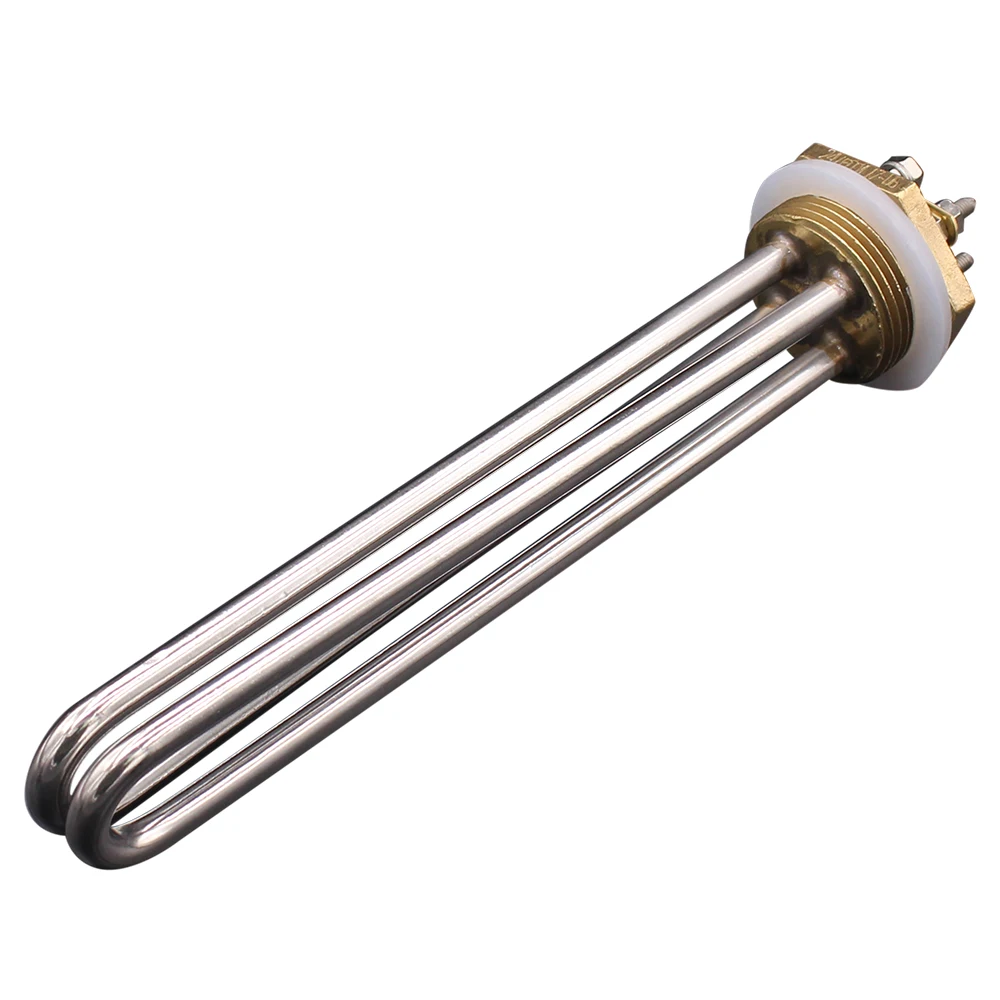
How can it become a perfectly flat homogeneous layer, from a heating element which looks like this[1]? It's your claim " the water at the level of the heating elements gets hotter and hotter and the water away from it gets cold " which is surprising me; water being quite a good conductor of heat, and "efficient boiler" suggesting that the tank will be insulated so not much heat is lost to the outside world, so the wa…
Suspicion of mine is part of the answer is that the viscosity of water drops with temperature. Rising hot water in a warm layer hits the cold layer above it and spreads out then turns down. Also water is a middle of the road non metallic solid when it comes to heat conduction. But it has high heat capacity and is a liquid.
Complicating things stratification at least in a well designed water heater happens rarely. So it's easy enough to set up conditions where it doesn't happen. But of course it's a known problem. And not a totally solved one either. Suspect that simplified models probably don't display the behavior.
Re: How well do cars do in crash tests they're not optimized for?
#350Earlier quoted context omitted.
No, you could also safely drive an F1 car from the driver’s seat by limiting your speed to 40 km/h.
Could you? Here[1] is Richard Hammond driving an F1 car on Top Gear, and he says it can't go slowly, safely - no downforce, no heat in the tyres, no heat in the brakes. If you're coming off a lot of fast laps into the pit lane they will still be warm, if you try to drive it at 40km/h all the way they won't be. [1] https://www.youtube.com/watch?v=EGUZJVY-sHo
And indeed, if my memory of Hammond's experience is anything to go by, the F1 engine may not even be able to handle being driven exclusively at such slow speeds without stalling out.