Live data from Hacker News

Walkable Streets Are More Economically Productive

strongtowns.org

341–350 of 429 posts

Re: Walkable Streets Are More Economically Productive

#341
post #171

Earlier quoted context omitted.

> This leaves those preferring density at a relative disadvantage. 100% agree. I much prefer to live in a dense, urban, walkable area, but most built environments that satisfy these criteria violate modern zoning regulations. So, the USA's supply of pleasant, dense environments is dwindling because every time an olde/walkable area revitalizes enough to attract new development, that new development must comply with mo…

The only city I've been in the US that made me think "wow, that's kind of walkable" was Boston. Are there any other dense cities I should visit?

Brooklyn. Provincetown, MA. Charlestown, SC
Re: Walkable Streets Are More Economically Productive

#342

Earlier quoted context omitted.

They might have looked dull, but not duller than any American city, esp. built in 20th century. Besides, the whole point is not the looks, but the layouts are nice. Still, currently living in a large Soviet city, and to me it is much nicer than Philly or NYC.

>They might have looked dull, but not duller than any American city, esp. built in 20th century. Besides, the whole point is not the looks, but the layouts are nice. Still, currently living in a large Soviet city, and to me it is much nicer than Philly or NYC. The only comparable places I've seen in the US, in terms of sheer ugliness, are large high-rise government housing projects. I will say this about St. Petersbu…

OTOH, I have not seen anything uglier that cookie cutter American suburbia.

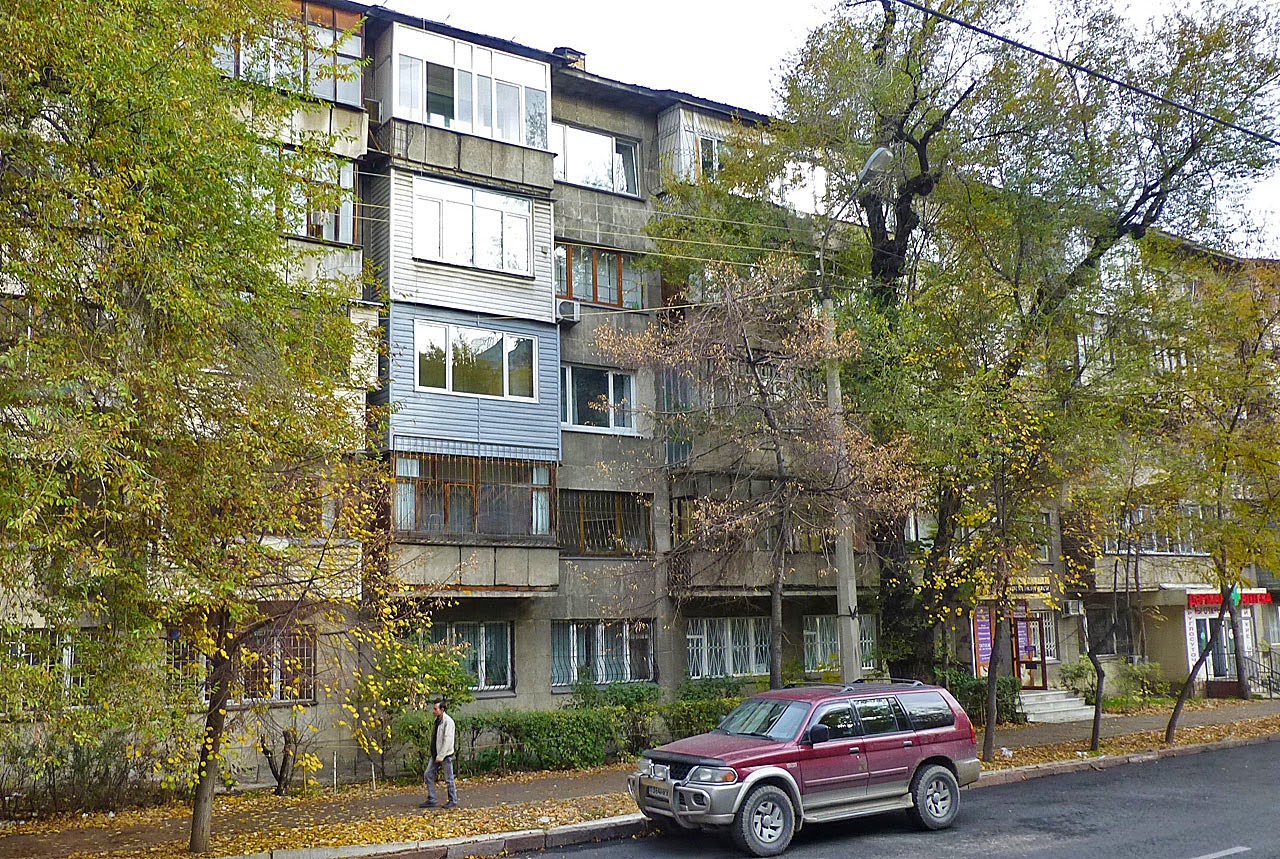
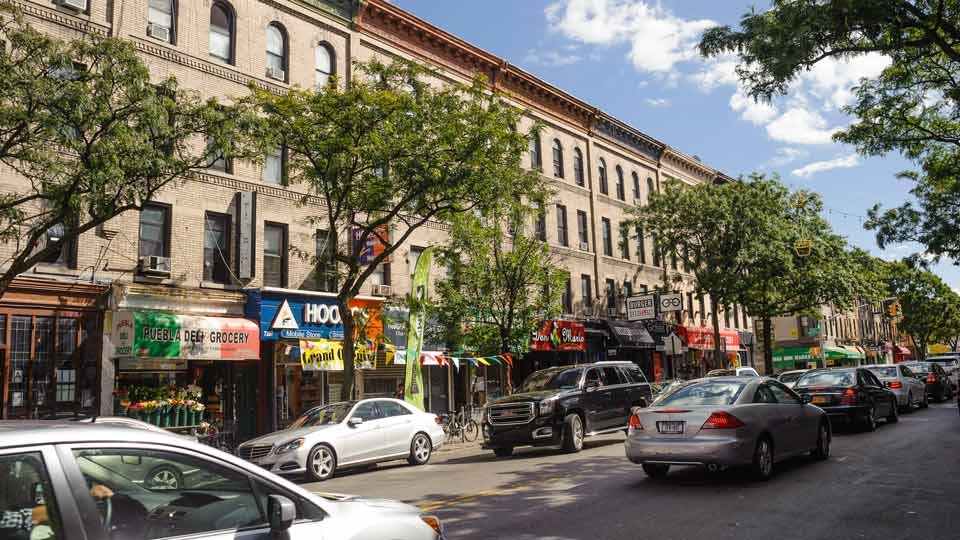
I still cannot figure how NYC (https://nyulangone.org/files/city-street-in-bay-ridge-brookl...) in nicer than Almaty (http://www.walkingalmaty.com/uploads/2/3/7/9/23797930/886799... or https://3.bp.blogspot.com/-uoAK6mvo248/VHUZgL6rFuI/AAAAAAAAW...) keeping in mind that the houses in Almaty have common areas, playgrounds without traffic going thru, benches etc; in case of Brooklyn it is just a building facing the street and there is nothing behind it. Oh, and that building has moldy walls made out of paper.

Re: Walkable Streets Are More Economically Productive

#343

Earlier quoted context omitted.

Because the post I'm replying to made the same equation, referring to "strict control" and naming places under such rule. In a discussion about what to do about US suburbs I don't think El Salvador, a poor country whose civil war ended in 1992, is even the least bit relevant.

No, the post you responded to says that density without strict oversight leads to all the bad things you were talking about. I cannot think of a counterexample. Density with strict oversight seems like it could lead to a flourishing society, which is what has happened in those other examples. It's very easy to have density with strict oversight lead to bad results, but some form of strict oversight seems like a prere…

Ok, so I suppose the conclusion I would draw, if we accept all these premises, is that increased density is not worth the cost.

Re: Walkable Streets Are More Economically Productive

#344
post #260

Earlier quoted context omitted.

Pretty sure progressives are strongly aligned on opposition to any housing construction unless it’s specifically set aside for low-income residents, and are okay with low density zoning as an anti-gentrification measure. YIMBYism is more center-left than progressive.

It's more complicated than that. The recent Minneapolis mayoral race had housing policy as a major issue, and Minneapolis is nothing if not progressive. Affordability and gentrification are interrelated, but so is quality. I live in a relatively low-density neighborhood of mostly 80-110 year old houses. Lately, we're getting new development in the form of cheap older rentals being torn down, and large-for-the-lots (t…

Well, building today's affordable housing has never been a goal anyone aspires to. We're building 2040/2050's affordable housing:

https://www.strongtowns.org/journal/2017/8/1/how-luxury-hous...

Re: Walkable Streets Are More Economically Productive

#345
post #75

Another important factor not mentioned here is the practice of "curb cuts" http://www.spur.org/publications/urbanist-article/2008-06-01... I recommend the article (not just posting for a cite, it's an interesting one). But to summarize - SF has a lot of "curb cuts", sections of the curb that are cut out and lowered so a car can drive across the sidewalk to a driveway or garage. This prevents the sidewalks from becomi…

I noticed this when I visited Boston for the first time, after several years of living in SF. I was walking down a street--and I was delighted to keep walking, unmolested by oblivious motorists zooming out of driveways and garages. Too bad WalkScore doesn't consider this experience for its assessments.

Re: Walkable Streets Are More Economically Productive

#346
post #11
post #6

Earlier quoted context omitted.

Interesting, what would incentivize people to live there, as opposed to the city?

I'm still figuring that one out, hah. I think if the culture was strong enough and public transportation was "perfected" within the cofines of the 100acres people might gravitate their under normal market pressure. Otherwise I guess you could just make it cheap. For those reading -- what would incentivize you?

[deleted]

Re: Walkable Streets Are More Economically Productive

#347
post #83

I live in Boulder and attribute much of the quality of life here to walkable (and bikeable) streets. We have hundreds of miles of multi-use paths that are used extensively for getting around and for recreation. Our main road downtown has a pedestrian mall for a number of blocks that keeps traffic away and lends itself to street performers, community events, and a generally calming atmosphere. Downtown parking lots ar…

> multi-use paths that are used extensively Is that really true? I live in a smaller version of Boulder. University town, we have a walkable downtown, trails and paths, and yes you see people using them. But the reality is that it's a tiny, tiny fraction of the people who live here. Same with buses. There are a few routes that service big apartment complexes and go too and from campus. Those get used. The others driv…

> Is that really true?

No I made it up to help prove my point. :)

Yes, people young and old use these paths for nature walks, running, biking, commuting, taking the dog out for a stroll around the neighborhood, and more. We even have people do roller skiing (which I hadn't heard of before I moved here).

Your town might not have self-selected for people who like the outdoors. It seems even the students at CU have chosen to attend the university because of the prevalence of multi-use paths (there are loads of them cutting through the campus and college housing areas) and proximity to nature trails (many can be reached by bike or bus).

Re: Walkable Streets Are More Economically Productive

#348

Earlier quoted context omitted.

They might have looked dull, but not duller than any American city, esp. built in 20th century. Besides, the whole point is not the looks, but the layouts are nice. Still, currently living in a large Soviet city, and to me it is much nicer than Philly or NYC.

>They might have looked dull, but not duller than any American city, esp. built in 20th century. Besides, the whole point is not the looks, but the layouts are nice. Still, currently living in a large Soviet city, and to me it is much nicer than Philly or NYC. The only comparable places I've seen in the US, in terms of sheer ugliness, are large high-rise government housing projects. I will say this about St. Petersbu…

> The woman (35 yrs and under) there seemed to be, on average, notably more attractive than in any other place I've been, before or since.

This just means you've never been to ex-Yugoslavia!

(Been there with my wife; she agrees wholeheartedly)

Re: Walkable Streets Are More Economically Productive

#349

Earlier quoted context omitted.

Yes, there's the one example everyone loves to trot out. Japan is different from the US in a lot of ways and we can't just wave a wand and turn New York into Tokyo (or Cleveland into Sapporo, for that matter).

It takes the right policies and a lot of time. We have seen American cities become less walkable and more auto-centric in the last ~60 years thanks to policies designed to hollow out urban cores and increase suburban sprawl [1]. We have also seen Amsterdam embrace "human-centric" urban planning, leading to significant transformation toward the vibrant, walkable, bikeable city that Amsterdam is famous for being today…

Re #3: It basically makes two points.

That zoning should be more liberal and less specific (stop trying to plan in such fine grain), which makes a lot of sense.

And zoning should be done at the national level. Absolutely laughable in a country as large and diverse as the US.

Re: Walkable Streets Are More Economically Productive

#350
post #206

This is something that certain cities have understood for many years. Chicago, for example, mandates that all new development from a simple three-story building to a 100-story skyscraper has retail at its base to improve the walkability of its streets and make its business corridors vibrant. This also helps push down retail rents even in the CBD, allowing local upstart businesses a shot at reaching the masses. Chicag…

Weird - I visited Chicago a couple years ago from NYC and was shocked at how pedestrian-unfriendly central parts of Chicago seemed (e.g. River North). There were parking lots everywhere , with aggressive drivers pulling in and out. I walked through a parking lot to go to a liquor store and was almost run over. Sometimes crossing a large street felt like a race against the green light. Jaywalking signaled to drivers t…

Chicago is huge. River North is a good example of what you're talking about, but most of the city is not as you described.

For example, Rogers Park is extremely walkable, safe part of the city.

Post reply on HN