Earlier quoted context omitted.
FWIW, blocking policy on 2 blocks (at least some, Qobuz for me) streaming sites and bandcamp (bandcamp being the more problematic one as every band is on their own subdomain and you can’t (I think) just allow all of them).
I seem to have no problems streaming from either Bandcamp or Qobuz, the latter which I'd never heard of before. (or as far as I'm aware any other site) I intentionally want to click-to-play on every site out there, so perhaps you mean "blocks autoplay" or somesuch?
UniFi 5G
311–316 of 316 posts
Re: UniFi 5G
#312Earlier quoted context omitted.
Not GP but I’m trying to figure out what you’re insinuating. > For tougher environments or deployments with poor indoor cellular coverage, the outdoor model maintains the same high performance cellular connectivity with improved antenna performance in a durable IP67 rated enclosure. It is built for rooftop installs, off site locations, and mobile deployments where reliability is critical. Just like its indoor counter…
Your quote lists mobile deployments, their bullet point also says: >Built for rooftops, remote sites, and vehicle based setups They are insinuating if you actually read their press release then you would not state it was targeted only at stationary deployments. Based on the spec sheet 2 out of its 6 antennas are directional, this is probably a 4x4 modem so it must have some way to switch 2 antenna from directional to…
Re: UniFi 5G
#313Earlier quoted context omitted.
I seem to have no problems streaming from either Bandcamp or Qobuz, the latter which I'd never heard of before. (or as far as I'm aware any other site) I intentionally want to click-to-play on every site out there, so perhaps you mean "blocks autoplay" or somesuch?
I want to always play full albums, the way 2 is implemented seems to require a click for every track
Re: UniFi 5G
#314Earlier quoted context omitted.
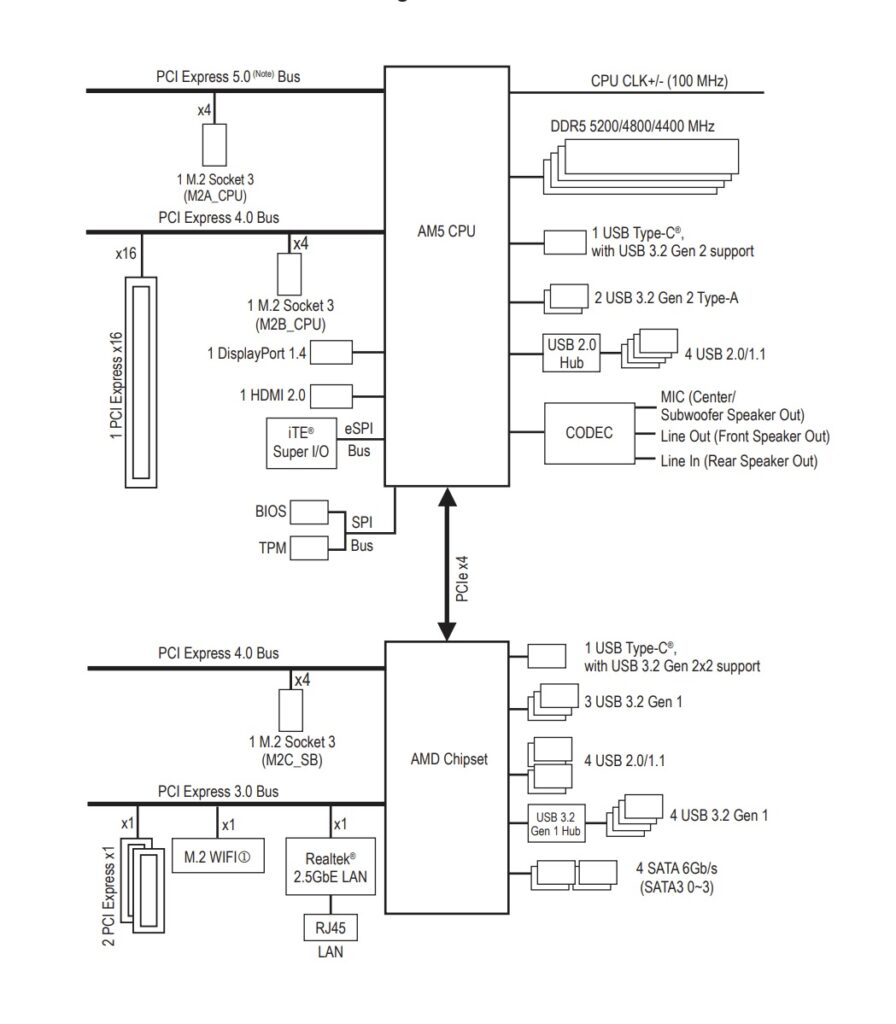
1x PCIE 3.0 has 8 Gbps raw speed - for 2.5Gbps duplex Ethernet you'll need 6~7 Gbps of raw link to CPU. For 5Gbps and higher, you'll need another PCIE line - and SOHO motherboards are usually already pretty tight on PCIE lanes. 10GbE will require 4x3.0 lanes
> 10GbE will require 4x3.0 lanes 3.0 PCIE is irrelevant today when it comes to devices you want on 10G. I'm pretty sure the real reason is that 2.5G can comfortably run on cable you used for 1G[1], while 10G get silly hot or requires transceiver and user understanding of a hundred 2-3 letter acronyms. Combine it with IPS speeds lagging behind. 2.5G while feels odd to some, makes total sense on consumer market. [1]: a…
Re: UniFi 5G
#315Earlier quoted context omitted.
1x PCIE 3.0 has 8 Gbps raw speed - for 2.5Gbps duplex Ethernet you'll need 6~7 Gbps of raw link to CPU. For 5Gbps and higher, you'll need another PCIE line - and SOHO motherboards are usually already pretty tight on PCIE lanes. 10GbE will require 4x3.0 lanes
PCIe is full duplex. And there's no requirement for ethernet ports to be able to do full tilt. Even with a 1x PCIe 3.0, a 10G port will be much much better than a 2.5G one. (But PCIe 3.0 of course is from 2010 and isn't too relevant today - 4.0, 5.0, 6.0 and 7.0 have 16/32/64/128 Gbps per lane respectively)
Agree that 10G would be still better, but OEMs couldn't write 10G on their hw while it is capped to 7Gb
Re: UniFi 5G
#316Earlier quoted context omitted.
1x PCIE 3.0 has 8 Gbps raw speed - for 2.5Gbps duplex Ethernet you'll need 6~7 Gbps of raw link to CPU. For 5Gbps and higher, you'll need another PCIE line - and SOHO motherboards are usually already pretty tight on PCIE lanes. 10GbE will require 4x3.0 lanes
Are motherboards commonly using PCIe 3.0 for onboard peripherals these days? I wouldn’t expect it to save them much money, but my PCIe knowledge is constrained to the application layer - I know next to nothing about the PHY or associated costs.