Live data from Hacker News

Space Elevator

neal.fun

311–320 of 414 posts

Re: Space Elevator

#311
post #83
post #77

Earlier quoted context omitted.

The issue of the line falling back to earth is solved by putting the base of the elevator on water. If the top part of the elevator was cut of you could even detonate charges along the line to make sure all pieces fall into water.

Are we to assume they would be falling straight down? Because I'm pretty sure that's wrong. I'm not a physicist, though, and am happy to be corrected because every time the Space Elevator comes up, I want to know what happens when catastrophic failure occurs and how we'd mitigate that.

https://en.wikipedia.org/wiki/Space_elevator

> Above GEO, the centrifugal force is stronger than gravity, causing objects attached to the cable there to pull upward on it. [...] On the cable below geostationary orbit, downward gravity would be greater than the upward centrifugal force, so the apparent gravity would pull objects attached to the cable downward.

So, without defensive countermeasures, the Space Elevator would indeed whip around the Earth.

But honestly, if I were designing such a thing, it would have break points, and maybe even a whinch at the base, to pull the line in. I'd also build it over water, and not over a population centre.

But I'm only a software engineer– it's likely a lot more challenging than this.
Re: Space Elevator

#312
post #308
post #275

Earlier quoted context omitted.

> If you somehow manage to get magnetic fields involved, so you are not afraid of friction with the cable itself, at 1.3 max apparent acceleration […] This means that half-way after 58 minutes, the climber is traveling at 0.3 * 9.81 m/s² * 60 * 58 ~= 10.2 km/s ~= 36,720 km/h (!!!) relative to the cable. A tiny imperfection or wobble is going to make the climber crash into the cable, destroying both. A climber with a…

> A tiny imperfection or wobble is going to make the climber crash into the cable, destroying both. A maglev train is several centimeters from the rail; if someone made the carbon nanostructures (the only known material strong enough are atomically precise carbon nanotubes or graphene, but the entire length has to be atomically precise you can't splice together the shorter tubes we can build today) this badly wrong,…

> A maglev train is several centimeters from the rail […]

No maglev train I ever heard of travels at 36,000 km/h. This is about two orders of magnitude faster.

> We already have megavolt powerlines.

That's transmission over long distances, but you need to handle and transform all that power in a relatively small enclosure. Have you seen the length of isolators on high-voltage powerlines? What do you think is going to happen to your circuit if you have an electrical potential difference of 1 MV over a few centimeters?

Yes, you can handle large voltages with the right power electronics, but you need the space to do so. For comparison, light rail typically uses around 1 kV, while mainline trains use something like 15 kV. But a train is also 10 to 100 times as heavy as the 10t climber in my calculation, so you need to multiply the power (and therefore the electric current) by 10 to 100 as well.

Re: Space Elevator

#313
post #303

Earlier quoted context omitted.

In a parallel universe where Africa is covered by world powers, Mount Kilimanjaro would make a pretty good launch facility. Reduced rocket equation needs for being nearly 3 miles high. If you start in thinner atmosphere you need less fuel to punch through it. You’re also higher when you hit Max Q. This is essentially what Scaled Composites and Virgin Galactic were trying to do with their cargo plane system, only you…

The most important feature of a launch site is having no populated areas downrange. Kilimanjaro would have Mombasa downrange. I don't know of any launch sites significantly above sea-level, the marginal performance increase wouldn't be worth the logistical nightmare. It's easier to fly up a 747 than build a launch facility on top of a mountain.

> The most important feature of a launch site is having no populated areas downrange. Kilimanjaro would have Mombasa downrange.

This was part of the Plot of Halo: ODST, where fragments of the space elevator collapsed onto New Mombasa.

Re: Space Elevator

#314
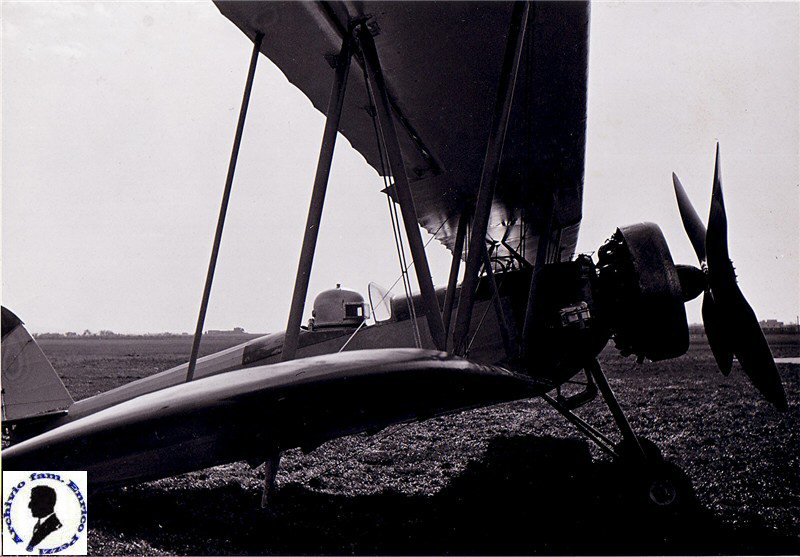
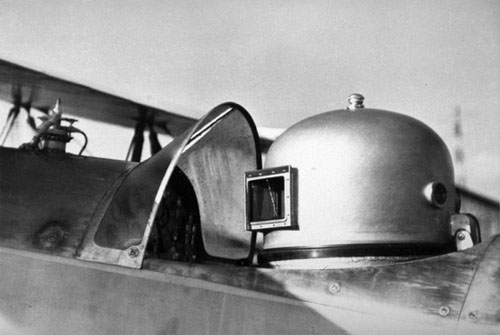
The biplane part (Caproni ca 161) right after the "you should put on a spacesuit" comment got my notice, so I checked. Actually vaguely fascinating that in 1938 the Italians had Mario Pezzi wear an electrically heated pressurized suit [1], an airtight helmet [2][3], and sit inside of a pressure cylinder [4] to fly at 17,083 m (56,047 ft) in a propeller-powered biplane. Seems to have barely been mentioned afterward though, as it's difficult to even find imagery.

[1] https://en.wikipedia.org/wiki/Mario_Pezzi_(aviator)

[2] https://static.thisdayinaviation.com/wp-content/uploads/tdia...

[3] https://www.enricopezzi.it/fam_pezzi/mario_pezzi/images/MP_1...

[4] https://www.reddit.com/media?url=https%3A%2F%2Fi.redd.it%2F4...

Re: Space Elevator

#315
post #246

Earlier quoted context omitted.

It's NOT rocket science?

You can reach space using air breathing jets. You can’t stay in space using air breathing jets.

There isn't enough air at high altitudes for jets to reach space even if you count 100km as space.

The highest jet record is 37km in MiG-25. The scramjet record is 33km. I found source that says the limit is 40km at Mach 15.

Re: Space Elevator

#316
post #298

Earlier quoted context omitted.

https://en.wikipedia.org/wiki/Atmosphere_of_Earth#Pressure_a... 90% of the atmosphere is below 16 km. 16 km * (12" / Earth diameter) :: https://www.wolframalpha.com/input?i=16+km+*+%2812%22+%2F+Ea... 0.015 inches, 0.38 mm ... and tossing sheets of paper into that ( https://www.wolframalpha.com/input?i=thickness+of+paper ) ... 16 km * (12" / Earth diameter) / thickness of paper :: https://www.wolframalpha.com/input?i=…

I just love such nerdy debates on HN on a hypothetical scenario/example. I think this thread would also be loved by the nerdy folks at https://Reddit.com/r/theydidthemath

If I recall correctly... my very first post on Reddit was doing calculations for a (practically immortal) person eating beans and storing the flatus for a trip to the moon (searching shows that this is a not-infrequent request). It was only concerned with quantity - not storage or the engine.

... and the source document for the numbers was based on a paper that is fairly easy to find given the proper keywords in google search... https://pubmed.ncbi.nlm.nih.gov/1648028/ (and I learned that methane more rare in flatus than not).

Re: Space Elevator

#317
post #158

Very cool. One thing I wish was better shown: space is close, it's just hard to go up. Our liveable breathable atmosphere is razor thin compared to the size of earth. In most cases, 100km is less than the distance between sizeable metropolitan areas. It's a day long bike ride. Air runs out less than a bus ride across town. A 15k jog/hike would put you in the stratosphere. Those jet aircraft that seem so high are clos…

> it's just hard to go up Going up is the comparatively easy part, it's not exactly rocket science. Going fast enough sideways so you stay up there is the tricky bit.

This is where Douglas Adams was right, of course:

> There is an art, it says, or rather, a knack to flying. The knack lies in learning how to throw yourself at the ground and miss.

You're not going sideways - you're actively falling continuously, but somehow missing the ground for the entire length of your orbit.

Re: Space Elevator

#318
post #316

Earlier quoted context omitted.

I just love such nerdy debates on HN on a hypothetical scenario/example. I think this thread would also be loved by the nerdy folks at https://Reddit.com/r/theydidthemath

If I recall correctly... my very first post on Reddit was doing calculations for a (practically immortal) person eating beans and storing the flatus for a trip to the moon (searching shows that this is a not-infrequent request). It was only concerned with quantity - not storage or the engine. ... and the source document for the numbers was based on a paper that is fairly easy to find given the proper keywords in goog…

Hilarious!

Re: Space Elevator

#319

Very cool. One thing I wish was better shown: space is close, it's just hard to go up. Our liveable breathable atmosphere is razor thin compared to the size of earth. In most cases, 100km is less than the distance between sizeable metropolitan areas. It's a day long bike ride. Air runs out less than a bus ride across town. A 15k jog/hike would put you in the stratosphere. Those jet aircraft that seem so high are clos…

For a standard globe that you might see in a classroom, the Earth's atmosphere is about as thick as the paper glued to the outside that displays the map.

And the bumps for the mountains on that globe (assuming you had a fancy one) were gross exaggerations:

https://dahosek.substack.com/p/one-million-stories

Re: Space Elevator

#320

Very cool. One thing I wish was better shown: space is close, it's just hard to go up. Our liveable breathable atmosphere is razor thin compared to the size of earth. In most cases, 100km is less than the distance between sizeable metropolitan areas. It's a day long bike ride. Air runs out less than a bus ride across town. A 15k jog/hike would put you in the stratosphere. Those jet aircraft that seem so high are clos…

> it's just hard to go up. Eh. Going up is easy. A Frenchman, a sheep, duck, and rooster solved the whole ‘up’ thing over two centuries ago. But going DOWN? That’s far more difficult. What wonders may lie beneath our feet: vast caverns, ore, underground oceans… hard to get to though.

If memory serves well, Frenchmen solved the problem of going up in two ways, and the one you quote seems like a lot of hot air to me. I mean, if you follow that line of thought, the literature says an American would get to the Moon in 19 days or so.

The other French method included two dogs, a bunch of chicken, and a very large cannon, which had quite a bit more showmanship.

Post reply on HN