Live data from Hacker News

New Cities

blog.ycombinator.com

311–320 of 710 posts

Re: New Cities

#311
I'm skeptical.

I want to believe in this, but I can't help feeling cynical--likening the results with that of privatization of prisons in the US.

Red-Light Cameras that infest my city were sold to public by claiming they would increase public safety, but instead are just another way for the city to generate revenue, much of which likely goes back to the camera builders.

It's hard to imagine a very for-profit entity like YC having an impact on city planning without ultimately driving towards a monetary return on investment.
Re: New Cities

#312

Earlier quoted context omitted.

> Why do you think so many people choose to drive their own car, when given the choice? It's just anecdotal, but in my experience most of the people I know who live in places where having a car is an actually choice don't own them at all, i.e. people who live and work in city centers. Due to the US's terrible public transportation infrastructure, however, that's not a real choice in most places. If you want to work,…

There are precious few places where you literally can't walk or bike. There are a lot of places where it's impractical to do so, because it takes too long, and so people mostly don't. That's despite the fact that walking or biking would increase throughput, because throughput isn't all that matters. I would even argue that it isn't all that important.

"There are precious few places where you literally can't walk or bike."

Where you literally can't? No. But where current infrastructure has made it hugely impractical to? I'd say that's most of the country, especially suburbia.

"I would even argue that it isn't all that important."

If you're ok with driving everywhere, then no, you wouldn't think it was. Not everyone wants to do that, though. And making things friendly for cars tends to make it harder for walking and biking.

Re: New Cities

#313

Something that I've always wondered in relation to city design is why it isn't standard for high-rise buildings to be 50% office space and 50% living space. It's one of those things where I assume there must be a good reason why it isn't done, but I've never been able to find one. It seems like such a huge waste of human resources to force people to commute for hours each day, spending money, wasting gas, lost produc…

Some of this could be alleviated by just eliminating offices where possible. The entire team of software developers I work with is 100% remote, in fact, the vast majority of our production workers (billers and medical coders) is also remote. It's a huge benefit to both the employees and the company, no more commute and the ability to spend time with your family on your breaks, and the company doesn't waste money on office space that isn't even being used 50% of the day.

I understand there are still times where an office is necessary, and in fact we are looking at getting one here in Boise where the majority of our team is located, but it's more of a small space for meetings, holding our lab gear, etc.

Re: New Cities

#314

Earlier quoted context omitted.

http://cdn.slowrobot.com/524201613515576555.gif :)

It's a lovely picture, and it makes a great point. If 200 people want to get to the same place, it's far more efficient to pack them into the same vehicle going to that place. Now what happens when those 177 cars are going to 100 different places?

That's why buses have more than one stop on their route.

Re: New Cities

#315
post #312

Earlier quoted context omitted.

There are precious few places where you literally can't walk or bike. There are a lot of places where it's impractical to do so, because it takes too long, and so people mostly don't. That's despite the fact that walking or biking would increase throughput, because throughput isn't all that matters. I would even argue that it isn't all that important.

"There are precious few places where you literally can't walk or bike." Where you literally can't? No. But where current infrastructure has made it hugely impractical to? I'd say that's most of the country, especially suburbia. "I would even argue that it isn't all that important." If you're ok with driving everywhere, then no, you wouldn't think it was. Not everyone wants to do that, though. And making things friend…

The "it" which I'm saying "isn't all that important" is throughput. Not biking/walking, traffic throughput.

I don't understand why everyone is coming out of the woodwork here to criticize my car-centric viewpoint and tell me how great biking or walking is. I guess it's Yet Another Example of how people on the internet can't handle the concept of disagreeing with a single point.

Re: New Cities

#316
post #168

Earlier quoted context omitted.

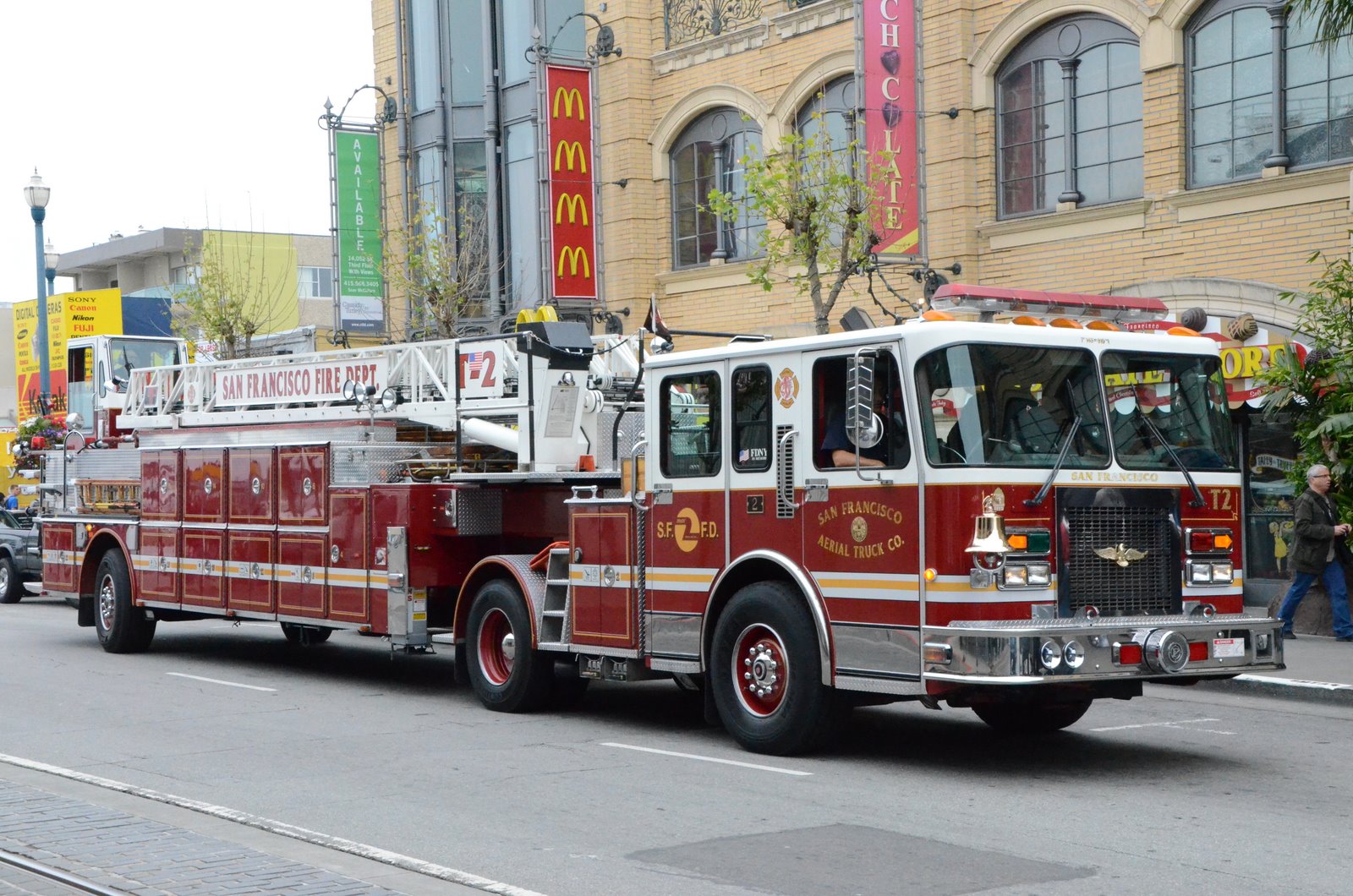
See another of my posts about road vs street definitions. Note that a lot of suburban wide streets are built that way to meet fire codes written to accommodate overly-large trucks. A suburban town doesn't need giant trucks where smaller, cheaper, more maneuverable trucks can do the work. Combined with ubiquitous hydrants - which have disappeared from many US suburban subdivisions - they are more than enough fire safe…

Absolutely. There is currently a trend in the US towards smaller emergency vehicles, and I expect that to continue. US fire truck manufacturers are starting to look at their European brethren (companies like Metz out of Germany) for examples of how to accomplish the necessary tasks on much smaller platforms. I think we're still a long ways from being able to do away with fire trucks entirely though. Firefighting is a…

Even something easy like articulated fire trucks would be an improvement: http://1.bp.blogspot.com/-a2g94xSRqSo/T7RXxkqARAI/AAAAAAAAJ1...

Maybe a bit narrower/shorter though.

You still get the volume but don't have to punish the people who live in an area for the 0.001% of the time fire trucks need to be there.

Re: New Cities

#317

Earlier quoted context omitted.

Yep, what you describe is very similar to my experience of many European cities including Barcelona.

Yes, the Eixample district of Barcelona is a good example: https://en.wikipedia.org/wiki/Eixample Actually it was planned to have a lot more green space (the blocks were only supposed to have housing on two sides so as to leave the other sides unimpeded), but market forces prevailed, and all the green space is now walled off. Shame. The district is still a lot more liveable than basically any place I've seen in North…

And that's one of the noisier traffic dense parts of the city.

Re: New Cities

#318
post #255

Earlier quoted context omitted.

Central planning has been a colossal failure both in terms of the economy at large, and in terms of urban planning. If someone can make money by building a store, that's great, what's wrong with it? Zoning should be about keeping truly noxious activities away from residential areas, not about keeping a corner store away from where people could possibly walk to it.

Ah, I took a different take on your original post. I'll leave my original reply, as I still agree with the point, but I see where you're going with this and heartily agree. One of my main complaints with where I live is that it's a round-trip hour to walk to any store, yet $DEITY forbid that we put a corner store anywhere in my neighborhood lest a developer be prevented from plopping another house on that plot.

Yeah, my point is that it's impossible to say a priori what the mix of stores and single family houses and apartments and barber shops and other things should be, and where they should all be located. Markets are a good way of dealing with complex problems like that. They're not perfect, but better than the alternatives.

Re: New Cities

#319
Carfree Cities is a book (and website) that I've really enjoyed and explores the concept of how to design car free cities http://carfree.com.

It approaches the problem from several levels. From how you lay out a city to accommodate mass transit, to street layouts that make living more enjoyable.

Post reply on HN