Is this the Casimir effect?
Wringing
31–40 of 78 posts
Re: Wringing
#32Great stuff. We need more of these types of science tidbits on HN. And good links by the commenters too. I love Feynman's classic style of "explaining to a 5 year old" on Cold Welding. The reason for this unexpected behavior is that when the atoms in contact are all of the same kind, there is no way for the atoms to “know” that they are in different pieces of copper. When there are other atoms, in the oxides and grea…
Here's one I posted today showing how tunnel boring machines work. More civil engineering than science, but I found it quite fascinating: https://news.ycombinator.com/item?id=20364474
Re: Wringing
#33I grew up next to an abandoned granite quarry. You could, and still can --though they are beginning rarer as the quarry is a bit of a tourist attraction, find super smooth, polished rocks. We would do this wringing with them all the time as kids. Never over until now did I wonder if anyone else had ever done this or if it had a proper name.
Re: Wringing
#34I suspect OP was brought here by this excellent video which enjoyed some success over the past couple days on the topic of flatness.
Re: Wringing
#35This is part of the reason why you commonly see cymbal players in orchestras use an oblique motion for a crash rather than a head-on direct motion. Bringing two symbols together directly along their axis of rotation risks getting them stuck together like suction cups--the crazy part is that even when holes are drilled to release the near vaccum between two stuck cymbals, they remain glued together by the forces descr…
Are you sure that's not just the air pressure difference? Cymbals often have a shape with many concentric ripples, so you might need multiple holes to equalize the air pressure between each ripple. Wringing only works with extremely flat surfaces, and it works even in vacuum.
Re: Wringing
#36This is part of the reason why you commonly see cymbal players in orchestras use an oblique motion for a crash rather than a head-on direct motion. Bringing two symbols together directly along their axis of rotation risks getting them stuck together like suction cups--the crazy part is that even when holes are drilled to release the near vaccum between two stuck cymbals, they remain glued together by the forces descr…
I was wondering about (what I presume to be) this effect the other day with regard to things sticking to my bench top that I hadn't moved in a few weeks. One was a glass jar and the other a plastic lid. The bench is oiled hardwood. I was thinking that it seemed related to the two coefficients of friction (static vs moving). That is, the static part of friction could well be this phenomena on a less sticky scale. My thoughts led me to how it could be an electron transfer going on that bonded the two materials on some way...
(This was all backyard conjecture of course)
So, many thanks for this post: it shows how much better thought has gone into the problem.
Re: Wringing
#37https://www.youtube.com/watch?v=2lOOl3VxOtE <- Video Explanation
Re: Wringing
#38Re: Wringing
#39This is part of the reason why you commonly see cymbal players in orchestras use an oblique motion for a crash rather than a head-on direct motion. Bringing two symbols together directly along their axis of rotation risks getting them stuck together like suction cups--the crazy part is that even when holes are drilled to release the near vaccum between two stuck cymbals, they remain glued together by the forces descr…
It’s less the risk of them getting stuck together than it is the fact that they sound better if you don’t create that partial vacuum.
Re: Wringing
#40If you (like me) read the entire article without really getting an intuition for these "gauge blocks", here they are in action: https://www.youtube.com/watch?v=gbsd2OpPOMw https://www.youtube.com/watch?v=2lOOl3VxOtE
While a lot of analog measurement tools have been replaced by digital ones, Gauge Blocks are still often used as the de facto reference(Though CMM machines[1] are becoming more and more common).
You have a 'Master Set' of expensive Gauge Blocks that you use as a definite reference. Stacks of which can be combined with various tools for various purposes. https://i.ytimg.com/vi/2d-hGd_kYLc/maxresdefault.jpg https://images-na.ssl-images-amazon.com/images/I/61RhwssKaBL... https://i.ytimg.com/vi/n572qMo3g0A/maxresdefault.jpg

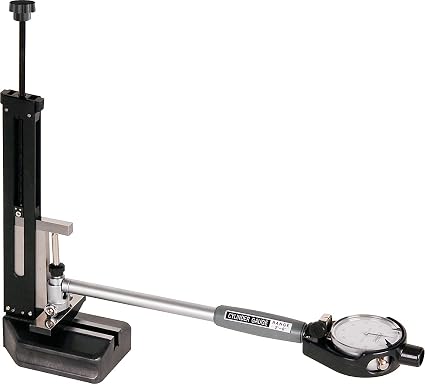
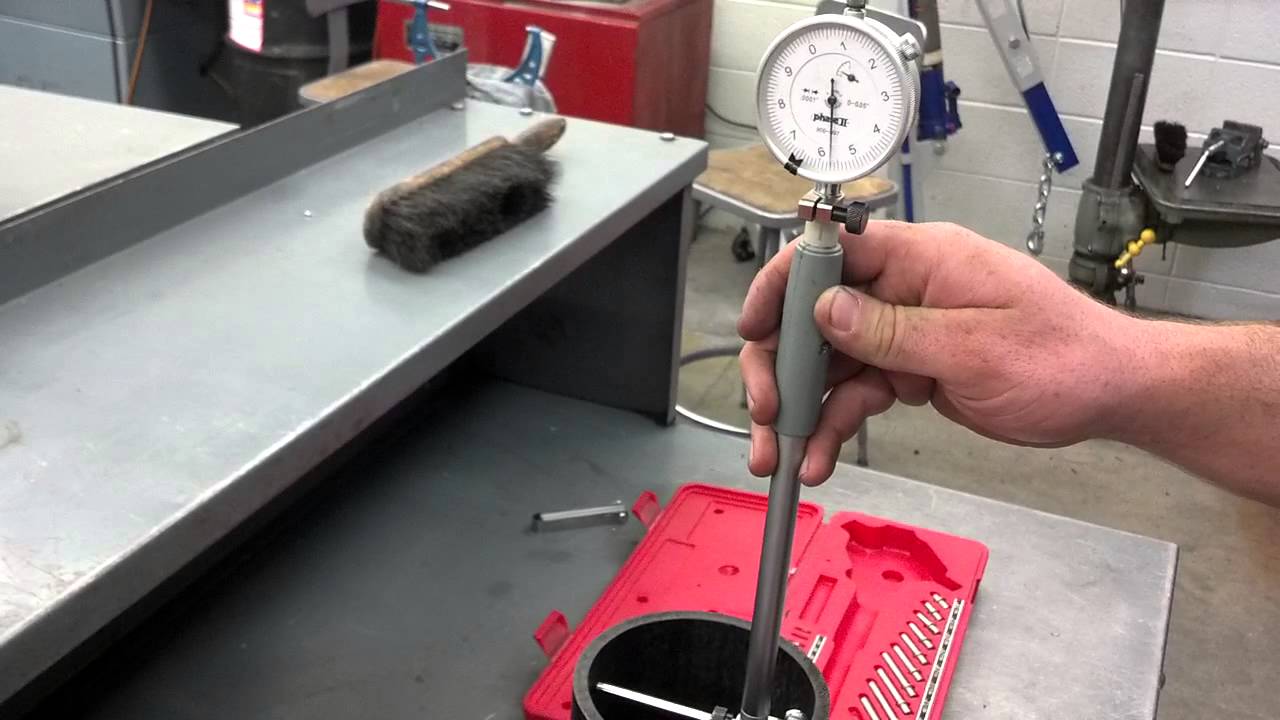
The 1 Inch block always seems to go missing.
[1] https://en.wikipedia.org/wiki/Coordinate-measuring_machine