Live data from Hacker News

Red-light camera grace period goes from 0.1 to 0.3 seconds, Chicago to lose $17M

arstechnica.com

31–40 of 79 posts

Re: Red-light camera grace period goes from 0.1 to 0.3 seconds, Chicago to lose $17M

#31
post #25

A big plus of automating tickets is that it's no longer biased. You're not more likely to get a ticket in a poorer, more high crime neighborhood, just because there happen to be more police there. This way, rich white people in the Loop are just as likely to get tickets as poor black people in Woodlawn. To me this democratization seems like a big plus.

I don't feel like this is true - the rich people can hire the lawyers to get them right back out of the ticket. Secondly, the cost of the ticket creates different amounts of deterrence, as when you're rich enough with no social shame (cop car with lights), you're probably going to run red lights.

See: cars parked brazenly illegally are rarely beaters.

These types of "democratizations" usually leave the poor even worse off, where they have no extra-legal wiggle room (chat with the cop) and no intra-legal resources.

See: Modern credit cards, mobile phone billing, etc.
Re: Red-light camera grace period goes from 0.1 to 0.3 seconds, Chicago to lose $17M

#32
post #16

The moral hazard that comes from cities using fines for offenses to generate revenue is awful and despicable, and it causes all sorts of injustices, big and small. Red light cameras are a part of this, and they're awful.

How is it an injustice to make people pay when they make our roads unsafe?

People drive reckless, ignore speed limits, race over intersections in the last possible moment, ...

... and then it's an injustice when someone fines them?

Re: Red-light camera grace period goes from 0.1 to 0.3 seconds, Chicago to lose $17M

#33
post #25

A big plus of automating tickets is that it's no longer biased. You're not more likely to get a ticket in a poorer, more high crime neighborhood, just because there happen to be more police there. This way, rich white people in the Loop are just as likely to get tickets as poor black people in Woodlawn. To me this democratization seems like a big plus.

Except the companies are for profit. The red light cameras increase rear ending accidents:

https://arstechnica.com/tech-policy/2014/12/major-chicago-st...

..because most people don't want to intentionally run red lights.

Furthermore, most cities run these as civil violations, but if you take them to court, the courts run them under criminal procedures. IANAL, but there was an excellent post someone shared on HN a few weeks back where a law professor fought one of these tickets (I can't seem to find it right now). He wasn't driving, but felt the burden of proof shouldn't reside with him, but the state.

He lost his case, had to appeal, won that case and was never given any of the bond he issued to appeal.

These tickets don't add points to your license in most states, their safety improvements are questionable, and they're pretty much a money making racket for cites and the companies that make/run the cameras.

Re: Red-light camera grace period goes from 0.1 to 0.3 seconds, Chicago to lose $17M

#34
post #28
post #16

The moral hazard that comes from cities using fines for offenses to generate revenue is awful and despicable, and it causes all sorts of injustices, big and small. Red light cameras are a part of this, and they're awful.

I agree. I've only ever received one red light violation, and that was because I intentionally rolled through a red light at low speed on a three-way intersection making a right turn. It was early Sunday morning in clear conditions, with clear visibility in all directions for about a quarter mile, not a car in sight. My trusty crapmobile had been stalling while resting at complete stops, and the destination was my me…

If your car can't stop safely at an intersection, you should have had it towed in the first place, instead of endangering everyone else on the road.

The way you tell this story, those $100 were absolutely justified.

Re: Red-light camera grace period goes from 0.1 to 0.3 seconds, Chicago to lose $17M

#35

Earlier quoted context omitted.

There needs to be countdown timers on all traffic lights.

If you can see the pedestrian crossing light, they usually have countdowns to yellow at least. I use these a lot to estimate the staleness of a green light. Many traffic lights in China have countdown timers.

I've attempted this, but if the car which triggered the light change clears the intersection in a particular time (say, with a right turn), the countdown completes only to go back to a "walk" signal.

Makes for some confusing signaling; but it's better than a red light for an empty crosswalk and cross street..

Re: Red-light camera grace period goes from 0.1 to 0.3 seconds, Chicago to lose $17M

#36
post #25

A big plus of automating tickets is that it's no longer biased. You're not more likely to get a ticket in a poorer, more high crime neighborhood, just because there happen to be more police there. This way, rich white people in the Loop are just as likely to get tickets as poor black people in Woodlawn. To me this democratization seems like a big plus.

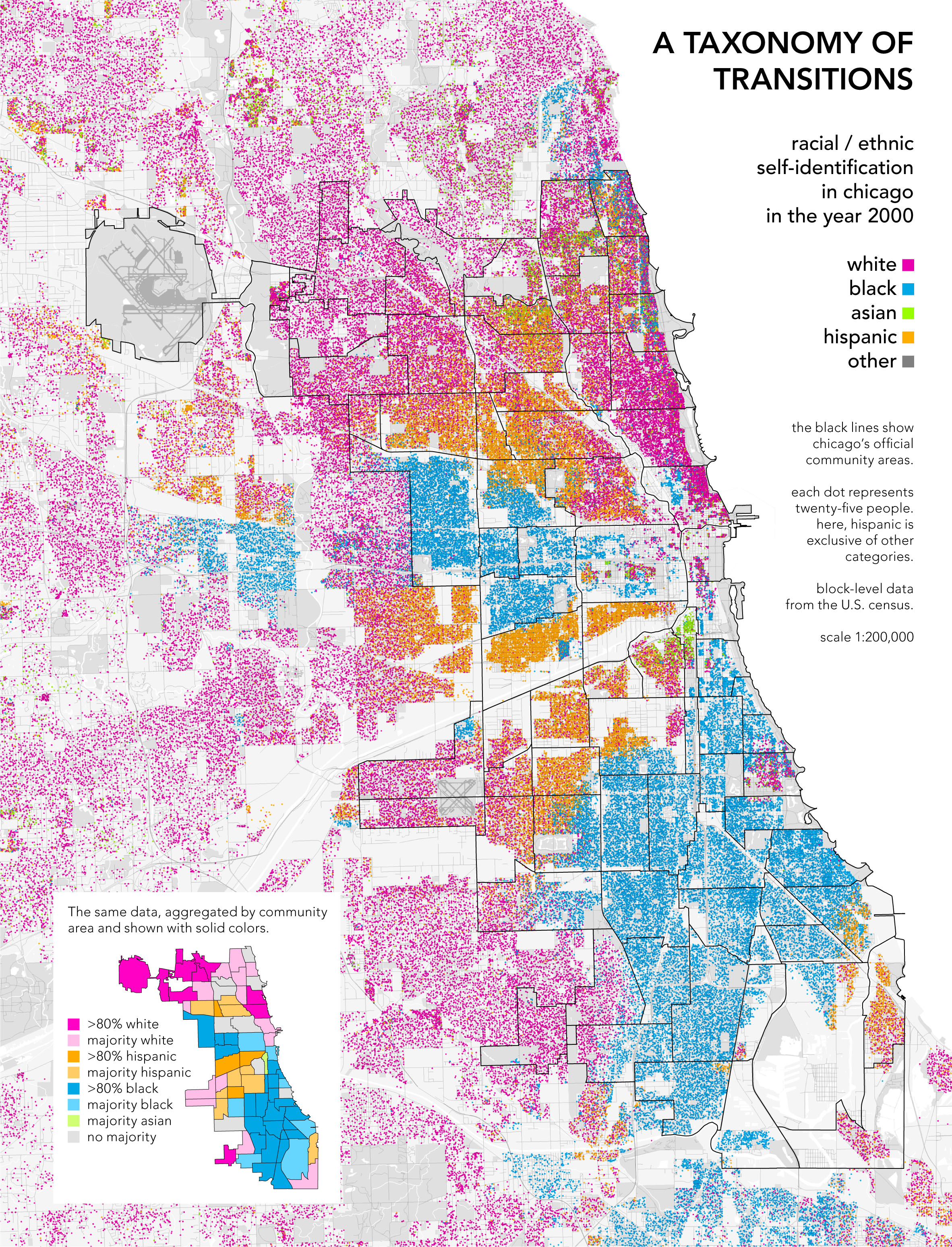
The red light cameras are not distributed equally. You'll find more of them in minority neighborhoods.

Look at what redlining hath wrought:

http://www.radicalcartography.net/chicagodots_race_big.jpg

http://www.photoenforced.com/chicago.html#.WNKlsxLyufc

Re: Red-light camera grace period goes from 0.1 to 0.3 seconds, Chicago to lose $17M

#37
post #16

The moral hazard that comes from cities using fines for offenses to generate revenue is awful and despicable, and it causes all sorts of injustices, big and small. Red light cameras are a part of this, and they're awful.

That goes to the more general problem of fines, cities and people.

It is terrible that peoples' mistakes are used to fund a city. They really shouldn't. Furthermore anything that could reduce the fine aspect, say an advanced parking system that auto-charges you and warns you via text when you're close to your daily time limit, wouldn't make any money and would never get approved.

I use to be a sys admin for a debt collection firm; a company that was based entirely of making money from peoples' mistakes. I set up terminals for employees, many who were on welfare, to collect bad checks and credit card debt from other people who were also on welfare.

These types of revenue generators, whether they're run by a state or a private interest, rarely ever benefit society.

Re: Red-light camera grace period goes from 0.1 to 0.3 seconds, Chicago to lose $17M

#38
post #10

Earlier quoted context omitted.

I'm curious to hear why you think it's unconstitutional. It's unobtrusive surveillance in a public setting, so there's no expectation of privacy. It's punishing people for breaking a public-safety law. In most cases they even have signs alerting you to the presence of an enforcement camera. Now I can definitely see how automated enforcement ripe for abuse when there are revenues to be had, and it's concerning when op…

https://en.wikipedia.org/wiki/Confrontation_Clause

I don't get that argument. How is a red light camera different than surveillance footage that show a murder? It's not a witness, it's evidence.

Re: Red-light camera grace period goes from 0.1 to 0.3 seconds, Chicago to lose $17M

#39
post #28

Earlier quoted context omitted.

I agree. I've only ever received one red light violation, and that was because I intentionally rolled through a red light at low speed on a three-way intersection making a right turn. It was early Sunday morning in clear conditions, with clear visibility in all directions for about a quarter mile, not a car in sight. My trusty crapmobile had been stalling while resting at complete stops, and the destination was my me…

If your car can't stop safely at an intersection, you should have had it towed in the first place, instead of endangering everyone else on the road. The way you tell this story, those $100 were absolutely justified.

He didn't say the car couldn't stop - there was no mention of any problems with the brakes. He chose to roll through the intersection after evaluating the safety of doing so. Please don't put words in others' mouths.

Re: Red-light camera grace period goes from 0.1 to 0.3 seconds, Chicago to lose $17M

#40
post #16

The moral hazard that comes from cities using fines for offenses to generate revenue is awful and despicable, and it causes all sorts of injustices, big and small. Red light cameras are a part of this, and they're awful.

How is it an injustice to make people pay when they make our roads unsafe? People drive reckless, ignore speed limits, race over intersections in the last possible moment, ... ... and then it's an injustice when someone fines them?

Chicago seems to have also reduced the amber phase to an absolute minimum also in order to increase the likelihood of someone hitting a red. This is anecdotal, but go there and see. And this seems to contribute to some of the very scary driving behavior you see in Chicago so it's likely that in fact this is causing accidents more than punishing bad drivers.
Post reply on HN