Live data from Hacker News

PDP-10/its: Incompatible Timesharing System

github.com

31–40 of 54 posts

Re: PDP-10/its: Incompatible Timesharing System

#31
post #9

ITS was an early operating system that could handle multiple users logged onto the same machine at the same time -- think of how multiple people can SSH into the same Linux machine. It came out of MIT's AI lab which is where a lot of early hackers were doing their thing. Here's an excerpt from Stephen Levy's book Hackers: heroes of the computer revolution. It is a great read and I highly recommend it: "It underlined…

Around 1982, I had an account on MIT-MC, an ITS computer. I was not an MIT student -- rather, a curious teenage hacker from DC. I'd found a text file with 'interesting modem numbers,' and one of those was to a DoD TAC (basically, a dial-in). I recall the text file had a note saying how to connect (via NCP, not TCP/IP) to MIT-MC. I connected, and remember playing around (as we did) at the login prompt. I probably trie…

MIT-AI was always ITS. Must have been OZ.
Re: PDP-10/its: Incompatible Timesharing System

#34
post #24

Earlier quoted context omitted.

> the TECO editor (a crazy beast). Makes ed look almost benign... https://en.wikipedia.org/wiki/TECO_%28text_editor%29

Those example programs... holy cow. After that, I don't know if I'll ever feel bad about my code being unreadable.

It looks like a language that someone used to the APL family would have no problems with.

Re: PDP-10/its: Incompatible Timesharing System

#35
post #24

Earlier quoted context omitted.

> the TECO editor (a crazy beast). Makes ed look almost benign... https://en.wikipedia.org/wiki/TECO_%28text_editor%29

Those example programs... holy cow. After that, I don't know if I'll ever feel bad about my code being unreadable.

Actually it's not as bad as it looks at first glance. At least on OpenVMS, you normally use it like sed, and its not much worse than writing some regex, normally.

Granted, writing a text editor in regex sounds awful.

Re: PDP-10/its: Incompatible Timesharing System

#37
post #4

For those wondering what ITS is. It's an operating system that was developed at MIT for the PDP-6 and later PDP-10 starting in the mid 60s. The last ITS system was shut down in 1990. A very cool thing about ITS is that DDT, the debugger, is the user interface to the OS. You can load files, examine and change memory of your current job (and also DDT itself!), and of course also start programs. ITS is also where EMACS…

> the TECO editor (a crazy beast). Makes ed look almost benign... https://en.wikipedia.org/wiki/TECO_%28text_editor%29

I remember running across a Turing machine emulator implemented in TECO in Minsky's home directory that I'd REALLY love to get ahold of.

https://news.ycombinator.com/item?id=10161159

hga 515 days ago | parent | favorite | on: The most obsolete infrastructure money could buy –...

Ask and yea shall receive:

    MSG: APL    1     
    DISTRIB:  *BBOARD
    EXPIRES: 03/17/81 23:08:54
    MINSKY@MIT-MC 03/11/81 23:08:54 Re: too-short programs

    APL is compact, I suppose.  So is TECO.  When I wrote the following
    Universal Turing Machine, which works, I actually understood it.

    [ I've interpolated the non-printing characters as displayed by (Gnu) EMACS, 
    escape is ^], ^^ is one character, as is \356: ]

    i1Aul qq+^^0:iqm^[29iiq\356y0L1 00L1 11L2 A1L1
    y0L1 0yR2 1AR2 AyR6 yyL3 00L0 1AL3 A1L4 yyL4 0yR5 11L7 A1L4
    yyR5 0yL3 1AR5 A1R5 yyR6 0AL3 1AR6 A1R6 y0R7 0yR6 11R7 A0R2
    ^[j
    jjxblx1lx2lx3lx4lx5lx6lx7hk
    iyyAyyAyy^[32ji110101110000010011011^[ 1uq
I do not advise attempting to understand this code, which is almost as bad as that for the Universal Turing machine.

ADDED: or http://ancell-ent.com/share/minsky-TECO-turing-machine.txt

Please ack receipt of this and/or send me email (in my HN info); for others, note this is ITS TECO, which I was told was by far the most powerful version of it (fortunately, by the time I showed up learning it was no longer really necessary).

Re: PDP-10/its: Incompatible Timesharing System

#38
post #9

ITS was an early operating system that could handle multiple users logged onto the same machine at the same time -- think of how multiple people can SSH into the same Linux machine. It came out of MIT's AI lab which is where a lot of early hackers were doing their thing. Here's an excerpt from Stephen Levy's book Hackers: heroes of the computer revolution. It is a great read and I highly recommend it: "It underlined…

Around 1982, I had an account on MIT-MC, an ITS computer. I was not an MIT student -- rather, a curious teenage hacker from DC. I'd found a text file with 'interesting modem numbers,' and one of those was to a DoD TAC (basically, a dial-in). I recall the text file had a note saying how to connect (via NCP, not TCP/IP) to MIT-MC. I connected, and remember playing around (as we did) at the login prompt. I probably trie…

NBS TIP: 301-948-3850

I dialed it enough times that I still remember it. Much thanks to Bruce of "Bruce's NorthStar" BBS in Virginia for that phone number. [1]

MIT-MC: @L 236

MIT-AI: @L 134

MIT-DM: @L 70

MIT-ML: @L 198

Anyone remember how to do a TIP-to-TIP link, as documented on page 5-4 of the "Users Guide to the Terminal IMP" [2], by connecting an input and output socket of one TIP to an input and output socket of another TIP, through an unsuspecting host, so you could chat back and forth directly between two TIP dial-ups, without actually logging into the host?

It went something like @HOST #, @SEND TO SOCKET #, @RECEIVE FROM SOCKET #, @PROTOCOL BOTH, making sure the sockets were different parity so as not to violate the Anita Bryant clause with homosocketuality. [3]

You could also add the octal device port number of any other TIP user on your same TIP after the @ and before the command, to execute those commands on their session. (See page 5-7, "Setting Another Terminal's Parameters".) BBN wrote such great documentation and would mail copies of it for free to anyone who asked (that's how I got mine), you couldn't even call it security by obscurity!

The "ARPANET" episode of "The Americans" really missed the boat about how easy it was to break into the ARPANET. I didn't even have to kill anyone! [3] [4] Makes me wonder about the part about squeezing your anus... [5]

What was your uname?

-A2DEH

[1] https://games.slashdot.org/comments.pl?sid=242967&cid=196819...

[2] https://archive.org/details/bitsavers_bbntipADA0eTerminalIMP...

[3] https://news.ycombinator.com/item?id=12422813

[4] https://en.wikipedia.org/wiki/Arpanet_(The_Americans)

[5] https://www.youtube.com/watch?v=hVth6T3gMa0

[6] https://www.youtube.com/watch?v=s3OMSMq9zPA

Re: PDP-10/its: Incompatible Timesharing System

#39
post #31

Earlier quoted context omitted.

Around 1982, I had an account on MIT-MC, an ITS computer. I was not an MIT student -- rather, a curious teenage hacker from DC. I'd found a text file with 'interesting modem numbers,' and one of those was to a DoD TAC (basically, a dial-in). I recall the text file had a note saying how to connect (via NCP, not TCP/IP) to MIT-MC. I connected, and remember playing around (as we did) at the login prompt. I probably trie…

MIT-AI was always ITS. Must have been OZ.

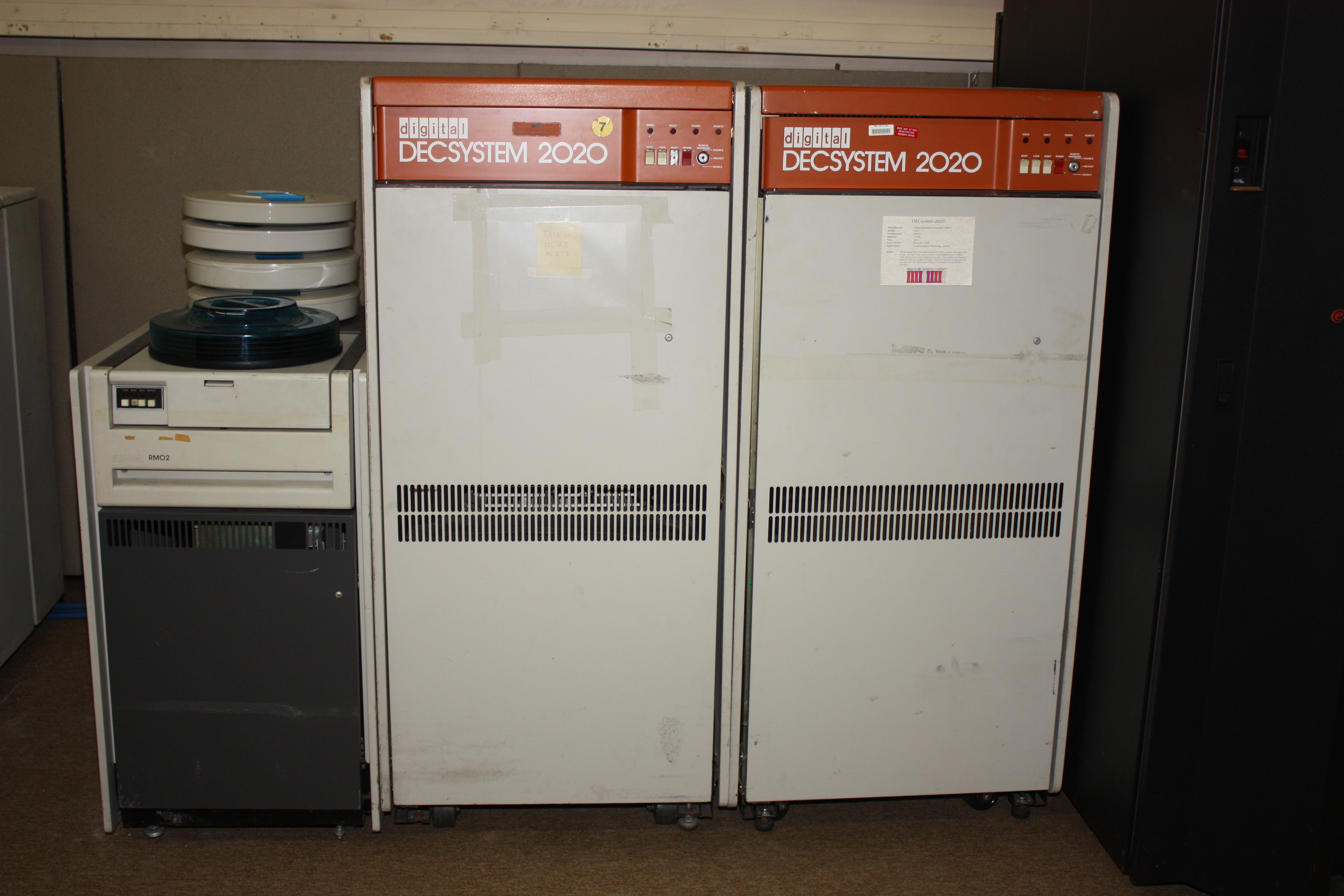
OZ was always TOPS-20. Or Twenex, as they called it.

Actually the new KS10 AI may have been running TOPS-20 briefly before the ITS port was done.

Re: PDP-10/its: Incompatible Timesharing System

#40

There are still a few (emulated) ITS systems running online. In particular, there's UP, which you can SUPDUP into from your home machine, and even get an account on, if you ask nicely. Also, if you're interested in fiddling with ITS, and weren't around in The Good Old Days (as I was not), Björn Victor's ITS wiki ( http://its.victor.se/wiki/ ) is an invaluable resource.

SV is back online.

http://its.svensson.org/

Post reply on HN