Live data from Hacker News

Why aren’t we talking more about airborne transmission?

theatlantic.com

271–280 of 292 posts

Re: Why aren’t we talking more about airborne transmission?

#271
post #163

I am still shocked: months after research has shown that SARS-CoV-2 is airborne stable in aerosol form for over 3 hours, we still aren’t telling the public that room air purifiers are a ‘good thing’ (for making indoor air like outdoor air - in regards to virion density per cubic air volume) The filter technology is essentially the same as in the N95, orders of magnitude more effective than cloth masks. Put these indo…

Opening the windows more often may also help a lot. This is a very simple method to reduce risk of spreading. It is free and especially useful for places like schools. But I do not think I read about this in mainstream media. It's all about masks and social distancing.

I've been saying this from the start - should be mandated in public transport.

Re: Why aren’t we talking more about airborne transmission?

#272

After this pandemic, doctors and scientists are going to have to come up with more media-friendly terms from now on. The problem is that "airborne droplets" and "airborne" sound too similar and it's very hard for regular people to understand what that means. "Airborne droplets" means that viruses need saliva to transmit between people. "Airborne" means that the virus only needs dust particles to transmit to other peo…

All of the media messaging around COVID has been a complete disaster from the moment it became apparent it was spreading in January in China. One of the main takeaways from this pandemic needs to be that doctors and experts need to learn how to say the words: "I don't know, but we are working hard to find out." Way too many people have made statements that later turned out to be false. The lack of any consistency and…

The messaging regarding masks was "They don't keep you from getting it, and everyone should be inside right now to avoid spreading it if they have it, so avoid buying a mask to make sure there are enough for people who need them." The messaging regarding masks now is, "They don't keep you from getting it, but they do stop you from spreading it, so since there are enough masks now for everyone, you should wear one." It doesn't seem like a flip-flop so much as responding to the current state of the world.

I think the public's willingness to trust the experts has been undermined more by a large portion of the US government deliberately trying to undermine public trust in the experts.

Re: Why aren’t we talking more about airborne transmission?

#273
post #68

Earlier quoted context omitted.

> we would have to implement extremely strict lockdowns... if we assume that the goal is not to flatten the curve but to completely stop the virus in its tracks. Most people and countries don't have this goal. Edit: To those downvoting, I'll just say that my statement is factual, so argue the facts. Long-term, we want a vaccine, yes. In the meantime, most people and countries are simply not willing to do what it take…

The whole "flatten the curve" messaging always seemed like we were barreling toward a misunderstanding, and I think this comment and the disagreeing downvotes are a perfect example of that. Back when US public health messaging really went all-in on that phrase it was like late February when we thought the transmission level was minimal. "Flattening" the curve at a minimal level would have been fine, and if we got the…

Flattening the curve was about preventing the hospital system from being overwhelmed. It was about solving the crisis from the point of view of civic administrators and politicians. So, keeping people safe was a secondary goal: the primary purpose was to keep the system from failing outright.

IMHO, consequent to the misinterpretation of this, people assumed that if the curve was flattening, the problem was being solved, since they thought that the curve was about their safety, rather than about stretching the deaths out so that queues didn't form.

Re: Why aren’t we talking more about airborne transmission?

#275
post #6
post #4

My company took steps to address this months ago. The re-circulation rate was set to zero so all air is fresh make up air from outside. This has significantly increased our cooling bill since it's summer, but it was something that we felt important even though there hasn't been much science to back it up. We also have a UV system hooked up to our system, but this has been installed for the last 2-3 years now.

I wonder if air-to-air heat exchangers could address that cost issue.

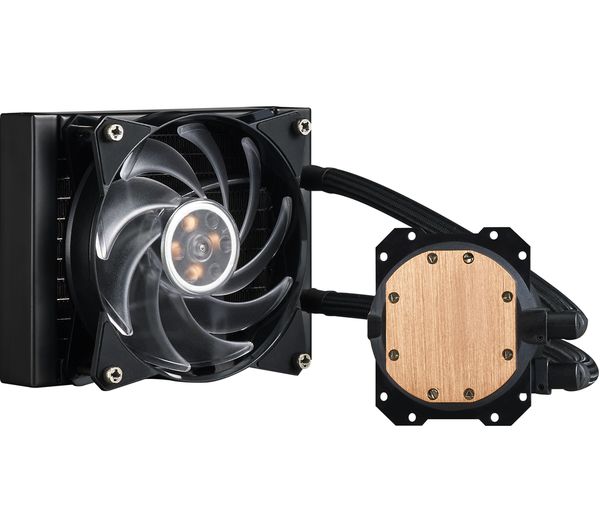
I've been thinking about getting two CPU cooling fans that have the heat sink at a distance from the fan and use a heat pipe to move the heat over to the fan and connecting them back-to-back so one fan blows outward and one blows inward. Something like two of these:

http://i.ebayimg.com/images/i/151452729196-0-1/s-l1000.jpg https://prod.scorptec.com.au/10/299/65429/121859_large.jpg https://brain-images-ssl.cdn.dixons.com/7/2/10178327/l_10178...

That way outgoing air would warm (or cool) the incoming air. If a Hepa filter could be added to the incoming air fan it would make an ideal unit to put in the window at fairly low cost. Since they are CPU coolers they could probably be made speed adjustable also.

Re: Why aren’t we talking more about airborne transmission?

#276
post #200

Earlier quoted context omitted.

It’s because it seems to be mostly ballistic droplets, except for a (small?) percentage were it is not. This is also stated in text for measles (that spreads throughout a house) which Corona seems to not do.

From the article, that's exactly what's being questioned: "There is a big dispute in the scientific community, however, about both the size and the behavior of these particles, and the resolution of that question would change many recommendations about staying safe. Many scientists believe that the virus is emitted from our mouths also in much smaller particles, which are infectious but also tiny enough that they can…

Yes but, and this is the important part : not as potent as for instance measles (which spreads and infects 90%)

Or we’d see far more indoor cases. And we do see in events with lots of expiration, where there is singing for example, very potent transmission.

Re: Why aren’t we talking more about airborne transmission?

#277
post #228

Earlier quoted context omitted.

"However, it seems COVID has an above average ability to survive in extremely fine droplets - think mist-sized particles that CAN float in the air for an extended period of time (given the right circumstances)." This is one of those "facts" that is often repeated, but which has little actual evidence if you bother to look for it. The WHO has been consistent that aerosol transmission of the virus is a theory with litt…

> although aerosolization in medical settings where aerosol generating procedures are used is also another possible mode of transmission I'm married to a physician and have been primarily following this through the eyes of her and her peers. In an acute care setting, aerosolization is a huge concern. It's a big factor between being able to get away with a surgical mask/face shield and requiring significant PPE. In da…

Sure, absolutely. If you're in the business of intubating people on a daily basis, then it's a real concern.

Re: Why aren’t we talking more about airborne transmission?

#278

Earlier quoted context omitted.

It is all about virion particles per cubic meter (similar to how they classify class ## cleanrooms for the semiconductor, but in that case they talk about dust particles). Outdoor air works through dilution (‘the solution to pollution is dilution’ is the phrase often used). Indoor air being purified is often much cleaner than outdoor air (assuming CO2 levels are not of any concern), this is especially true during wil…

> this is especially true during wildfire season Curious what if any effect that would have over here in Iowa. I would guess negligible, but we do get high-level haze occasionally when there are wildfires in Canada. > If you purchase a PM2.5 sensor I have been curious about these in the past. Do you have any recommendations? I couldn't find enough info to feel comfortable that whatever I bought might actually tell me…

This is a good quality particle counter for a home or school:

https://www.amazon.com/Dylos-Laser-Particle-Counter-DC1100/d...

It can be connected to a computer to record particle counts long term using the included Windows software. Useful for seeing that your Hepa air purifier is actually working. There are many brands of hand held instruments for use with HVAC systems. Their cost ranges from $100 on eBay up to several thousand dollars for high end instruments that can measure many particles sizes. They generally are not meant to be left on to take measurements over days though. There are also professional weather instruments that use a laser to count particles in the air outdoors.

Re: Why aren’t we talking more about airborne transmission?

#280

Earlier quoted context omitted.

> we still aren’t telling the public that room air purifiers are a ‘good thing’ (for making indoor air like outdoor air - in regards to virion density per cubic air volume) > The filter technology is essentially the same as in the N95 So, due to the very small size of this virus, in microns. Most air filters on the market are still not good enough. HEPA isn't good enough, is it better than nothing? Yes but not much.…

The virions initially travel in large droplets of water that eventually turn into small micron-sized water droplets, these happen to overlap with the high filter efficiency regime. For aerosol filtration, cloth masks are not very effective, much less than 40% has been measured.

You can also get air purifiers that run the air past a UVC lamp to kill viruses:

https://www.amazon.com/gp/product/B01JKDAN2M

Post reply on HN