Live data from Hacker News

High-speed train collision in Spain kills at least 39

bbc.com

261–270 of 293 posts

Re: High-speed train collision in Spain kills at least 39

#261

Earlier quoted context omitted.

I have observed that it is a recurring pattern. I am most aware of the behind the scenes in public education, but I believe it is across the board. Massive efforts are done to implement reforms to conform to EU standards, believing that that’s how the “superior” EU members do it (Germany, NL, Nordics…). But then I go there and I see that their system has nothing to do with the standards and they are not doing much to…

> Massive efforts are done to implement reforms to conform to EU standards, believing that that’s how the “superior” EU members do it (Germany, NL, Nordics…). I can't speak for Germany or the Nordics, but here in the Netherlands the government is doing just about anything in their power to keep foreign competition from our rail network. The only lines serviced by foreign operators are the ones that would cost the nat…

> any Dutch rail project crossing into the German border

Like this?

https://www.openstreetmap.org/#map=19/51.901456/6.137620

https://www.bing.com/maps?cp=51.901346%7E6.137722&lvl=19.8&s...

https://www.google.com/maps/@51.9016843,6.1374348,210m/data=...

Re: High-speed train collision in Spain kills at least 39

#262

Earlier quoted context omitted.

Wouldn't the gap simply be the result of loss of tension after the weld broke? Metal expands in the heat (about 1cm per degree C per km). Weather shows it got down to around 0C in Córdoba last night while the summer record is around 47C so one would expect a fairly large gap once tension is released.

We will know once the report is public. In Poland, they explicitly left C14 to make sure everybody understands who did it.

C4?

Re: High-speed train collision in Spain kills at least 39

#263
post #226

If you’re interested in this kind of thing, look up plainly difficult on youtube. He has more videos on train crashes than I’ve seen, and I’m embarrassed how many I’ve seen. Here’s one to get you started: https://youtu.be/VV2rIHEp5AM?si=sSBT9s49PqbLTGbt There are a lot of safety lessons embedded in these videos, which is why I like them. I also did a double take when I heard "semaphore"; its history goes back far lon…

In Spanish a traffic light it's called a semaphore too.

In Slavic countries as well. Traffic lights for cars as well as for pedestrians.

Re: High-speed train collision in Spain kills at least 39

#264

Earlier quoted context omitted.

It would be nice to have a couple of routes between a few major cities with nonstop service, but there are are no bypasses around the interstitial cities so those would need to be built first. Groningen -> Amsterdam Maastricht -> Amsterdam Eindhoven -> Amsterdam Nijmegen -> Amsterdam I can only speak for myself, but a trip from Maastricht to Amsterdam is almost 2.5 hours by train for a distance of a smidge over 200km…

There are a few tracks that can go faster than 160km/h ( https://upload.wikimedia.org/wikipedia/commons/b/b1/Baanvaks... ) but also slower ones. The 80km/h tracks especially have a tendency to make a relatively short journey feel like it takes forever, especially if your train journey includes a trip over the 200km/h segment.

"Gut Ding will Weile haben." / "Haste makes waste."

I've got good memories waiting on the platform in Arnhem for my train back into Germany in the early morning, after a night in the coffeeshops there in the nineties.

Observing all the commuters holding on to their coffee to go, and balancing it in their hands, anticipating the jerky start of these things https://en.wikipedia.org/wiki/NS_Mat_%2764 :-)

Looked hilarious. All in sync. Like orchestrated.

Regarding the percieved slowness, and differences on both sides of the border(at the times?).

When doing the same route by car, your motorways felt supersmooth, even with all the strange markings and traffic signs :-)

Crossing back into Germany toward Oberhausen-> Ruhrpott came the Autobahn made of concrete slabs, and gaps between them. Thump, thump, thump, thump, thump!.

Very annoying when still 'under the influence' of that grassy green stuff :-)

Re: High-speed train collision in Spain kills at least 39

#265

Taking the commuter train to and from Dublin, sometimes another train on the other direction passes and it's a bit unnerving. I cannot imagine such a collision between two high speed trains :(

Look for train collision in Greece (1), the only in a developed country. Extensive research has been done, from a simple switch malfunction to plasma scale temperatures.

1. https://en.wikipedia.org/wiki/Tempi_train_crash

Re: High-speed train collision in Spain kills at least 39

#267

Earlier quoted context omitted.

Wouldn't the gap simply be the result of loss of tension after the weld broke? Metal expands in the heat (about 1cm per degree C per km). Weather shows it got down to around 0C in Córdoba last night while the summer record is around 47C so one would expect a fairly large gap once tension is released.

That's not the way stuff like this is built nowadays. Meaning the thermal expansion and shrinkage of rails is considered and accounted for(or should). Thus things like these are integrated: https://en.wikipedia.org/wiki/Breather_switch

As I understand it breather switches are used rarely in high speed rail systems. The ride on Spanish high speed trains is very smooth. At 300km/h (5km per minute) you’d notice going over a breather switch. It’d be like taking Amtrak’s Acela.

The gap looks about 50cm which is maybe 1.5km of contraction from installation tension.

Re: High-speed train collision in Spain kills at least 39

#268

Earlier quoted context omitted.

That's not the way stuff like this is built nowadays. Meaning the thermal expansion and shrinkage of rails is considered and accounted for(or should). Thus things like these are integrated: https://en.wikipedia.org/wiki/Breather_switch

As I understand it breather switches are used rarely in high speed rail systems. The ride on Spanish high speed trains is very smooth. At 300km/h (5km per minute) you’d notice going over a breather switch. It’d be like taking Amtrak’s Acela. The gap looks about 50cm which is maybe 1.5km of contraction from installation tension.

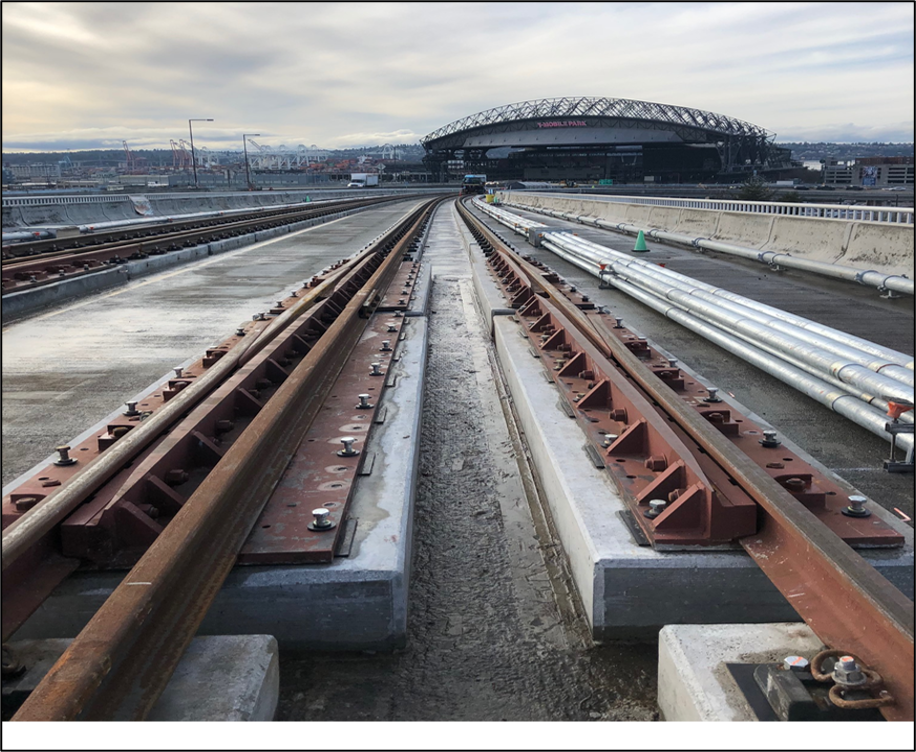
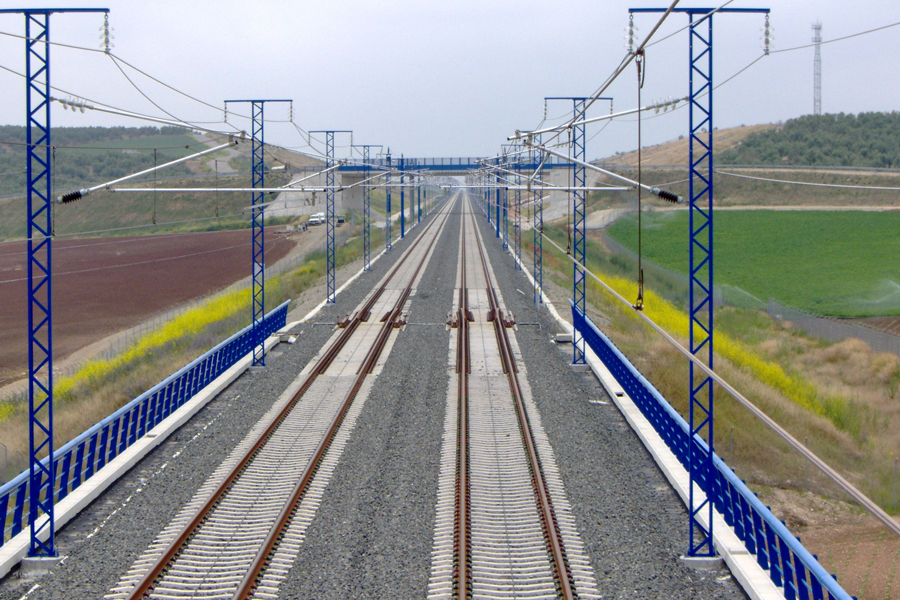
I disagree. Though I've never ridden Acela, I did Intercity Express at 330kph. Since I've been rail fannig in my youth, I still look out for rail-related stuff. Even if it's 'only infrastructure'. Meaning I notice that stuff in pictures in reports about building/opening new HSR track. No matter where. Seems like they are mandatory. You just don't notice them, even when looking out of the window onto the other track, because it's all just a blur. Need to be on an overpass, and looking down onto where they are, for instance, or from the side, during construction or maintenance, watching how the machines operate, and wondering about what they are doing there. Because it's an interruption :-)

Some better pictures:

https://www.eisenbahn.gerhard-obermayr.com/produzenten/vae/s...

https://slabtrackaustria.com/our-technology/red/

https://www.voestalpine.com/railway-systems/en/products/rail...

https://upload.wikimedia.org/wikipedia/commons/7/7d/Oelzetal...

https://upload.wikimedia.org/wikipedia/commons/b/bf/Schienen...

https://cmi-promex.com/wp-content/uploads/2023/06/CurvedRail...

https://cmi-promex.com/wp-content/uploads/2023/06/Sound-Tran...

https://www.hsrail.org/wp-content/uploads/2024/06/HSR_Track_...

Re: High-speed train collision in Spain kills at least 39

#269

Earlier quoted context omitted.

Train crashes like this are _so_ rare. It's not as safe as flying but AFAICT in rich countries it's the same rough order of magnitude in terms of danger level. I don't have data but I would imagine crashes on these high speed lines (which always seem to be run at a higher level of professionalism than the general networks) are rarest of all. I don't think it's a good use of mental energy to plan for a crash like this…

> I don't have data Most railway deaths in the EU are due to unauthorized people on the tracks or due to crossings. The actual number of passengers deaths has been really low in the past years. https://ec.europa.eu/eurostat/statistics-explained/index.php...

Aha yeah I did not consider the danger to _passengers_ specifically.

So yeah if you follow the rules you are REALLY safe with rail.

Not to mention the stats about HSR specifically that a few others brought up.

Re: High-speed train collision in Spain kills at least 39

#270
post #235

Earlier quoted context omitted.

France, for example, has been trying to delay allowing Renfe (Spanish operator) to operate through the country as much as possible, while their public operator SNCF (branded as Ouigo) has been able to operate here since 2021.

Interestingly SNCF is expected to subsidise less profitable local services with funds from the profitable high speed routes. Open competition kind of spoils this model. It's not really sustainable.

It's not. Regulation (EC) No 1370/2007[^1] states in the annex, related to compensation in cases where a public operator operates subsidised public services and commercial, for-profit activities, that:

>In order to increase transparency and avoid cross-subsidies, where a public service operator not only operates compensated services subject to public transport service obligations, but also engages in other activities, the accounts of the said public services must be separated so as to meet at least the following conditions: [...]

Another topic is: should France be allowed to keep the TGV monopoly in their country because they need it to finance the rest of their network, while they are allowed to operate abroad (like in Spain), taking away business from Renfe through the free market competition they try to impede on their country anyway?

[^1]: https://eur-lex.europa.eu/legal-content/EN/TXT/?uri=CELEX:32...

Post reply on HN