Earlier quoted context omitted.
It also doesn't match what I experienced in 2015, though having a foreign driver's license may have skipped some of the requirements (though they never actually asked for for it when getting my provisional license, they might have just assumed?), the actual testing felt like a joke compared to the equivalent in the UK.
I've had a CA license for going on three decades and they largely match what I had to do. And, yes, paperwork was checked as far as driver's ed. and whatnot. Regardless. The current requirements are all spelled out fairly clearly: https://www.dmv.ca.gov/portal/driver-licenses-identification...
How Britain built some of the world’s safest roads
261–269 of 269 posts
Re: How Britain built some of the world’s safest roads
#262Earlier quoted context omitted.
You're not supposed to drive 60mph on those tiny roads. Why are they 60mph? Well, the symbol they display doesn't say 60mph, it's basically just a slash symbol - it should be read "National Limit Applies" or perhaps "Derestricted" and it so happens that the law in the UK says that if there's no other rule in place that limit is 60mph and on these tiny roads nobody has put in place a more specific limit so that's the…
It's probably worth noting you can be charged with a driving offence if you're driving 60mph down a country road even if it's technically national speed limit. Just because legally you can drive at 60 doesn't mean you're legally allowed to drive recklessly. National speed limit is basically, "you're permitted to drive as fast as you like so long as you do so in a safe manner".
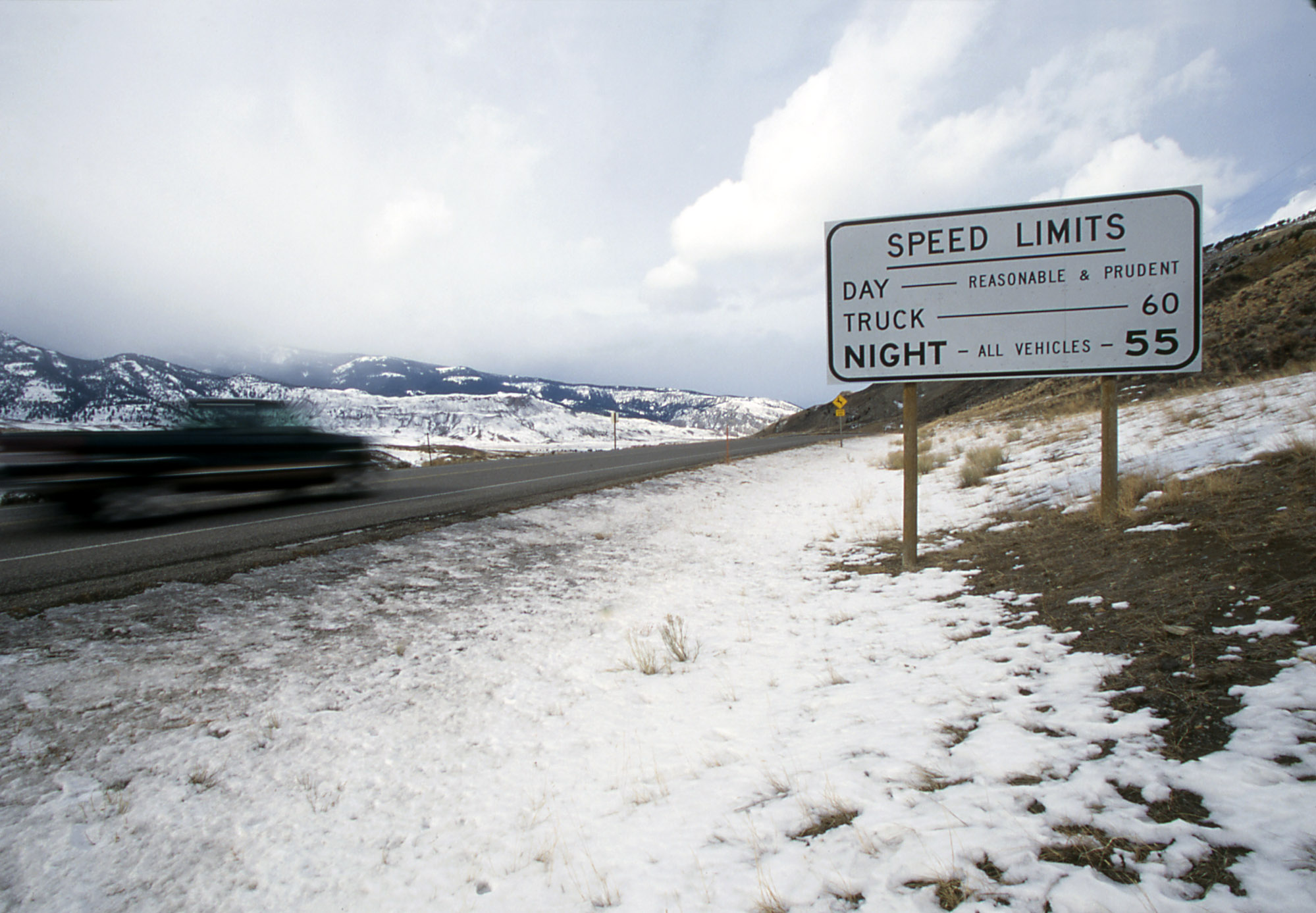
https://www.nps.gov/features/yell/slidefile/gatewaycommuniti...
Re: How Britain built some of the world’s safest roads
#263Earlier quoted context omitted.
By death per km France, Italy, Slovenia and Croatia are more dangerous then Germany or Switzerland. German Autobahn is crazy and non-pleasant if you drive slow, but in Switzerland everyone follows the speed limit so it is quite relaxing. Also, you seem to struggle with mountainous roads, which depends on the topography and not the country.
>German Autobahn is crazy and non-pleasant if you drive slow, but in Switzerland everyone follows the speed limit so it is quite relaxing The German situation seems vastly superior on the basis that whoever is the "odd one out" or violating the norms should be the one having a bad time. Basically incentivizing homogenous and/or predictable traffic flow, which is safer.
Re: How Britain built some of the world’s safest roads
#264Earlier quoted context omitted.
A camera is no substitute for actual visibility, at best it’s a mediocre workaround to the problem. There is no evidence at all that I’ve seen that there are fewer pedestrian collisions in modern large vehicles - I would be interested if you have any such data. Regardless, all of these “extreme measures” could be applied to a smaller car (or even just one with a smaller wall at the front) for the best of both worlds.…
I mean, the risk was already socially acceptable, and it has further been reduced as far as practicable. >A camera is no substitute for actual visibility I dont even know what point you are trying to make here. Seeing things a different way is not seeing things? Make it make sense.
What society considers acceptable changes over time. Just because it was socially acceptable, doesn’t mean we continue to accept it forever. Don’t forget slavery, the idea of women as chattel, kings as having a god given right to rule etc etc were all “socially accepted” once upon a time. I doubt you would advocate for a return to medieval times on the basis that it was “socially accepted”.
> it has further been reduced as far as practicable.
This is obviously untrue. Car safety for drivers and pedestrians has continued to improve year-over-year (except in the U.S., where pedestrian safety has got worse). There’s no reason to believe the trend toward increased safety is suddenly going to halt now.
> I dont even know what point you are trying to make here. Seeing things a different way is not seeing things? Make it make sense.
Obviously, last I checked I spent my time looking out of the windscreen of my car when driving, not staring at a screen in the centre console. Being able to see everything by looking an out of a single window is always going to be better than having to swap between looking out the window, and looking down at a screen.
Re: How Britain built some of the world’s safest roads
#265Earlier quoted context omitted.
Then you get the two wheeled side of the fence. You can do a one day compulsory basic training course and convince a trainer you know what you're doing, then drive on the road with everyone on a 125cc motorcycle (or 50cc at 16 years old), and then repeat the CBT every two years to keep on the road. It's only if you go for the full license that you need to study for theory as a prerequisite, so long as you keep out of…
I did my CBT a few months ago after driving for 30 years. It was harder than I assumed it would be. But what scared me the most was the 18 year old who did his at the same time, never driven on the road before. The phrase organ donor seemed appropriate, as mcarbre as it sounds.
Re: How Britain built some of the world’s safest roads
#266Earlier quoted context omitted.
The UK does have default rules, for example if there are houses directly facing onto the street (no front garden or similar maybe hard to imagine in most of the US but common in some UK towns) then the limits are low, if there are no houses at all the default limits are much higher. You are taught some rules of thumb for this when learning to drive. The posted limit signs are in addition to these rules, though they'r…
I did a speed awareness course as I got caught speeding and was told if there are lamp posts the speed limit is 30mph unless stated otherwise.
Re: How Britain built some of the world’s safest roads
#267Earlier quoted context omitted.
Begs the question why the symbol for a limit is in the (literal) shape of a target.
Circular signs with a red outline are prohibition signs (ie you _must_ not do this). Triangular signs with a red outline are warning signs.
Re: How Britain built some of the world’s safest roads
#268Our driving test standards are also high, having spoken with US colleagues, much higher than state-side (although I imagine that varies from state to state). The theory test you must pass before taking your practical also now includes a hazard perception test - you are shown multiple videos and must click when you first perceive a hazard - the earlier you click after the hazard presents the higher your score - but if…
I live in the US in a town with particularly bad drivers. I know I know, everyone's area has the worst drivers. But I've lived in dozen cities across the US so have some frame of reference. The sad thing is, it's a small town with what -should- be little traffic. It's one of those places there will only be 2 other cars in sight, but they're driving side by side and 10 under the speed limit. And for some reason, every…
Re: How Britain built some of the world’s safest roads
#269Earlier quoted context omitted.
That's true, on the other hand it made young women safer. This happened in Norway when the skid pan was made a compulsory part of the course a couple of decades ago and the insurance companies soon noticed an increase in reckless driving among young men but the opposite in young women.
> an increase in reckless driving among young men but the opposite in young women This is fascinating. Does anyone know the root cause here?