Earlier quoted context omitted.
If you're interested in fixing the problem the article discusses, this is pretty much exactly the wrong approach. You would actually be hard-pressed to find a solution more diametrically opposed to fixing the problem.
My belief is that post-scarcity society with very high technological unemployment and universal democracy are fundamentally incompatible. People who are net recipients from the government, should not vote, or they will vote the society into collapse. Can they ever vote for anything but more free stuff? Other problems are fixable with more attention/funding to law enforcement, and yes using all the AI toys: crime pred…
MIT economist believes U.S. is shifting to be more similar to developing nations
251–260 of 279 posts
Re: MIT economist believes U.S. is shifting to be more similar to developing nations
#252I'm thinking MIT economists haven't lived in a third world. (I was born in one) The U.S is not even remotely close to being a third-world or will be one anytime soon.
I think this is a standard trick employed by elites. That to make a very serious claim that paints USA in a bad light and then propose themselves as the "problem solver".
> The antidote, as prescribed by Temin, is likely a tough sell in today’s political climate. Expanding education, updating infrastructure, forgiving mortgage and student loan debt, and overall working to boost social mobility for all Americans are bound to be seen as too liberal by many policy makers.
At the risk of being down-voted I think the MIT economist is playing political games here. In the absence of stronger contrary evidence I would simply call him a shill.
Re: MIT economist believes U.S. is shifting to be more similar to developing nations
#253Re: MIT economist believes U.S. is shifting to be more similar to developing nations
#254Earlier quoted context omitted.
I am curious about the state of water in Flint, do you know the current status? Do you know how long families had non-potable tap water, even if it is drinkable now? EDIT - Please reply if you don't like my comment. Just downvotes do not tell me anything. Also, please consider that I just asked questions, I made no statements and I did it that way because I actually seek answers. If the water in Flint is perfectly fi…
Lead levels are only elevated in certain areas. Getting clean water might be as easy as your neighbor's hose. Flint authorities weren't treating the water properly and it corroded the pipes in some areas. Lead levels were expected to drop as soon as treatment resumed but it spooked everyone bad enough that it doesn't matter if the water is safe, they want new pipes. Lead pipes are not unusual at all in older cities a…
Flint is not an isolated case, it's distinctive because it got bad relatively quickly due to clear mismanagement (with a big serving of partisan politics on top). How's this for a headline? "Reuters finds lead levels higher than Flint's in thousands of locales." [0] All it took was searching for "lead worse than flint."
[0] http://www.reuters.com/investigates/special-report/usa-lead-...
Re: MIT economist believes U.S. is shifting to be more similar to developing nations
#255Is this just happening in the US or is it also happening across many other "Western/European" nations? I wonder if it is isolated or widespread in part because there will be some equalization as other developing nations rise -- like China and India.
Demographics is destiny, so yes. Particularly demographics of the youth. If you import your population from 1800-Ireland and 1800-Germany in the 1800s, in 2017 you end up with a country like 2017-Ireland or 2017-Germany. In other words, pretty nice. If you demographically replace the existing population (and what, precisely, was wrong with the existing population, such that we have to replace them, other than their r…
Re: MIT economist believes U.S. is shifting to be more similar to developing nations
#256Earlier quoted context omitted.
I think most of the division in US politics comes from the way representatives are influenced. By co-locating them all in Washington we enable destructive lobbying while keeping them away from the people they are supposed to represent. The party system is also destructive - I advocate against any legal recognition of political parties and against campaign ads funded by anyone outside the state a person is running in.…
> By co-locating them all in Washington we enable destructive lobbying while keeping them away from the people they are supposed to represent Representatives do spend time in their own states. They also need a central place to meet. No country or system does this differently. > The party system is also destructive - I advocate against any legal recognition of political parties and against campaign ads funded by anyon…
Re: MIT economist believes U.S. is shifting to be more similar to developing nations
#257Earlier quoted context omitted.
If it's truly a "post-scarcity" society, people can have all the free stuff they want. If they can't, then it's still a scarcity society. More law enforcement is rarely the solution to any long-term problem: that's how you end up with the East German situation where 1/4 of the population was Stasi informers.
The stasi informal informers where there to monitor attitudes of people, not prevent crimes and either way the system wasn't particularly effective. Overall in East-Germany, people were not very afraid of police ('friend and helper'). Police didn't randomly shoot people. I'd say the US is a better example of a police state than the GDR.
Well, unless they went over the wall while trying to leave.
The GDR has been synonymous with "police state" for my entire life, although it's not the place that coined the phrase. The US has colonial policing and people who believe that slavery should not have been abolished.
Re: MIT economist believes U.S. is shifting to be more similar to developing nations
#258Earlier quoted context omitted.
First of all, it is a republic and not a democracy. The difference is quite important. Secondly, to attribute the problems to the constitution is mistaken. That founding document is the only thing standing in the way of a complete and total disaster for the country. Nearly all the problems can be traced back to where politicians are ignoring the constitution in part or in full and thereby eroding the public protectio…
First of all, a republic is a type of democracy...
Re: MIT economist believes U.S. is shifting to be more similar to developing nations
#259Earlier quoted context omitted.
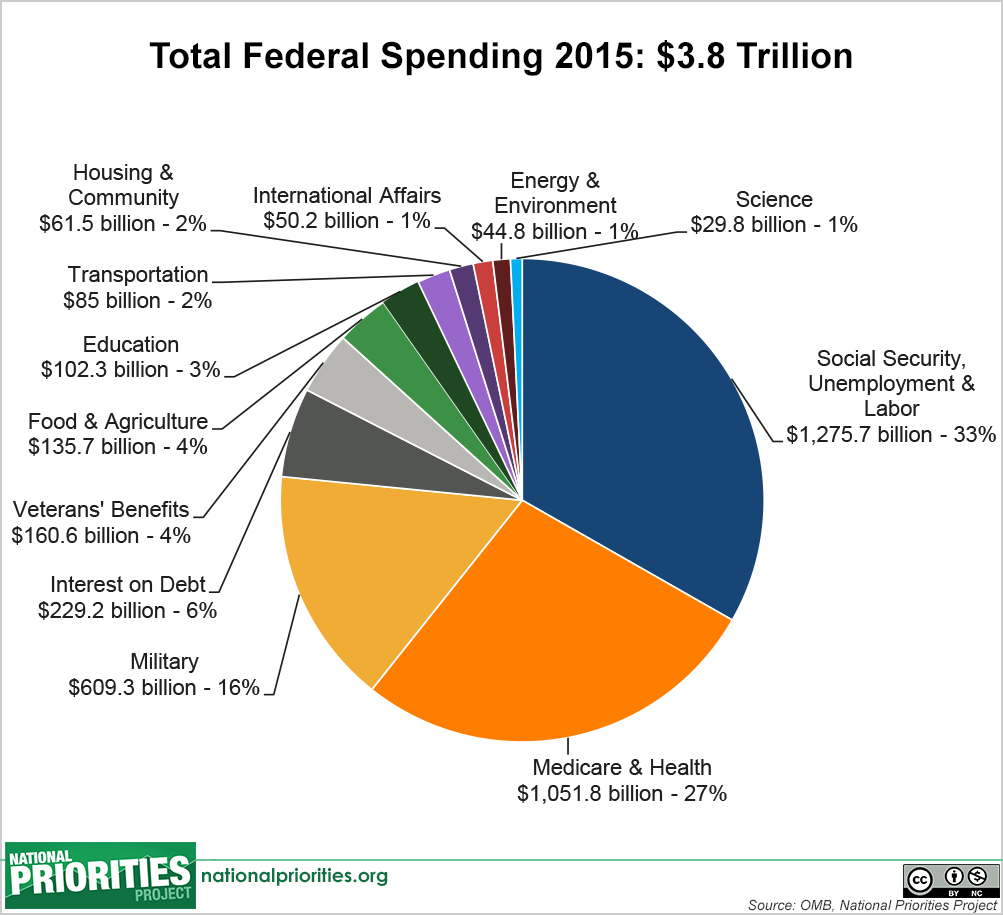
How many of those federal dollars spent are for the military?
Federal Outlays: ~$3.8T Federal Defense: ~$0.7T
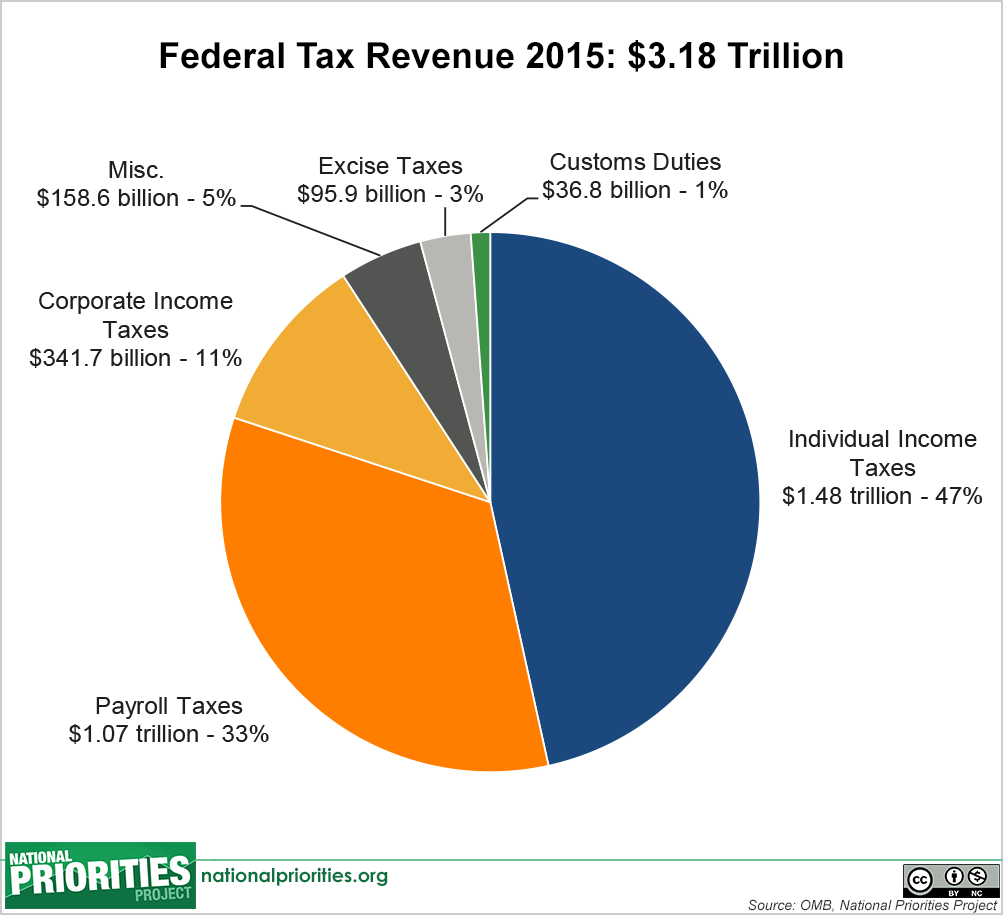
https://media.nationalpriorities.org/uploads/revenue_pie%2C_...
And here's a graph of federal spending --
https://media.nationalpriorities.org/uploads/total_spending_...
In theory the payroll taxes from the first picture completely cover the spending on social security/unemployment insurance -- (and this is currently the case) -- so including that category in the total federal outlays is a little disingenuous when making an argument about too much federal spending/taxation if you don't intend to cut that source of federal spending/taxation ...
If what you say is true that the issue with u.s. infrastructure is entirely the result of too much money going to federal tax authority and not enough to local tax authority -- then to make more dollars from the federal budget available for local taxation you are going to need to do one of the following in order of which action affects the largest monetary amounts:
- argue for reducing payroll taxes and cutting social security benefits
- argue for reducing federal healthcare spending
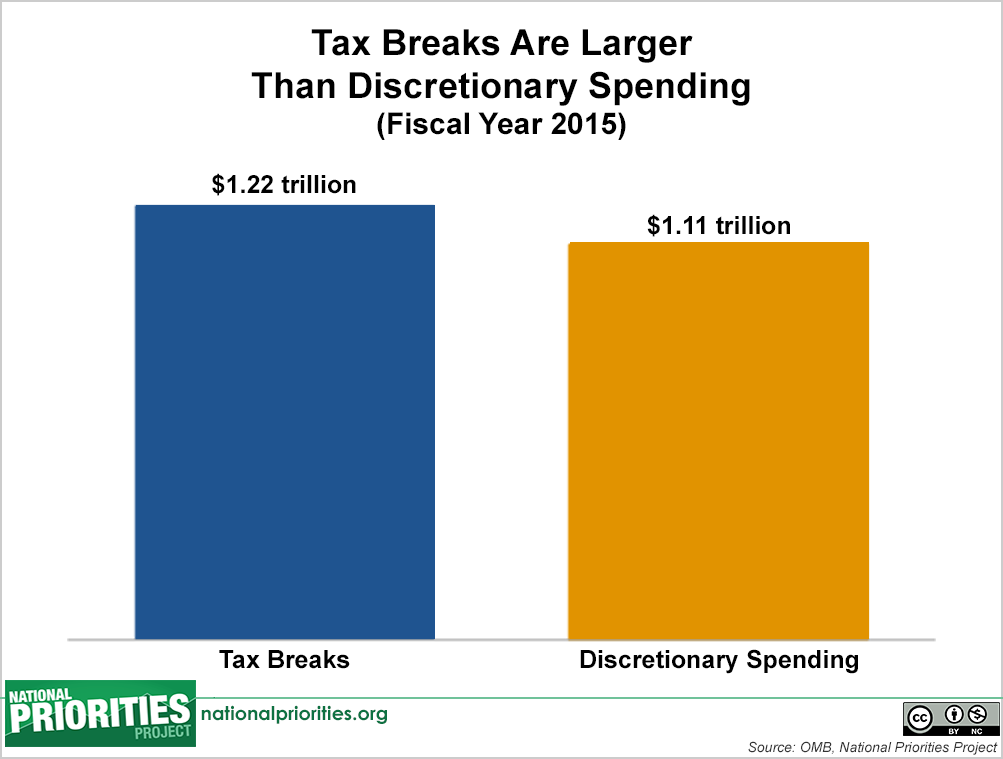
- argue for reducing tax expenditures https://media.nationalpriorities.org/uploads/taxexpenditures...
- argue for reducing the defense budget
- and then way down there at the bottom, the entire rest of the federal budget which is typically vilified as "government waste" and out of control federal spending by people who adamantly refuse to consider any of the above funding priorities when making arguments that try to scapegoat federal spending for regional management failures ...
Re: MIT economist believes U.S. is shifting to be more similar to developing nations
#260Earlier quoted context omitted.
Call me old-fashioned but I think it's wrong when the powers that be deceive, manipulate and strong-arm the local worker to give what they owned, personally or collectively. Why is the elite's right to ownership less sacred than the common citizen's? "You", in your example, can only buy these services because you could influence the State to wield its power in your best interest. Wagging the dog and all that...
> deceive, manipulate and strong-arm the local worker Can you back this claim up, please? > to give what they owned, personally or collectively Who is "they" here? Also, what are you talking about? > Why is the elite's right to ownership less sacred than the common citizen's? I have no idea, because I never made such a claim. > "You", in your example, can only buy these services because you could influence the State…
Ownership = as a nation and a democracy we steward many tangible values of the country
You couldn't buy these services without NAFTA etc.
Oldfashioned as in I romantically want to believe in "we the people" and not "we the global elite"