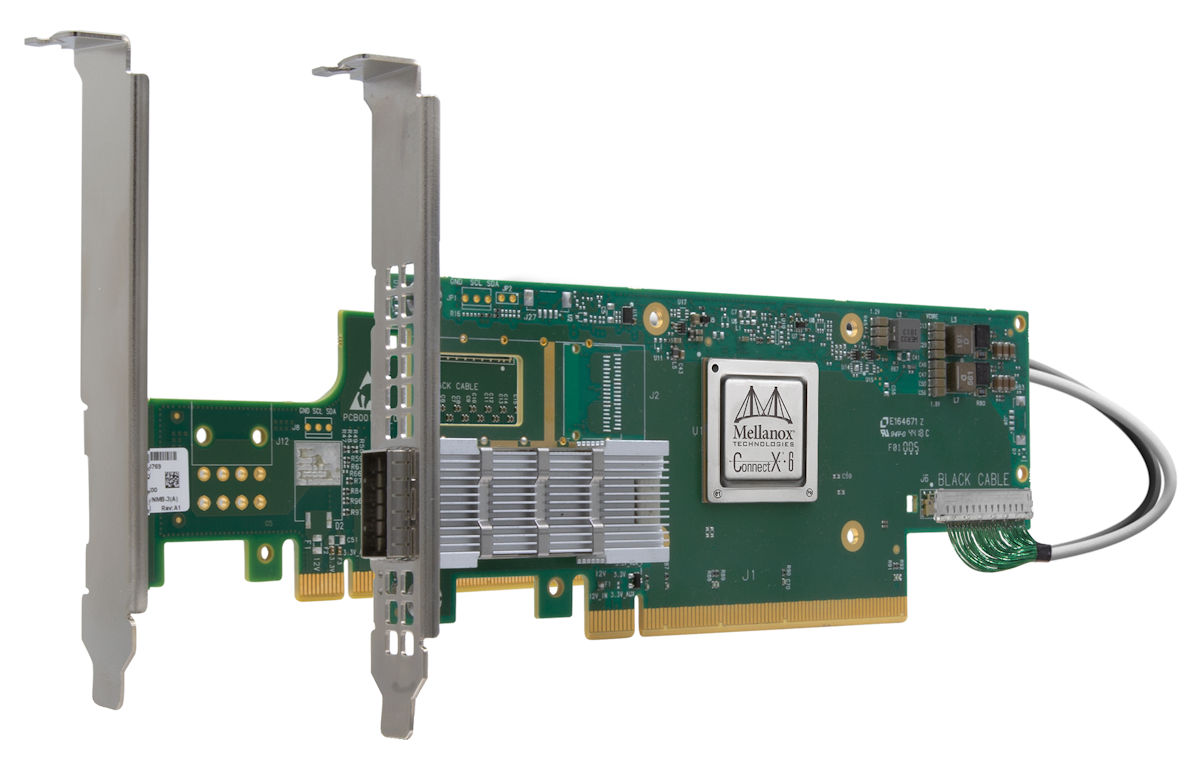
I'm just curious as to what kind of motherboard this personal computer is going to have? I'm asking this because of the limit on PCIe bandwidth. 100gbit NIC? How?
https://lenovopress.lenovo.com/assets/images/LP1195/Mellanox...
241–250 of 500 posts
I'm just curious as to what kind of motherboard this personal computer is going to have? I'm asking this because of the limit on PCIe bandwidth. 100gbit NIC? How?
https://lenovopress.lenovo.com/assets/images/LP1195/Mellanox...
I'm going to preface this criticism by saying that I think exercises like this are fun in an architectural/prototyping code-golf kinda way. However, I think the author critically under-guesses the sizes of things (even just for storage) by a reasonably substantial amount. e.g.: Quote tweets do not go against the size limit of the tweet field at Twitter. Likely they are embedding a tweet reference in some manner or ot…
Quote tweets I'd do as a reference and they'd basically have the cost of loading 2 tweets instead of one, so increasing the delivery rate by the fraction of tweets that are quote tweets. Hashtags are a search feature and basically need the same posting lists as for search, but if you only support hashtags the posting lists are smaller. I already have an estimate saying probably search wouldn't fit. But I think hashta…
Back in the 486 days you wouldn't be keeping, in RAM, data about every single human on earth (let's take "every single human on earth" as the maximum number of humans we'll offer our services to with on our hypothetical server). Nowadays keeping in RAM, say, the GPS coordinates of every single human on earth (if we had a mean to fetch the data) is doable. On my desktop. In RAM.
I still don't know what the implications are.
But I can keep the coordinates of every single humans on earth in my desktop's RAM.
Let that sink in.
P.S: no need to nitpick if it's actually doable on my desktop today. That's not the point. If it's not doable today, it'll be doable tomorrow.
I am both embarrassed and disappointed with the negativity this post has attracted. A litanny of "gotchas", where someone attempts to best the OP. What about x, y and z? It can't possibly scale. Twitter is so much more than this, etc. The OP isn't making the assertion that Twitter should replace their current system with a single large machine. The whole thread paints a picture of HN like it is full of a bunch of hal…
TFA, to me, touches about something I've wondered about a very long time ago: what are the implications of CPU and storage growing at much faster rates than human population? Back in the 486 days you wouldn't be keeping, in RAM, data about every single human on earth (let's take "every single human on earth" as the maximum number of humans we'll offer our services to with on our hypothetical server). Nowadays keeping…
I'm going to preface this criticism by saying that I think exercises like this are fun in an architectural/prototyping code-golf kinda way. However, I think the author critically under-guesses the sizes of things (even just for storage) by a reasonably substantial amount. e.g.: Quote tweets do not go against the size limit of the tweet field at Twitter. Likely they are embedding a tweet reference in some manner or ot…
Yes, this would be big enough to need specifically factoring into a real implementation design. But it would not be big enough to invalidate the proposed idea so I understand leaving it off, at least initially, to simplify the thought experiment.
Similarly to support a message responding to, or quoting, a single other you only need one or two NULLable ID references, 16 bytes per message, which will likely be dwarfed by the message text in the average case. Given it likely makes sense to use something like SQL Server's compression options for data like this the average load imposed will be much smaller than 16 bytes/message.
We are fiddling, fairly insignificantly, measurable but to massively, with constants a & b in O(a+bN) here, so the storage problem is still essentially of order O(N) [where N is total length of the stored messages].
> I did all my calculations for this project using Calca (which is great although buggy, laggy and unmaintained. I might switch to Soulver) and I’ll be including all calculations as snippets from my calculation notebook.
I've always wanted an {open source, stable, unit-aware} version of something like this which could be run locally or in the browser (with persistence on a server). I have yet to find one. This would be a massive help to anyone who does systems design.
Earlier quoted context omitted.
> What about backups Several ways of doing this without relying on k8s > observability This doesn't require k8s neither and it's more on your app. Systemd can restart systems by itself > how do you update that stack without bringing down everything That's probably where redundancy helps the most. I wouldn't run a big service without it (but again it found be at server level)
> but again it found be at server level Can you educate us on how to have a resilient app with no-downtime updates at the server level. Because if you're doing this via software then it's no different to Kubernetes.
Yeah, k8s might be the easiest way of doing this today if you want only 1 physical server