Live data from Hacker News

Maersk installed 100-foot-tall rotating sails on one of its tankers

wsj.com

221–230 of 233 posts

Re: Maersk installed 100-foot-tall rotating sails on one of its tankers

#221
post #198

Earlier quoted context omitted.

Two problems with boats and solar propulsion: 1) they need 24/7 power. 2) Using a random LG 330 W panel on top of the Edith Maersk, it would take an array 1/3 of a mile by 1/2 of a mile in area to match Edith's 80,000 kW engine power output. Edith is 1/4 mile long and 3/100ths of a mile wide. Quite a gap, and thats before you start factoring in batteries for the night, structure to support the array, storms...

> 2) Using a random LG 330 W panel on top of the Edith Maersk, it would take an array 1/3 of a mile by 1/2 of a mile in area to match Edith's 80,000 kW engine power output. Edith is 1/4 mile long and 3/100ths of a mile wide. Back of the envelope math says we're short by a factor of ~108. We can get savings in a few places: (1) We don't have to match the full engine output with solar. Many container ships use super sl…

> Panels can exceed current ship dimensions

They really can't, though. Sure, there's plenty of space when the ship is out on the high seas, but any time the ship needs to go into port (kind of the point of a ship) or navigate tight waters such as straits or canals, then the footprint of the panels really has to not exceed the footprint of the ship.
Re: Maersk installed 100-foot-tall rotating sails on one of its tankers

#222
post #59
post #50

Earlier quoted context omitted.

Two non-technology related containers story on the front page of hacker news, and they're both actually really interesting! Happy Friday!

Hey sails are technology. Just, really old technology. And these "sails" are much newer tech...

and containers themselves are pretty new technology

Re: Maersk installed 100-foot-tall rotating sails on one of its tankers

#223

Earlier quoted context omitted.

Re:solar - there was an experiment where they covered a whole tanker with solar panels. During the day, they provided 10% of power....needed to run the lights on the ship. Solar is just nowhere near good enough compared to the needs of a massive ship like this. Wind would maybe work, but then remember that a turbine would effectively slow you down as you'd be pushing against the air.

Wind is also extreemly limited. As a ship scales up there is proportionaly much less wind energy to work with. Cargo ships move as fast as windsurfers (25+mph). Think of a windsurfer's sail to hull ratio. And the ship isnt on a plane, but pushes through the water. I see 1000' tall mast(s), with sails the size of small towns. A big cargo ship's engine can be 25000kw. The biggest wind turbines (750') generate about 800…

>As a ship scales up there is proportionaly much less wind energy to work with.

It's the square-cube law in operation. It also applies to solar. The only application of solar mounted on a transportation vehicle that makes any sense is those ultra-light unmanned planes that cruise above 60,000 feet.

Re: Maersk installed 100-foot-tall rotating sails on one of its tankers

#224

Earlier quoted context omitted.

Wind is also extreemly limited. As a ship scales up there is proportionaly much less wind energy to work with. Cargo ships move as fast as windsurfers (25+mph). Think of a windsurfer's sail to hull ratio. And the ship isnt on a plane, but pushes through the water. I see 1000' tall mast(s), with sails the size of small towns. A big cargo ship's engine can be 25000kw. The biggest wind turbines (750') generate about 800…

>As a ship scales up there is proportionaly much less wind energy to work with. It's the square-cube law in operation. It also applies to solar. The only application of solar mounted on a transportation vehicle that makes any sense is those ultra-light unmanned planes that cruise above 60,000 feet.

Solar panels on cars make sense. They may not provide much actual charging, but they can prevent discharge over time.

Re: Maersk installed 100-foot-tall rotating sails on one of its tankers

#225
post #208

Earlier quoted context omitted.

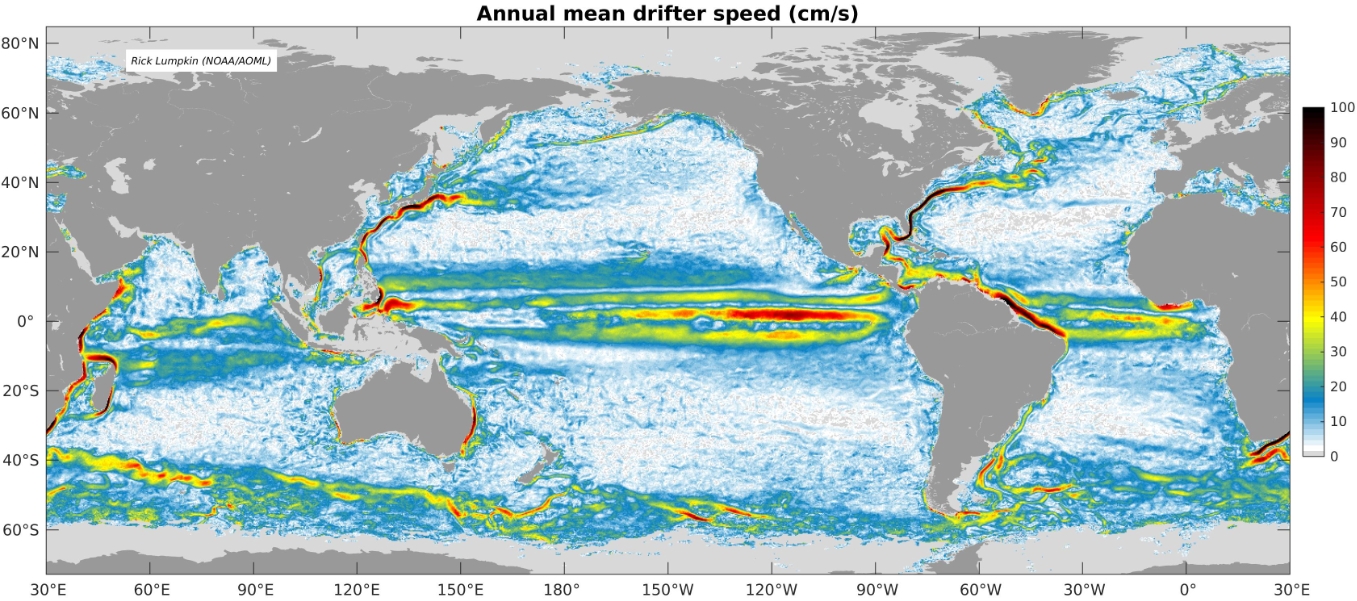
At perhaps 100 watts per square meter, a Maersk triple E ("An arbitrary large ship") at approximately 400 meters * 60 meters would generate 2.4 megawatts peak, or perhaps 400 kilowatts averaged. This is not nothing. It's roughly as much power as a redlined sports car engine. It might be sufficient to fight the worst ocean currents, since propulsion power scales so frighteningly faster than speed. https://www.maritime…

> This is not nothing. It's roughly as much power as a redlined sports car engine. And a sports car is what, 3,000 pounds? A container ship is something like 200,000 tons. I guess they can power a redlining sports car engine when out to sea but not a whole lot else.

It doesn't take an enormous amount of power to move a big ship very very slowly; Froude's law, the first approximation of the relationship, scales power requirements with velocity squared.

A Maersk Triple E has two up-to-30MW-each engines and a design speed of 19 knots. You'd scale down speed by a factor of 12 to achieve 1.6 knots (0.8m/s), and out of that you would get to scale down power by a factor of 144 to meet your ~400kw solar power endowment.

The question is whether you can cross the most powerful currents, and at 1.6 knots you would certainly need to be cognizant of them to stand a chance, but you could ford them in the manner of fording a river: Get pushed downstream a bit, but cross the highest velocity area perpendicular.

http://www.aoml.noaa.gov/phod/gdp/images/climatology.jpg

The Maersk Triple E and huge bulk carriers are practically worst-case-scenarios for solar, because there's so much ship to displace water under every square meter of solar. A smaller lighter catamaran is likely to find itself with dramatically higher speeds, albeit not linearly higher with hull depth, since a longer waterline is more efficient.

I'm not suggesting this is practical. I think massive nuclear powered cargo ships capable of high speed is a hell of a lot more practical in a post-carbon world. But again: it's not nothing.

Re: Maersk installed 100-foot-tall rotating sails on one of its tankers

#226

Earlier quoted context omitted.

>As a ship scales up there is proportionaly much less wind energy to work with. It's the square-cube law in operation. It also applies to solar. The only application of solar mounted on a transportation vehicle that makes any sense is those ultra-light unmanned planes that cruise above 60,000 feet.

Solar panels on cars make sense. They may not provide much actual charging, but they can prevent discharge over time.

I meant in the sense of providing the power for the motor.

Re: Maersk installed 100-foot-tall rotating sails on one of its tankers

#227
post #208

Earlier quoted context omitted.

Re:solar - there was an experiment where they covered a whole tanker with solar panels. During the day, they provided 10% of power....needed to run the lights on the ship. Solar is just nowhere near good enough compared to the needs of a massive ship like this. Wind would maybe work, but then remember that a turbine would effectively slow you down as you'd be pushing against the air.

At perhaps 100 watts per square meter, a Maersk triple E ("An arbitrary large ship") at approximately 400 meters * 60 meters would generate 2.4 megawatts peak, or perhaps 400 kilowatts averaged. This is not nothing. It's roughly as much power as a redlined sports car engine. It might be sufficient to fight the worst ocean currents, since propulsion power scales so frighteningly faster than speed. https://www.maritime…

> nuclear ships

IANA(nuclear scientist) but I imagine that it has to do with the lack of nuclear engines available for the commercial market, which is due to nuclear technology being restricted by export controls and the like. Keeping nuclear engines and fuel out of the hands of others is much simpler when they're only on military ships with armories and soldiers, basically impossible on unarmed, undefended commerical shipping vessels.

Do correct me if I'm wrong ...

Re: Maersk installed 100-foot-tall rotating sails on one of its tankers

#228
post #167

Earlier quoted context omitted.

Why not use electrical propulsion and charge batteries from wind and solar? At first, as a fuel saving measure in optimal conditions (rely on internal combustion engines most of the time). Seems better than pure sail power, even though that is more efficient (due to direct wind to motion conversion).

Re:solar - there was an experiment where they covered a whole tanker with solar panels. During the day, they provided 10% of power....needed to run the lights on the ship. Solar is just nowhere near good enough compared to the needs of a massive ship like this. Wind would maybe work, but then remember that a turbine would effectively slow you down as you'd be pushing against the air.

The solar doesn't necessarily have to be ON the ship. If photovoltaics continue their process of price drop in STC $/W ratio, or if at some point very high efficiency low cost nuclear becomes economical, it will be possible to crack hydrogen from sea water at a shore based facility and compress it into tanks. Then use that to power massive fuel cells on ships with fully electric azipod drives.

If your $ per kWh is something ridiculously low like $0.002 you can economically electrolyze h2o to pure hydrogen.

The surface area of the ship, don't care about that. A 20x20km area of the Mojave desert covered in super low cost PV can provide the power needed.

This is the same economy of scale thing as a solar powered car. If you were to theoretically cover every square cm of a Tesla model S in high efficiency PV, and let it sit in the sun all day, it might take a week or more to collect the 95kWh needed to charge it fully. But if the PV is somewhere else on rooftops or otherwise-useless arid land, connected to the grid, you can plug your car in to a 240V 30A socket in your garage and charge it every day.

Re: Maersk installed 100-foot-tall rotating sails on one of its tankers

#229
post #198

Earlier quoted context omitted.

> 2) Using a random LG 330 W panel on top of the Edith Maersk, it would take an array 1/3 of a mile by 1/2 of a mile in area to match Edith's 80,000 kW engine power output. Edith is 1/4 mile long and 3/100ths of a mile wide. Back of the envelope math says we're short by a factor of ~108. We can get savings in a few places: (1) We don't have to match the full engine output with solar. Many container ships use super sl…

> Panels can exceed current ship dimensions They really can't, though. Sure, there's plenty of space when the ship is out on the high seas, but any time the ship needs to go into port (kind of the point of a ship) or navigate tight waters such as straits or canals, then the footprint of the panels really has to not exceed the footprint of the ship.

it is not a b/w choice between 100% solar or 100% oil, hybrid solutions could work and address the gaps solar/electric cannot handle,even 10-20% emission savings could mean a lot .

Also it doesn't have to be solar directly, an electric propulsion system which can use hydrogen or high density battery/ storage which plugs into the grid eventually is good enough.

You don't need to drag the cells with the ship, they could be perhaps stationary middle of the ocean and charge the replacement batteries and you could line few such charging stations near the major shipping lines.

Re: Maersk installed 100-foot-tall rotating sails on one of its tankers

#230
post #125

Earlier quoted context omitted.

There's no question sails can move today's cargo volume. But the shape of the ships doesn't lend itself to sail power. I think these sails are specific to supporting other power. And the shape of today's ships is very much towards fitting more cargo. I think you'd need at least slightly bigger ships that are efficient for sail power alone, and able to carry similar cargo volume or mass.

I think such rotating sails could be almost called 'solid state' - basically zero hassle compared to a traditional canvas where there is always person on lookout, trim before wind picked up, make sure rigging is maintained, etc. That said these probably produce way less power.

Rotating sails and wind turbines have historically been extremely high maintenance due to the forces the long moment arm puts on the rotational coupling at the base.
Post reply on HN