Live data from Hacker News

How do you fix a stroad?

strongtowns.org

211–220 of 411 posts

Re: How do you fix a stroad?

#211

Earlier quoted context omitted.

NJB is not an "outrage" channel, that is utterly absurd. It's an information channel that mostly shows you how things work in the Netherlands and makes the case that it's a better way than the idiotic car-centric north American way. If you're outraged after watching his videos, it's not his fault, it's the fault of your city planners.

It is an outrage channel. >It's an information channel that mostly shows you how things work in the Netherlands and makes the case that it's a better way than the idiotic car-centric north American way. Yes. Comparing apples to oranges. What an outrage! My apples have less vitamin C! How dare they. >If you're outraged after watching his videos I'm not. But the majority who do watch the video are. It's his fault. The…

So you're saying it's an outrage channel based on what evidence? You say that the car centric cities of North America are like they are by thoughtful design and that NJB creates outrage by depicting this design as verfiably inferior while in reality it is just "what works for the country". So can you elaborate what is better (and works better) about the design of a car centric "stroad" City compared to a walkable city?
Re: How do you fix a stroad?

#212

I love that this highlights an oft-missed truth about Urbanism and shifting our urban landscape: this is going to take a long time. It's going to take many decades, and it's going to require waiting for individual human beings to literally die before we get to start making the changes we want to make. I mean, unless we can get someone really excited about this into federal office in which case it _might_ be possible…

3 words: Manhattan bike lanes.

They're everywhere now even the bridges, the ebike messengers own the streets and slowed down the cars, Lyft bought citibike stop you don't need another app, so it's now a joy to bike NYC, even as a tourist. Really.

Re: How do you fix a stroad?

#213

Earlier quoted context omitted.

Bus systems can work well to move commuters to rail-based mass-transit that bring them into the city. If the suburbs sprawl too far out, you can also plop down park-and-rides at the terminal stations of the mass transit system. Why do you specifically need to drive and park at the exact location you're going to, especially when the land cost of the storage place of your empty car is prohibitively expensive (as they t…

In places that have good mass transit for their suburbs, sure. But what about all of the places that don't? Because sometimes I have to go to work in weather conditions like hailstorms, thunderstorms, or freezing rain.

Build mass transit. It's one of the best ways to increase economic activity.

Re: How do you fix a stroad?

#214
post #158

Earlier quoted context omitted.

Cars didn’t construct the roads, humans did. For cars. The arrogance in this thread is off the charts, it’s like so many of you can’t fathom that people like the way our towns are built.

People like all sorts of things. There's people that really like meth or heroin. Doesn't make those things good or sustainable.

Stroadlandia is like meth or heroin? I didn't realize I was experimenting with something tantamount to drugs. I suppose it was a good trip, but one has to keep on dunetreading.

Re: How do you fix a stroad?

#215
post #92

Earlier quoted context omitted.

I used to agree that these things take a long time, but since the pandemic my local council in Ireland has acted very quickly to build excellent bike infrastructure and curtail car access to village spaces [1]. Many roads got changed to one-way, to make way for segregated bike lanes. Pre-pandemic, there was dallying for years over building this stuff, but now its there, and the world hasn't imploded for motorists, an…

Yes, the pandemic has accelerated this, but everyone involved needs to be open for the possibility from the beginning. Here in Germany when someone proposes something like this there is a storm of protest from small businesses: "what we are already on the brink of bankruptcy with everyone ordering stuff online or going to supermarkets with huge parking lots and now you want to cut us off from our customers do you wan…

I've written about this on a similar post previously. The town I grew up in in Germany (Lüneburg for those familiar with Germany), turned some of the central city into a pedastrian mall about 30-40 years ago. I still remember the local newspaper being full of angry letters from local businesses complaining that this would be the death of the city centre, everyone would go shopping at the big malls on the outside of town which will soon pop up etc.. In reality the exact opposite happened the city centre is packed with people, the city is immensely popular with tourists who come from all over and many of the big "shopping centres " outside of town disappeared.

At the moment there are discussions on expending the pedestrian zones further and the same arguments are being made by businesses, it is as if nobody learned anything.

Re: How do you fix a stroad?

#216

Earlier quoted context omitted.

People like all sorts of things. There's people that really like meth or heroin. Doesn't make those things good or sustainable.

Stroadlandia is like meth or heroin? I didn't realize I was experimenting with something tantamount to drugs. I suppose it was a good trip, but one has to keep on dunetreading.

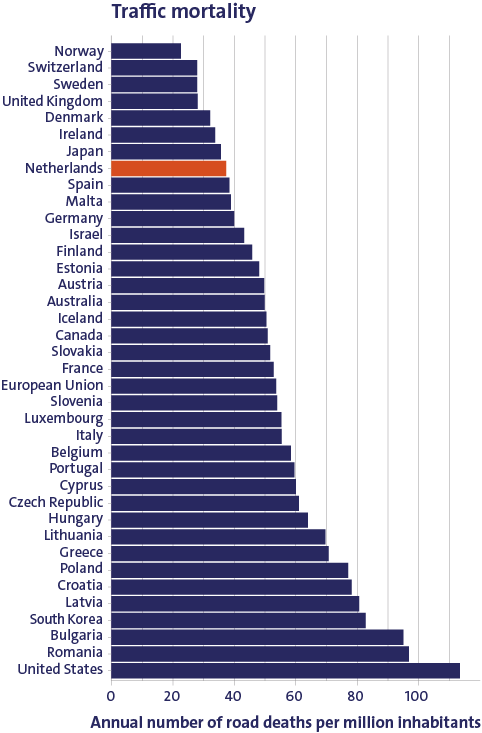
It does cause untold death and pain [1] and yet some people are unwilling to give it up. Sounds like there's some parallels at least.

[1] https://www.swov.nl/sites/default/files/media/media.up/fs_in...

Re: How do you fix a stroad?

#217

Earlier quoted context omitted.

Dislikes have little effect on whether a channel is recommended, only individual videos and the related videos to that specific one. Also to dislike a video you need to click it in the first place, which tells YouTube you potentially like content of this sort but the individual videos aren't up to your expectations so it's going to keep trying. As another poster said there is a way to get YouTube to stop recommending…

> Loving cars immediately must mean that his high quality, well researched content is "trash". Why is it surprising that people who love cars don't like a channel that basically says you're a bad person if you don't think cars should be abolished?

NotJustBikes doesn't think cars should be abolished.

In fact, they shared a video just three weeks ago about how non-car-centered cities are _better_ to drive in:

https://www.youtube.com/watch?v=d8RRE2rDw4k

Car-centric designs for cities makes living in cities worse, _even for people who like cars_.

The thesis of Strong Towns isn't that we should ban cars, it's that we should stop _subsidizing_ something that we know is bad for us (in economic terms, health terms, quality-of-life terms, and in ecological terms)

Re: How do you fix a stroad?

#218

The Strong Towns people want to go back to 1950s midwestern America - small towns strung out along roads, with farms in between. What were all those small towns for ? They were built, mostly, as service centers for the surrounding farms. Today, only 1% of the workforce works on farms, and they can get their stuff from Amazon and Walmart. The need for most of those towns is gone. So they're decaying and disappearing.[…

Tokyo is not a small town by any measure, and neither is the most of Europe.

I'm so confused by the idea that Tokyo is somehow bike-centric. Perhaps there's another Tokyo somewhere in Japan that is not a subway-and-taxi centric metropolitan area where bikes are rarely seen.

It's a pedestrian-friendly city, though, I'll give you that.

Re: How do you fix a stroad?

#219
post #176

Earlier quoted context omitted.

People like their cars because the city design makes all alternatives comically impractical.

Nope. I live in a country with high quality transit and the first thing people buy when they can afford it is a car. Why? Convenience, flexibility, ability to haul a family. Cars certainly aren’t a requirement if you have good walkability and/transit, but given the choice many people prefer cars.

There is a big difference between buying a car and doing literally every trip in a car because the only connection from the place you sleep to anywhere is six lane road with speeds exceeding 40mph.

Of course cars are convenient for some things. I live in a city where the majority of households has access to a car, but only a quarter of the trips (accounting for 40% of the traveled distance) are made by car. I still consider the city to be built very car-centric, but it's a wholly different world from what I experienced when visiting the US.

Re: How do you fix a stroad?

#220
post #115

Earlier quoted context omitted.

The itty-bitty bits of America that have any kind of walkable community are incredibly expensive. It’s basically the equivalent of avoiding mediocre American factory food by doing all your shopping at Whole Foods. Why does it have to be a rare luxury to taste what the Europeans have in overflowing abundance?

Because what they have flowing in abundance is a loss in many other ways. Public transit is a generally a worse experience in all but the most urban of places, and even then there's often enough problems that make it significantly less desirable. Biking in the winter? Doable, but also pretty miserable in much of the world. People like personal transportation and big detached houses with yards. Car-centric cities are…

> People like personal transportation and big detached houses with yards. Car-centric cities are the price we pay for these things.

Maybe people don’t even like Personal transport that much, maybe they only use it because of the lack of suitable alternatives? Maybe many people don’t have the „single family home whatever it takes“ attitude and would much prefer a suitable apartment in a somewhat dense walkable neighborhood? It’s no coincidence that the few relatively quiet very walkable neighborhoods often are the most desired places in a city, even here in German cities where the issue is nowhere near as extreme as it is in the US.

Also, car dependency is not just a city planning issue. Car dependency increases the risk of obesity and often results in overall bad health. And what about the kids? Children are totally dependent on their parents for anything transport related until they can drive themselves. Cycling doesn’t seem to be encouraged, let alone walking. Public transport maybe works for school, but rarely for leisure activities. How do you want to raise independent adults if they are totally dependent on you for something as basic as transportation?

Post reply on HN