Live data from Hacker News

About Google's approach to research publication – Jeff Dean

docs.google.com

211–220 of 607 posts

Re: About Google's approach to research publication – Jeff Dean

#211
post #111

Dean writes: Our aim is to rival peer-reviewed journals in terms of the rigor and thoughtfulness in how we review research before publication. But Gebru writes that HR and her management chain delivered her feedback in a surprise meeting where she was not allowed to read the actual feedback, understand the process which generated it, or engage in a dialogue about it: Have you ever heard of someone getting “feedback”…

I think the person who submitted feedback in privileged and confidential way made a great choice. I expect more people taking this route in the future actually, people are scared in the current political athmosphere. Look at what Jeff Dean is getting, even though he didn’t do anything bad.

A manager in ethics shouldn’t ask Google to break the law by not providing confidientality that was requested.
Re: About Google's approach to research publication – Jeff Dean

#212

Earlier quoted context omitted.

> manager: well we are not going to do those, so thank you for your time. We accept your resignation and would like it to start immediately (i.e. you're fired). The thing is, there's a big difference between resigning and being fired for cause, even if both end with you not working at the company anymore.

IANAL, but my best guess is that she was just let go without cause. Your employer can fire you at any time and technically doesn't need a reason. Typically, "terminated with cause" is a specific thing where they fire you and give a specific reason (e.g. stealing) that might have bearing on whether you receive unemployment benefits, accrued vacation, etc. It's hard to imagine that they fired her in that way and that s…

There were causes. The email to the women group and the demands. The paper wasn't so great either, based on the analysis of the abstract.

Re: About Google's approach to research publication – Jeff Dean

#213

Earlier quoted context omitted.

one link says she resigned. The other one says she was fired. Which one is it then?

People have argued both cases. The tl;dr is that she said "I will resign if XYZ" and Google was like "we accept your resignation effective immediately." Whether or not that counts as firing is a matter of opinion.

well; also whether google has to pay severance.

Re: About Google's approach to research publication – Jeff Dean

#214
post #72

Earlier quoted context omitted.

And the examples of issues flagged in review that Jeff keeps highlighting—like Timnit’s alleged failure to mention recent work to reduce the environmental impact of large models—are themselves a bit worrisome. Jeff gives the impression that they demanded retraction (!) because they wanted Timnit and her coauthors to soften their critique. The more I read about this, the worse it looks.

Google isnt publicly funded academic institution. Whatever they are doing, in particular publishing, is part of the business/PR. So if the management sees something not good for business it is a reasonable that they decided to not do it. If i were a shareholder i can see how i may have questioned why a person being paid $1M+/year (my understanding this is minimum what a manager in AI at Google would be making) for pu…

Even from the narrow view that in-house academic work is part of the PR budget (which I disagree with), Google has made a huge mistake here. This is a giant PR black eye for them. If the game is to pretend to have in-house ethical checks (say to avoid actual regulation), then they need to at least generate the appearance of independence. The correct sinister move here would either been to keep her on staff and give her the runaround or manage her out the door in a way that she wasn't particularly angry and where she signs a non-disparagement agreement.

But as others point out, it's entirely in Google's long-term interests to have internal critics who prod Google and the rest of the industry toward long-term behavior. So I think it makes good sense for them to have independent academics that occasionally make people uncomfortable.

Re: About Google's approach to research publication – Jeff Dean

#215

Earlier quoted context omitted.

If your work is suddenly and unexpected roadblocked at the last second by internal review, the only way to make changes that prevent that from happening in the future is to clearly understand the situations and criticisms that led to the roadblock. This is why understanding who raised these concerns is important. Anonymous feedback blowing up a project at the final moments is sure to frustrate anybody. If what she ha…

Isn't the academic journal peer review process generally an anonymous feedback mechanism? Why does this need to be different?

This isn't (or wasn't) a review process for scholarship. Oodles of people within Google (even within Brain) have gone through this process and it seems to have always been the case that it just checks for things like PR problems, IP leaks, etc.

Further, she claims that initially she was not allowed to even see the contents of the criticisms, only that the paper needed to be withdrawn.

Let's say you were working on a feature. At the 11th hour, just before it hit production, you get an email telling you to revert everything and scrap the release. Apparently somebody in the company thought it had problems but they won't tell you the problems. Then after prying you do get to see the criticisms and they look like ordinary stuff that is easily addressed in code review rather than fundamental issues. They still won't tell you who made the critiques. Would you be upset?

Re: About Google's approach to research publication – Jeff Dean

#216

Earlier quoted context omitted.

In most cases, yes. In this case, because the paper was about bias in Google's AI models, it might not be just a business decision because the racial bias described in that paper might result in a disparate impact on users, which could be in violation of state or federal law.

This is pretty dystopian ... 1. There exist laws to prevent discrimination against people based on protected attributes 2. ML models make predictions based on attributes without interpretability (it's not possible to prove that protected attributes are not factoring into model predictions) 3. Empirical observation that a model proxies a protected property exposes corporation to liability for regulatory non compliance…

A company can still protect themselves by fixing the model and delaying publication of a study about it's bias until after the statute of limitations had expired.

In this case, there were recent changes to the statute of limitations for CA laws that extended it from a year to 3 years, which could be why this whole process seems weird.

https://www.ebglaw.com/news/ab-9-extends-employees-statute-o....

Re: About Google's approach to research publication – Jeff Dean

#217

I've read her email. In my first job, right after college, I have also sent an inflammatory email (nothing compared to the email she has sent) to my manager (not a whole group of coworkers). And I got seriously reprimanded for it by my then manager. Even after a decade I cringe when I remember the email I wrote. I have no idea why people think it's okay to send emails like this and expect not to get fired.

It's because of a culture that praises playing victim, no matter how successful you are, and regardless of whether or not they're telling the truth.

Re: About Google's approach to research publication – Jeff Dean

#218
After reading Jeff Dean's response, I can only come to the conclusion that Timnit Gebru acted like a primadonna. It is completely normal to have to obtain prepublication signoff on material before it is submitted to a conference (and manager signoff even before abstract submission). Given the breadth of experience at Google, it seems strange not to avail yourself of this. Demanding to know the identity of reviewers is absurd (no journal would tolerate that) and deeply unprofessional. Making it an explicit ultimatum was her decision. Denigrating the entire area of research at Google on a large mailing list is the action of someone who wants to be terminated.

People claiming that the deficiencies in the paper are minor and wouldn't be blockers obviously have little experience submitting to academic journals. Other parts of Google doing deeply technical work probably don't have the same level of review as the Ethical AI group -- for obvious reasons.

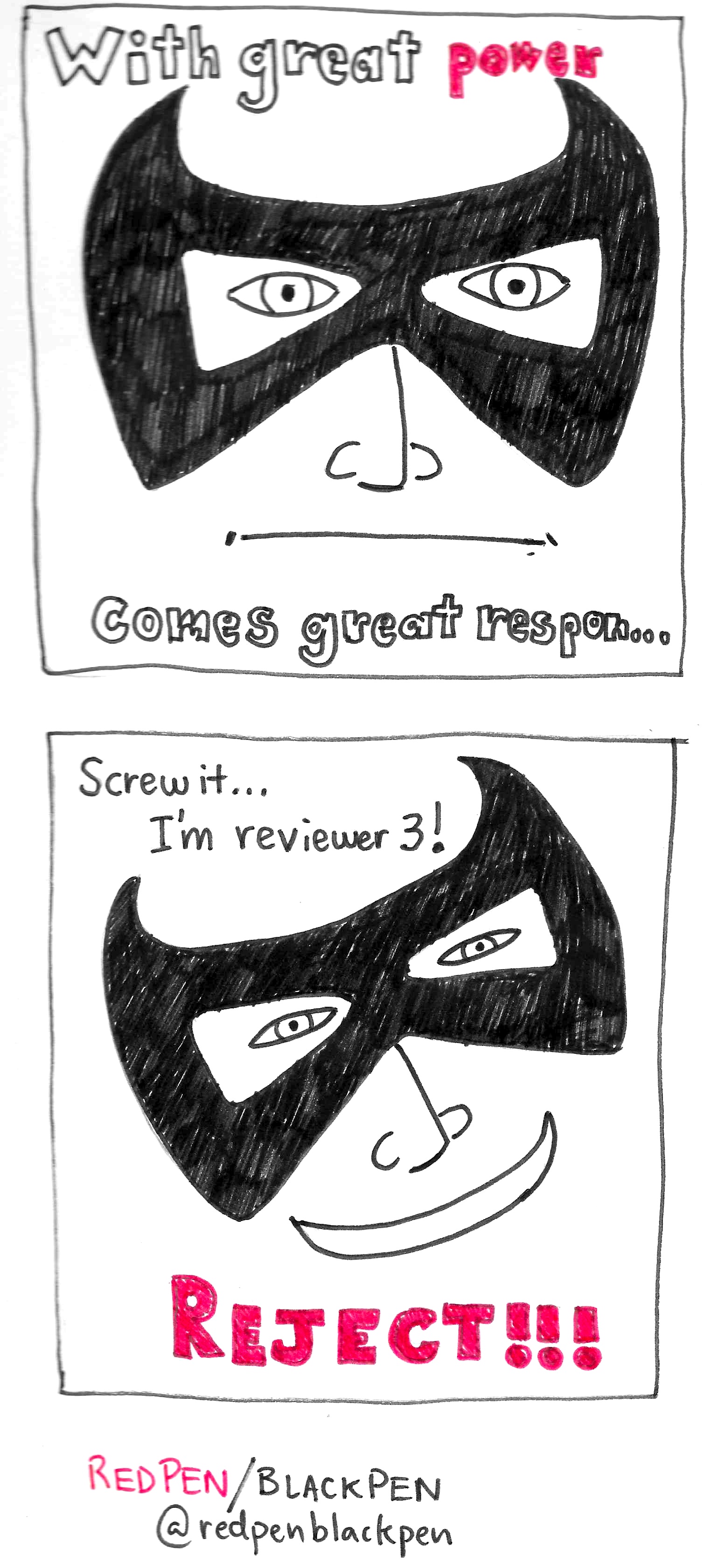
There is usually a long back and forth -- there are even memes about the infuriating comments from "Reviewer 2" [1][2]. Omitting to mention argument-obsoleting developments in the field (from your own lab!) is more than enough to send you back to extensive redrafting.

To be clear on terminology -- a retraction is an academic black mark, and occurs to a paper after publication, usually for reasons of research misconduct. This is not an instance of that.

[1] https://twitter.com/redpenblackpen/status/113344056990719590... [2] http://jasonya.com/wp/wp-content/uploads/2016/01/PowerRespon...

Re: About Google's approach to research publication – Jeff Dean

#219
post #111

Dean writes: Our aim is to rival peer-reviewed journals in terms of the rigor and thoughtfulness in how we review research before publication. But Gebru writes that HR and her management chain delivered her feedback in a surprise meeting where she was not allowed to read the actual feedback, understand the process which generated it, or engage in a dialogue about it: Have you ever heard of someone getting “feedback”…

I think the person who submitted feedback in privileged and confidential way made a great choice. I expect more people taking this route in the future actually, people are scared in the current political athmosphere. Look at what Jeff Dean is getting, even though he didn’t do anything bad. A manager in ethics shouldn’t ask Google to break the law by not providing confidientality that was requested.

He took one for the team, kept them safe.

Re: About Google's approach to research publication – Jeff Dean

#220

Earlier quoted context omitted.

> Yeah, put more simply, they pushed out someone in their Ethical AI department because they did not soften critiques against AI enough. I didn't read that. I read the person _demanded_ who said a particular critical feedback, or questioned the approaches instead of addressing them. The person gave the ultimatum to resign if details were not shared.

Unless she lied in her first e-mail, which it doesn't seem like she did, the reason she made those demands is because they asked for a retraction of the paper without indicating why the paper should be retracted. Asking for the identity of people that have the authority to ask for a withdrawal of your research without stating their issues with it seems understandable, if excessive. But maybe I misunderstood something…

AIUI, they asked her to retract it because she submitted it before getting final approval, and then they in fact decided not to approve it.
Post reply on HN