Earlier quoted context omitted.
You don't need any of that. You just need a knob that ranges from make as cold as you can to make as hot as you can and a reasonable fine grain in between. I can find the right set point because I'm literally sat next to the knob and I'm a better control system than anything they can come up with.
And I'm a lazy fucker: I want to set a temperature range and then not bother until I sell the car. Under the range? Heat it. Over? Freeze it. But a range, not a single point. So if the temperature is between min and max, the AC stays off.
The subtle art of designing physical controls for cars
201–210 of 242 posts
Re: The subtle art of designing physical controls for cars
#202Earlier quoted context omitted.
And I'm a lazy fucker: I want to set a temperature range and then not bother until I sell the car. Under the range? Heat it. Over? Freeze it. But a range, not a single point. So if the temperature is between min and max, the AC stays off.
I posit you're unusual in your opinion. I mostly observe people use the climate control knob like a heater knob. If it's cold, the set temperature gets cranked up; if hot it gets cranked down.
I really don't like getting out of a car cooled to 18 C when outside it's 30+.
However this just proves "smart" automatic a/c is useless because, newsflash, different people have different habits.
Re: The subtle art of designing physical controls for cars
#203Earlier quoted context omitted.
But I test drove a Tesla and besides the stupid tablet controls the smart turn stalks couldn't hold a turn signal when turning left at a crossroads that wasn't at 90 degrees. That's life threatening if you ask me. No, I don't need to know Musk's politics to avoid his cars. Of course, it's well known that BMWs come without a turn stalk so maybe it seems normal if you compare those two brands :)
My biggest objection to modern smart turn signal stalks is that you can’t turn the turn signal off easily. Sometimes the signal is on, I want it off, and there simply is no way to do it reliably. The old latching stalks could be moved to the center position, and the signal would turn off every time.
Since I was test driving, I just moved forward instead.
Re: The subtle art of designing physical controls for cars
#204What stood out in the article was the attention paid to designing intuitive haptics. What our bodies expect in feedback when we turn a weighted dial. Doing it in software allows controlling multiple things, but I would still prefer a dumb dial per function, placed in close proximity to where the function acts. Seat controls near seats, climate controls near vents. Personalization stuffed into the screen and menus and profiles.
I did not think I would like auto climate controls until I lived with one. Even then, I would fiddle with it because I didn’t like the sudden high initial fan speed until I got used to it.
Re: The subtle art of designing physical controls for cars
#205Earlier quoted context omitted.
I agree. I don't want a "smart" knob. I'm dreading going car shopping sometime this next year. I anticipate having to rule out a large pool of cars to keep my controls navigable without looking.
My wife bought a new car with fully digital display a year ago. For me, I got a 2013 low mileage dumb car. Couldn't find anything new that I liked with my preferred level of UX technology (or lack of). I drive both equally and even a year later, I hate operating anything in her car. Once you get it dialed in, not too bad, but there's constantly edge cases of things you do infrequently and really have to search around…
Re: The subtle art of designing physical controls for cars
#206Earlier quoted context omitted.
There’s a commercial product that looks like a fancy fancy version of this and I think has a tilt sensor as well. It’s notable not just because it is loved by some media people, both art and video, but also because it’s shown up on the pilot’s chair in several notable sci fi movies/series with an outer space theme. I do want more smart devices with analog inputs and outputs though. I feel like Ambient Technologies we…
Let me guess: 3DConnexion's SpaceMouse?
Re: The subtle art of designing physical controls for cars
#207Designing car controls is easy. You take what engineers have spent 100 yeas fine tuning every element of, for precision and ergonomics, then you give to someone with an industrial design degree who throws it all out the door to make something shiny, and it kills Anton Yelchin, amongst others.
Re: The subtle art of designing physical controls for cars
#208My favorite car control system is the BMW iDrive rotary dial. Touch screens are fine for given much more fine-grained access to controls. But they should be limited to controls that you _don't need to set while driving_. It's absurd that it takes 3 taps on a screen -- diverting my attention to the screen -- on my Tesla to turn on defogging (a common event here!) while I can do it with a one touch (now muscle-memorize…
Did you ever tried to use the rotary dial for text input? I gave up immediately. The car has a regular screen regular, no touch. Something is good only when balanced.
Re: The subtle art of designing physical controls for cars
#209I applaud the author for putting thought into how to design digital controls, in contrast to the "just put whatever garbage on a touch screen" strategy most carmakers do today. However, I still question the benefit of this complex, modal control (you have to press a single knob to "cycle between" multiple modes). My ancient, 2016 car features three knobs. This luxury allows me to, without looking, adjust any of three…
Toyota 3 knobs undefeated.
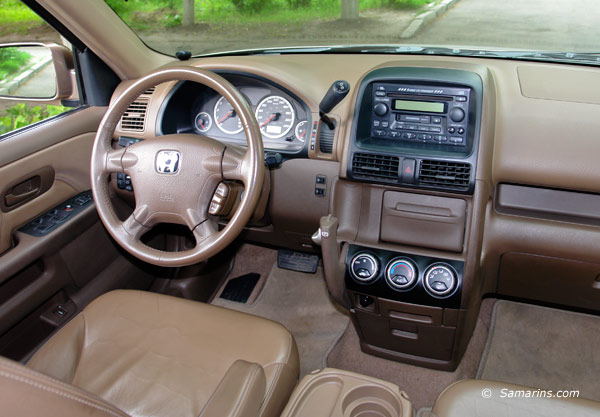
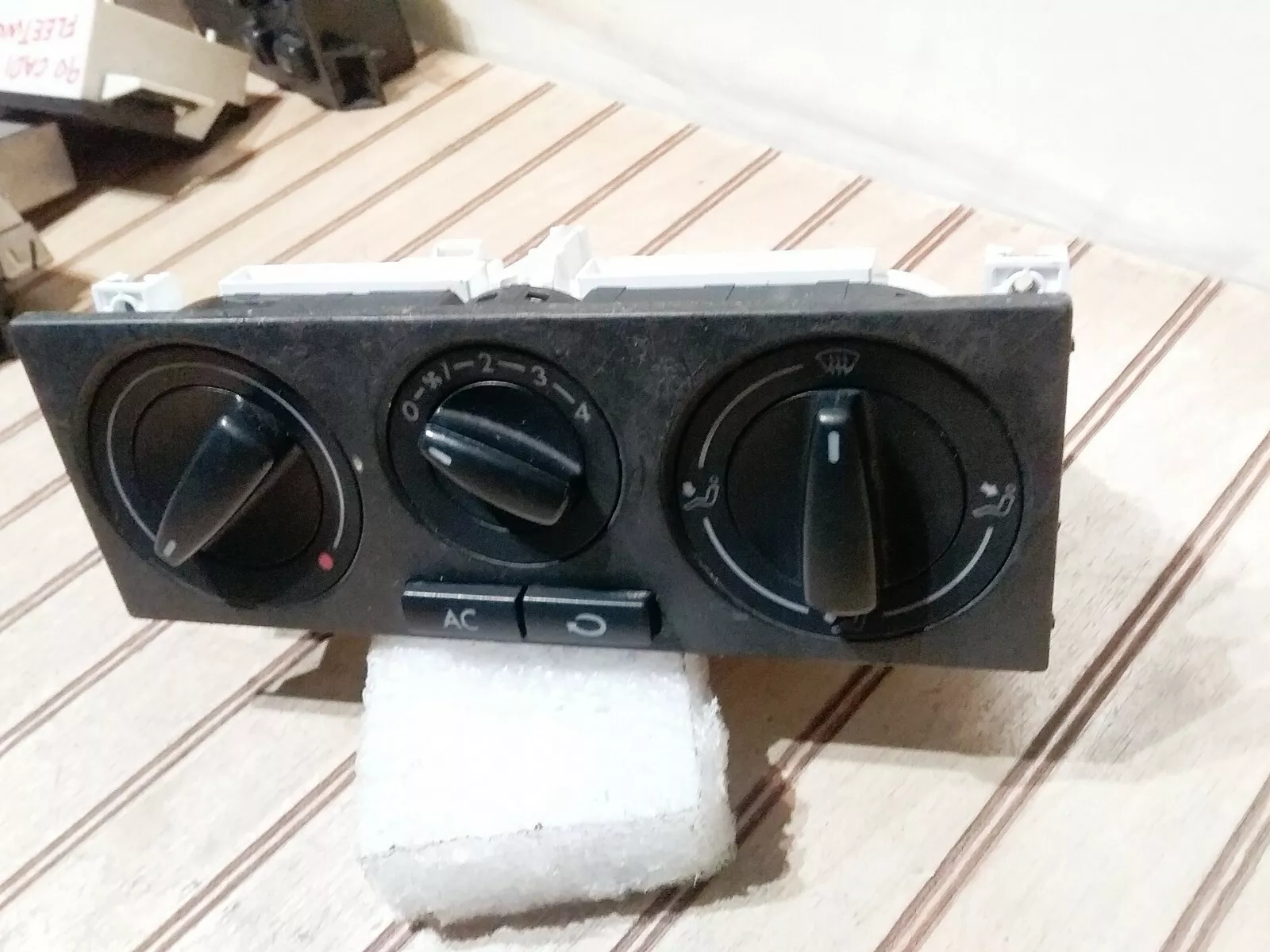
Every OEM has used the 3-knob design on and off but it was particualrly hot in the 90s and 00s. It isn't a Toyota thing, or even a specifically Japanese thing.
Here's a random 00s Honda:
https://www.samarins.com/reviews/img/cr-v_04_int_large.jpg
Here's the OJ era bronco:
https://media.carsandbids.com/cdn-cgi/image/width=2080,quali...
Here's a GMT800
https://jandjautowrecking.com/cdn/shop/files/57_8fc2bd4a-2cb...
Here's a radom VW
https://i.ebayimg.com/images/g/7w0AAOSwApleAMyP/s-l1600.webp
Re: The subtle art of designing physical controls for cars
#210Earlier quoted context omitted.
Cars used to have modular buttons. It was very common to have a couple of blanks in your infotainment cluster. The problem is that it still requires custom per-feature assembly. A single car model needs a dozen different button configs, with a dozen different wiring harnesses. That's a lot more expensive than a simple one-size-fits-all touch screen you install into literally every single car and configure with a soft…
Cars used to have modular buttons. It was very common to have a couple of blanks in your infotainment cluster. My brand-new luxury-brand EV still has blanks. Not all trim levels get the rear fog lights, or a few other things I can't remember. Also, they're used for buttons related to adding the towing package.