Live data from Hacker News

Installing a payphone in my house

bert.org

201–210 of 279 posts

Re: Installing a payphone in my house

#201
post #142

Thanks for this article and the comments. Reminds me of a trick we kids did in the early 60s (yeah, sorry) with the British 'phone box' pay phones. We called it 'tapping the phone', but it wasn't spy style listening. Passed from kid to kid the amazing trick was you could dial the number by tapping the handset (10 taps for zero, 9 taps for 9, ..) and the phone would ring the number but you didn't then have to 'press b…

A friend of mine had a system for getting free calls from New Zealand payphones. He installed a small switch between the payphone and the line before it went into the ground. He then exploited the lack of coordination between the phone and the exchange. * First he would pick up the phone and start dialing 0800 (equivalent of 1-800), the phone would see this was a free number and ignore what was being entered next. *…

Glad to know I wasn’t the only kid trying, by hook or crook, to figure out what was on the other end of those 900 numbers. :D
Re: Installing a payphone in my house

#202

Earlier quoted context omitted.

I converted an old rotary phone into a mobile phone ( https://www.stavros.io/posts/irotary-saga/ ), and the quality is much better than a mobile. Even just the sidetone makes it SO much better to talk on. I have no idea why modern mobile phones have no (or very low volume?) sidetone. It makes the UX orders of magnitude better.

Nice work! Maybe I missed this, but have you considered simulating a dial tone?

I haven't, I think it would be a fair bit of work, given that the modem is what outputs the sound.

Re: Installing a payphone in my house

#203

Earlier quoted context omitted.

I converted an old rotary phone into a mobile phone ( https://www.stavros.io/posts/irotary-saga/ ), and the quality is much better than a mobile. Even just the sidetone makes it SO much better to talk on. I have no idea why modern mobile phones have no (or very low volume?) sidetone. It makes the UX orders of magnitude better.

Yes, sidetone (hearing your own voice through the handset) makes all the difference! I'm not exactly sure why, but I find it so much easier to talk on the phone when there's a sidetone. In general, for me, talking on the phone is like talking into the void, and sidetone at least gives me the assurance that, yes, it's still working. Like the little inset video feed of yourself when you're on a Skype call.

Yeah, exactly. Plus, I've found I'm much louder when there's no sidetone, which is very tiring.

Re: Installing a payphone in my house

#205
Back in my day this was all called phreaking [ https://en.wikipedia.org/wiki/Phreaking ]

I had the pleasure of knowing a guy who knew a guy when I was in school. Basically there was a prefix 786 that you could (within the area code of course) dial the prefix for the callback 971 and the last 4 digits of the host (thankfully the number of the pay phone is right there on the pay phone) and then hang up twice the phone would ring until you picked the phone up.

Fast forward to another thing of the past, the mall! The mall had BANKS of pay-hones just sitting around. So a group of friends and I got to all of the banks and decided to make all the phones ring. We walked around the mall forever as people just looked at the ringing phones and carried on about their lives.

After doing it for about an hour security caught on and I got banned from the mall, I think for the fourth or fifth time.

It was a beautiful site to see. Two dozen or so payphones just ringing and people completely perplexed as to why.

Re: Installing a payphone in my house

#206

Does anyone remember a red phone book marketed as the “talking phone book?” In my town in the 1990s, it had the unique feature of a free local number you could dial and use to play games, get movie showtimes, find out the time, and more. It was almost like audio-only webpages you pulled up with a four digit code after initially dialing a regular phone number. I would spend lots of time on there, typing in random code…

No, God only knows what that service was intended for. :D

I do remember our town had a local number, 8463, that we could call to get current time and temperature played back to us.

Re: Installing a payphone in my house

#207
post #185

Earlier quoted context omitted.

Credit card fraud was really common in the 80 among "hacker" types. I knew of several in Lake Tahoe that were high-school kids at the time in the late 80s - someohow managed to get credit cards and would order deliveries to "vacation homes" in lake tahoe where they knew the owners lived in the bay area and wouldnt be at the house - and would have things dropped off to the vacant houses to go get them. Also, in 1980 -…

Late 1980 was when criminality was going up and right before its peak. It is quite lower now ... and people who were teenagers in late 1980 are almost 60 now.

Im 47. Started Highschool in 1989

Re: Installing a payphone in my house

#208
post #36

I feel like the logical next step is for the author to discover PBX, such as Asterisk or something built on top of it. Then they can call between the two in-house phones and also dial out to the real phone line in an emergency. Just need an old PC, a compatible dial-up modem with voice, and a card with a few FXO ports to go to the payphone and child's phone...

It would be cool! You'd need FXS ports, though (those are the ones which provide the line/ring voltage). You'd also need to research how the payphone indicated coin insertion (bell/2bell/bong or something else), and how to tell the payphone to either return the coins or drop them into the box (in some cases it's an MF signal, in others it's polarity reversal of the phone line).

The PacBell branding suggests this unit hasn't been converted, but most popular payphone model have a COCOT conversion kit available. COCOTs or customer-owned-coin-operated-telephones perform the charging internally and don't require exchange support, so they're a lot simpler to get working. The conversion kits are pretty readily available because a good majority of payphones out in the world today, even operated by the incumbent telco, are actually COCOTs since they've become cheaper and easier to manage over time. Plus a lot of payphones aren't managed by the telco anymore but instead by a separate private company like PTS, which runs all COCOTs with an arrangement where they "dial in" to a management system regularly for configuration and reports.

General rule of thumb is that any payphone that accepts credit cards is actually a COCOT, any payphone not branded by the ILEC is a COCOT, and a lot of the rest are COCOTs too depending on the telco. "Genuine" exchange-controlled payphones (that signal coin drops back to the exchange) have become rare.

I'm pretty surprised he went with the Viking box actually because it costs more than an inexpensive FXS ATA, and a lot more than getting an ATA used. It's simpler to set up, but on the other hand some ATAs have internal logic to connect their two lines that you can enable so they behave as standalone devices. I think this is typical on the older Ciscos.

Re: Installing a payphone in my house

#209
post #8

I did really enjoy this post, but is it just a tiny bit weird how casual he is about repeatedly committing fraud? Not asking for some grand apology (lord knows the crap I did as a kid), but the post is written like defrauding an ISP is just a normal and fine thing to do. Am I off base here?

don't be a snake

Re: Installing a payphone in my house

#210

Does anyone remember a red phone book marketed as the “talking phone book?” In my town in the 1990s, it had the unique feature of a free local number you could dial and use to play games, get movie showtimes, find out the time, and more. It was almost like audio-only webpages you pulled up with a four digit code after initially dialing a regular phone number. I would spend lots of time on there, typing in random code…

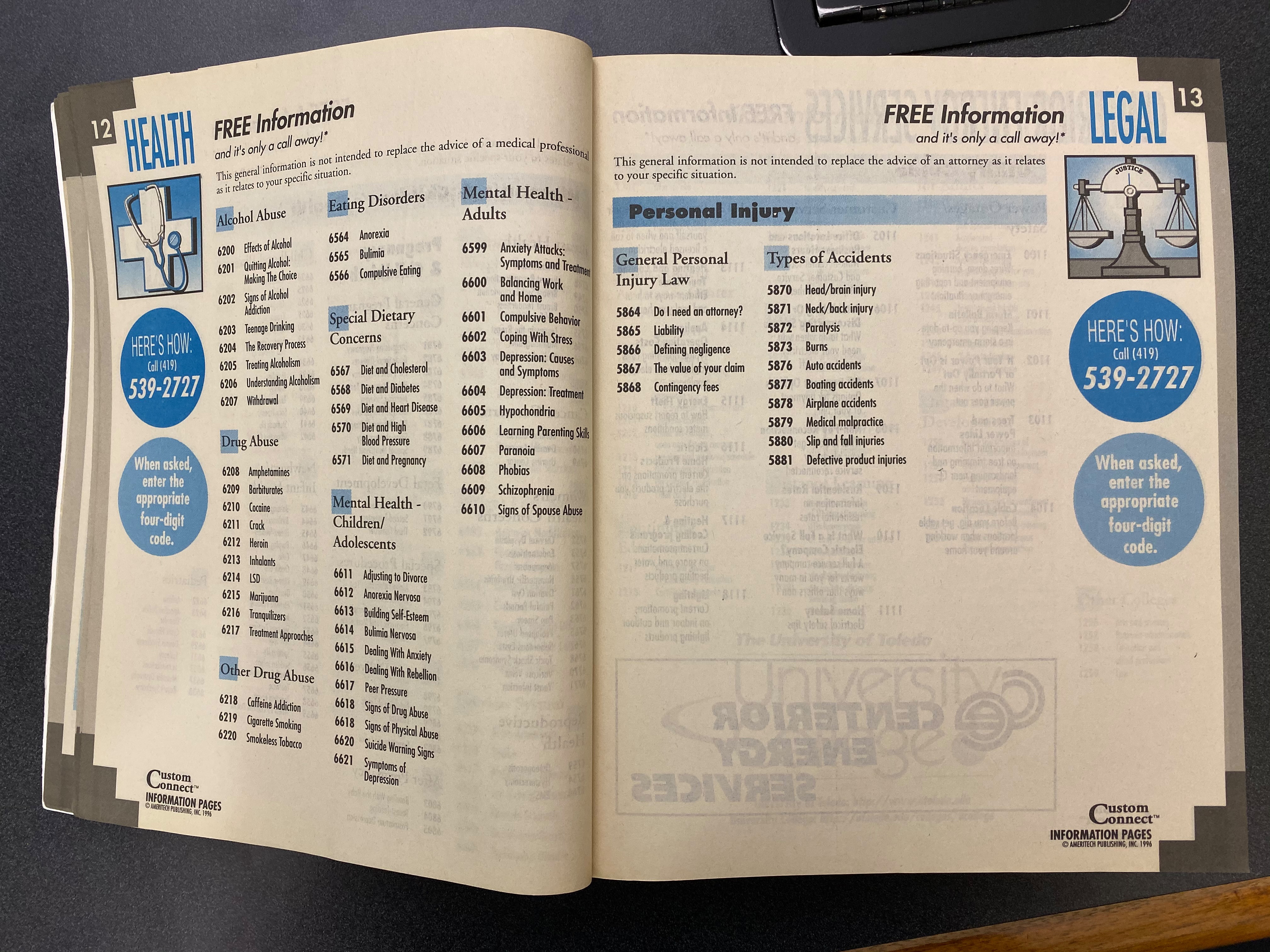
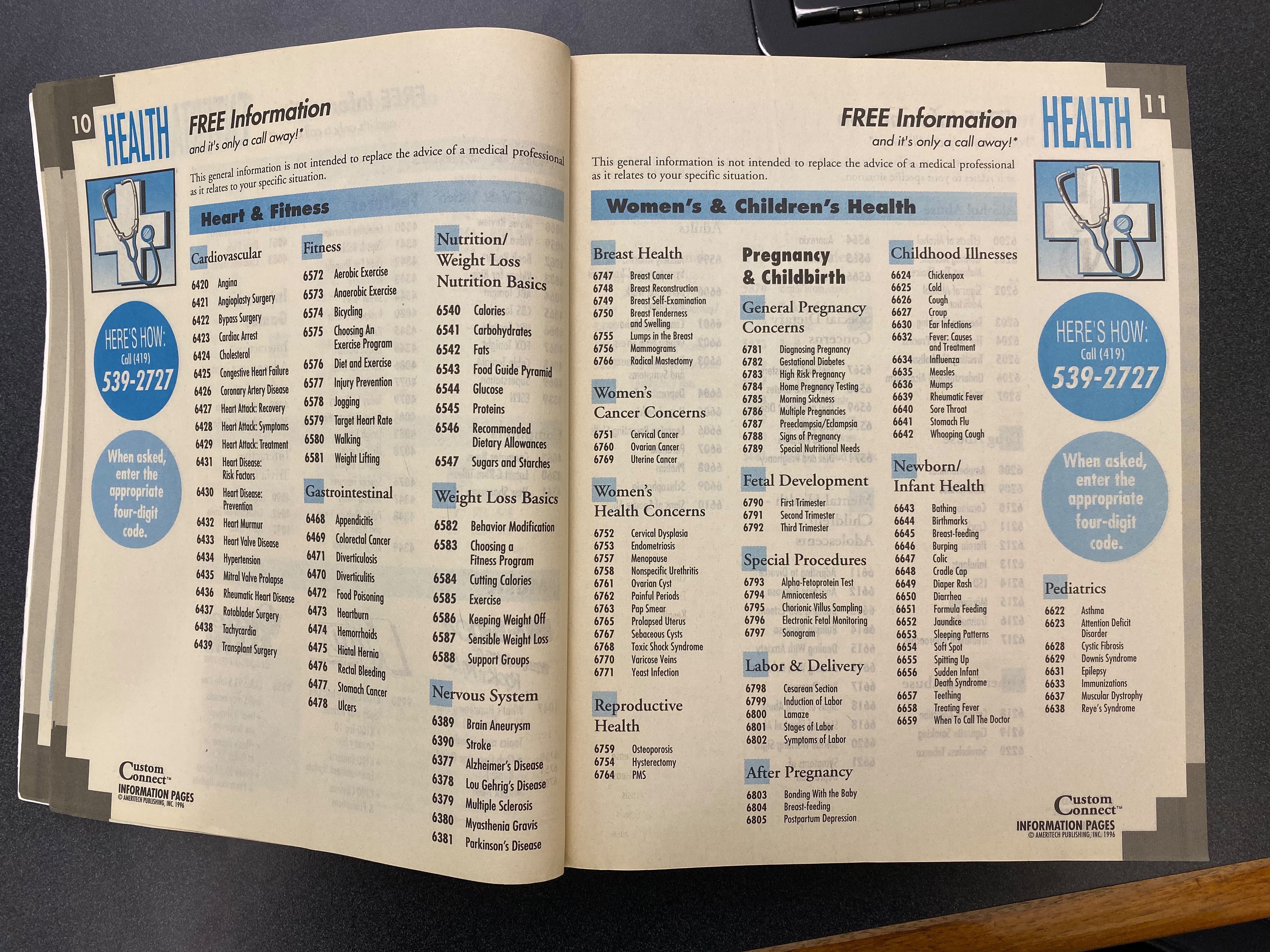
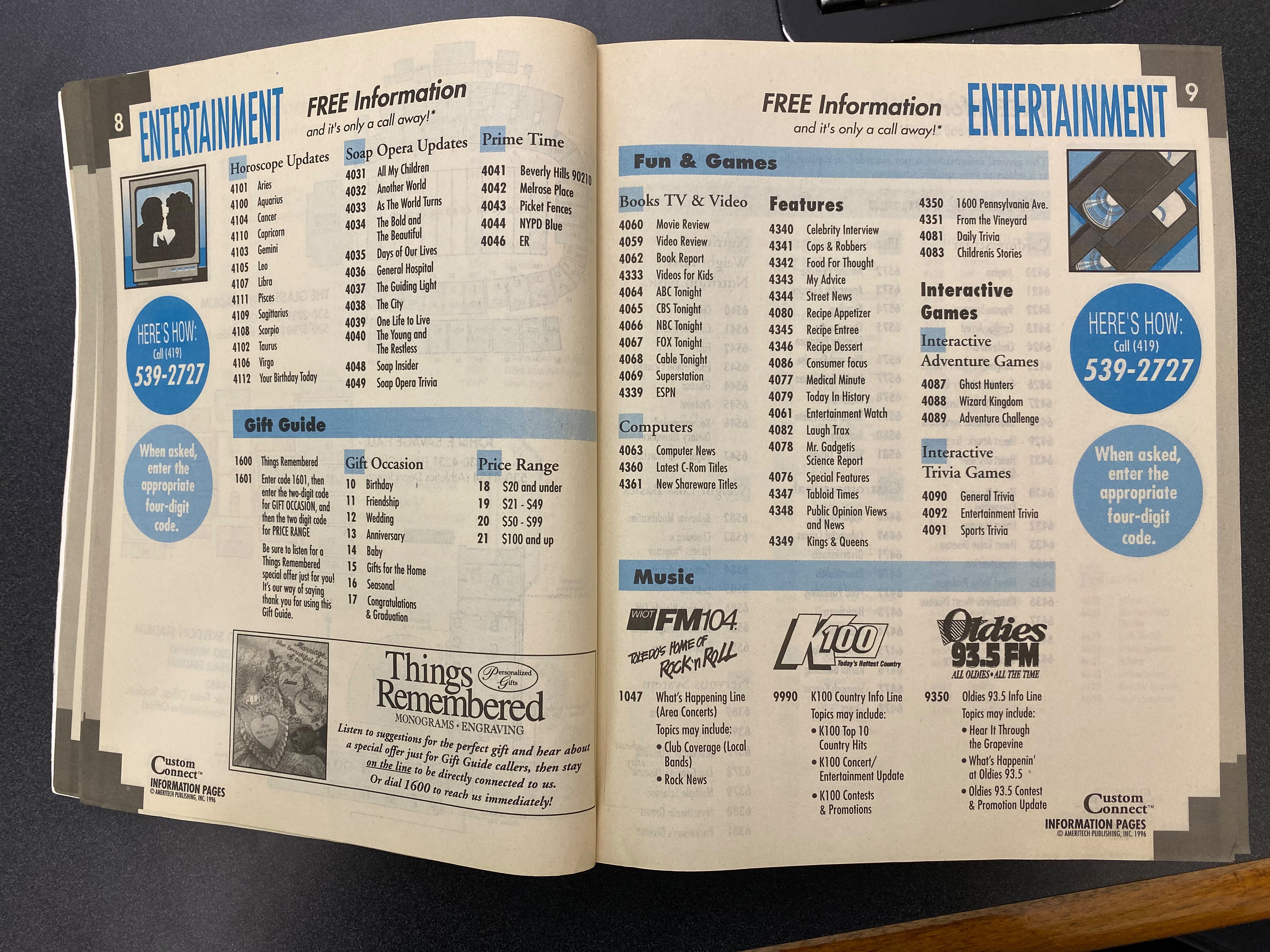
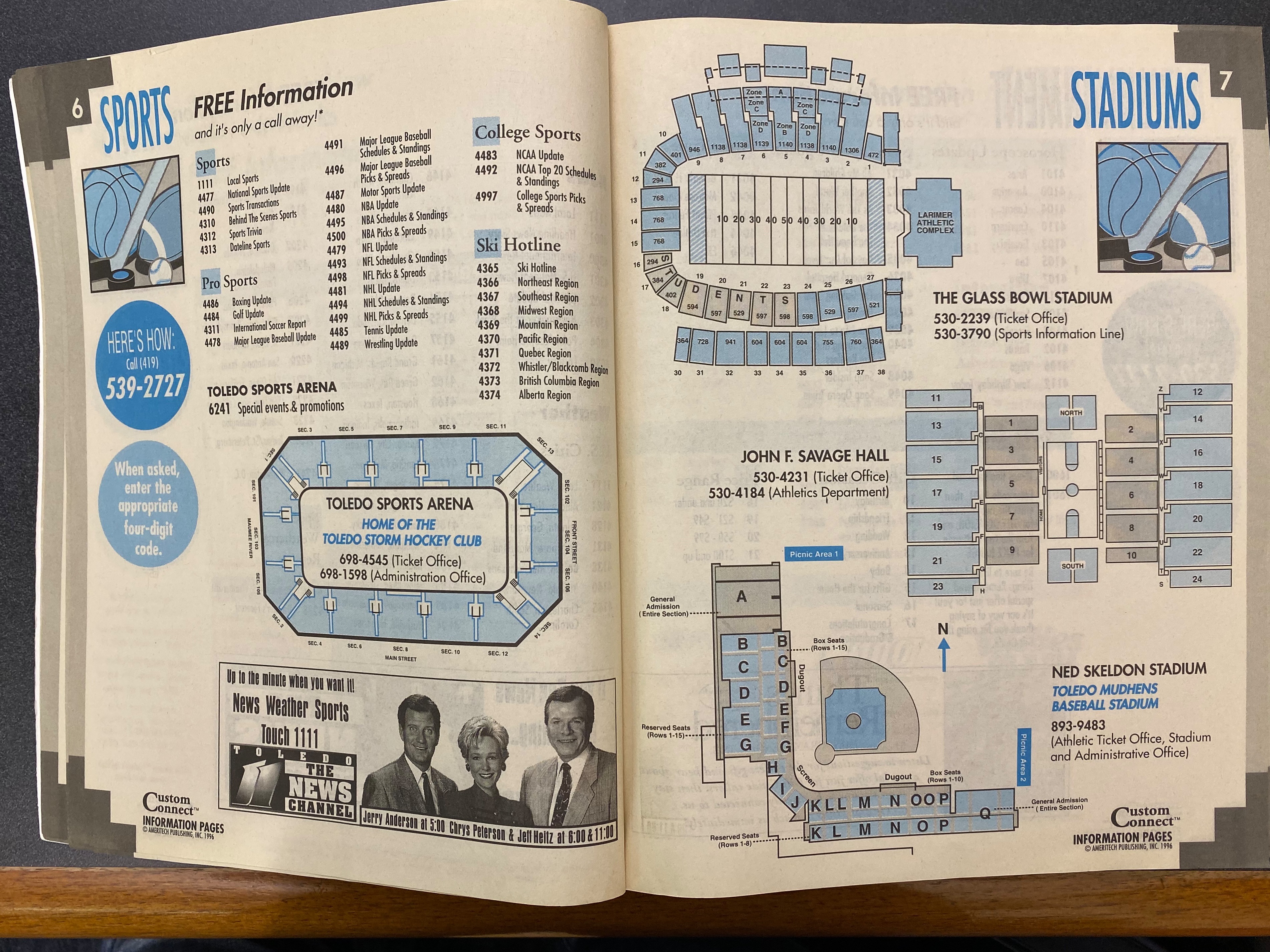
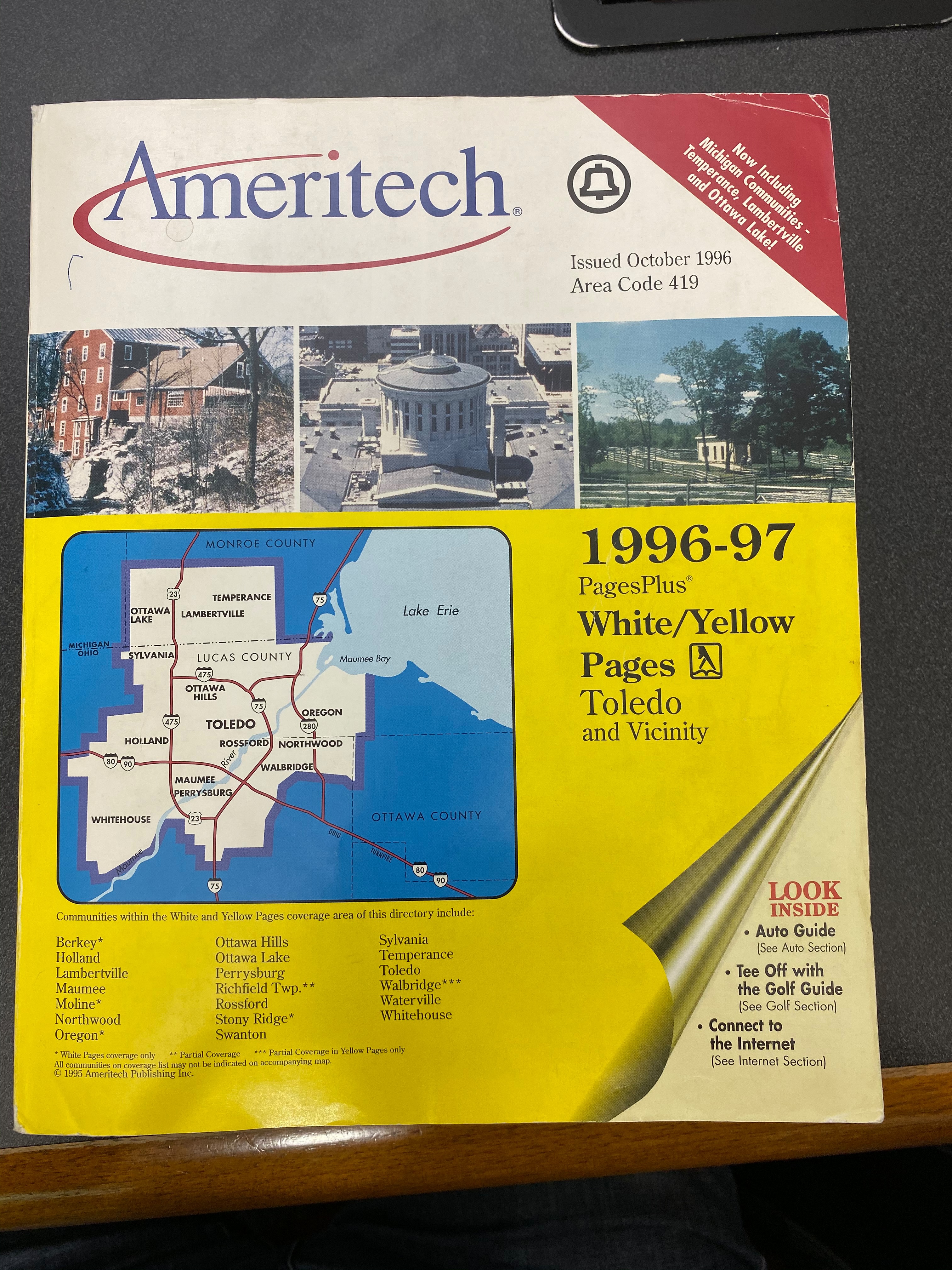
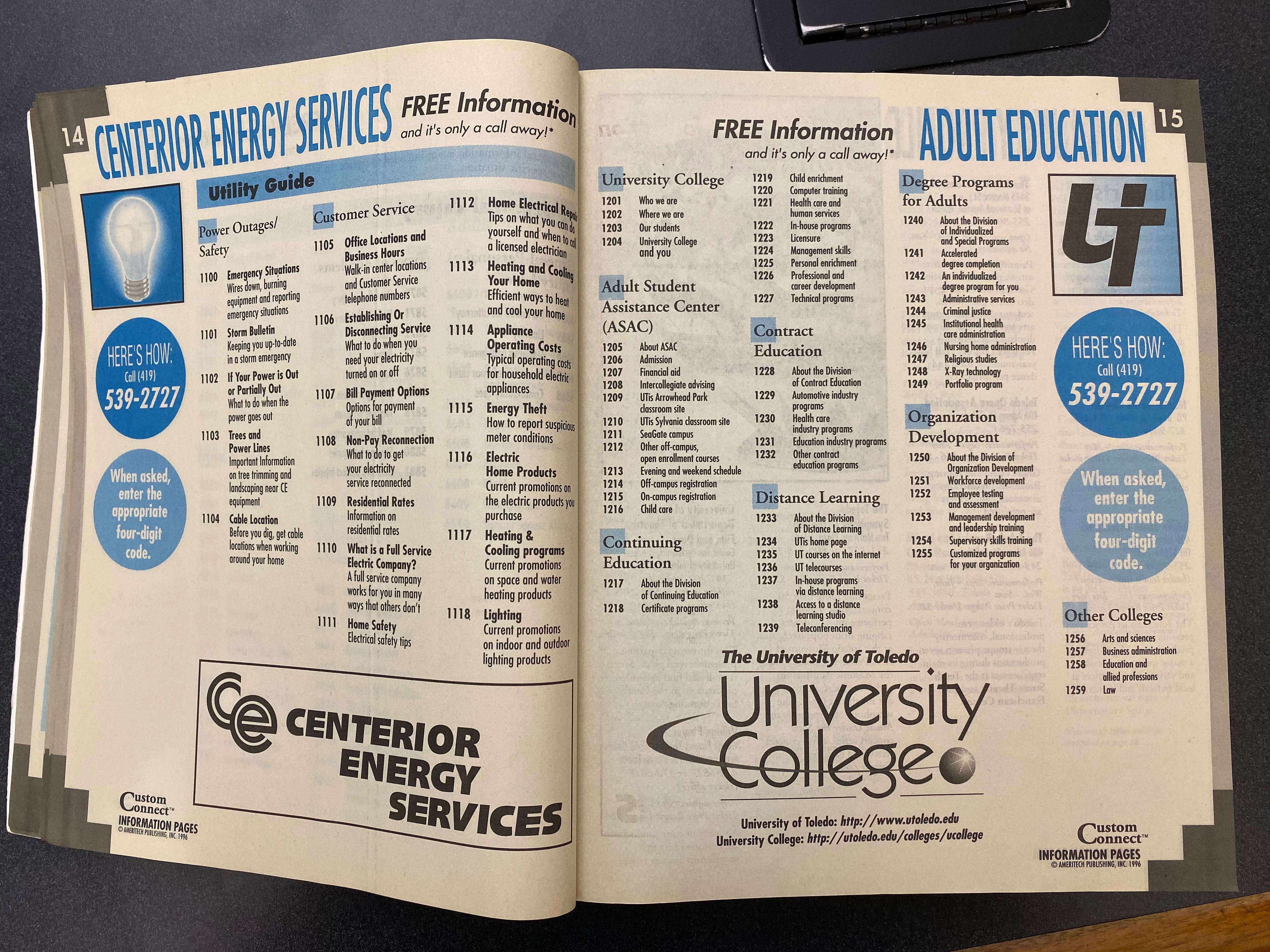
I don't remember the leave-a-message one, but I do remember the dial in service. One day I went down to the local library and found an old phone book from the 90s and sure enough, it had all the codes. Here are some photos from the Toledo, OH Ameritech 1996-7 phone book if anyone else is curious:

https://cdn.remarkedusercontent.com/file/remarked-prod/1/mar... https://cdn.remarkedusercontent.com/file/remarked-prod/1/mar... https://cdn.remarkedusercontent.com/file/remarked-prod/1/mar... https://cdn.remarkedusercontent.com/file/remarked-prod/1/mar... https://cdn.remarkedusercontent.com/file/remarked-prod/1/mar... https://cdn.remarkedusercontent.com/file/remarked-prod/1/mar...

Post reply on HN