Live data from Hacker News

Full Spectrum and Infrared Photography

timstr.website

21–30 of 34 posts

Re: Full Spectrum and Infrared Photography

#21

You’re considering whether it would be possible - and perhaps quite elegant - to use an XY‑scanner to raster‑scan the end of an optical fiber across a prism, disperse the light, and then capture the resulting spectrum with a CCD line sensor. With that setup, each pixel on the line sensor would effectively record the full spectral content of the light at that scanned position, all in a single acquisition.

You could probably use just an X-scanner, and instead of a CCD line sensor, use a regular 2D image sensor if you used a "1 pixel wide" slit aperture to crop the image perpendicularly to the direction that the prism disperses the light. So instead of a single pixel being dispersed, you disperse a line. You would reduce the time required by the root of the number of pixels you want (assuming a square image). (This is w…

> I would love to see e.g. a butterfly image with a slider that I could drag to choose the wavelength shown!!

Here[1] are some 31-band hyperspectral images of butterflies. Numpy/pillow can unpack the .mat files into normal images. Then perhaps vibecode a slider, or just browse the band images?

[1] http://www.ok.sc.e.titech.ac.jp/res/MSI/MSIdata31.html (includes 8 butterfly 31-band hyperspectral visible-light images). These butterflies are also in their VIS-SNIR dataset, and others.

I knew of the site having explored "First-tier physical-sciences graduate students are often deeply confused about color. Color is commonly taught, starting in K... very very poorly. So can we create K-3 interactive content centered around spectra, and give an actionable understanding of color?"

Re: Full Spectrum and Infrared Photography

#22
post #9

>Whenever shooting a subject with a mixture of visible and infrared light, it becomes readily apparent that infrared light focuses differently from visible light. For many subjects, this can mean having to choose between crisp visible contours and an odd pink glow, or blurred edges with some unusual pink features inside. Some things never look sharp no matter where you move the focus. The extent of this effect is ver…

> it becomes readily apparent that infrared light focuses differently from visible light.

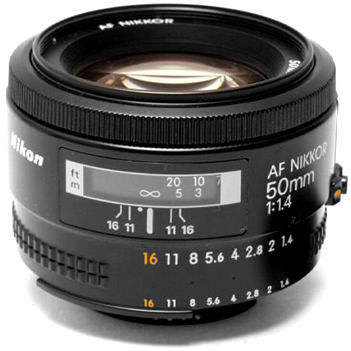
On old school manual focus capable lenses you'll note a small (often red when colors were used to indicate f stops) dot to the left of the focus indication line.

https://commons.wikimedia.org/wiki/File:AiS_Nikkor_85mm-2.0_...

On more modern lenses, is simply a dot. https://www.mir.com.my/rb/photography/companies/nikon/nikkor...

This was the offset for IR photography. You'd focus normally, and then make note of the focus distance and then line up the focus distance with the red dot for IR offset.

---

The UV photography often was done with other glass since the glass used by most lenses does an ok job of filtering UV light.

The 105mm UV lens for example - https://www.mir.com.my/rb/photography//hardwares/speciallens...

It's an oddball enough lens that others don't often make that it keeps getting special runs.

https://www.nikon.com/business/industrial-lenses/lineup/uv/

Costal Optics did a run of of the lens too - https://diglloyd.com/prem/s/DAP/Coastal60f4/Coastal60f4.html...

---

One of the photographers I've stumbled across from days of old who did UV nature photography (what do bees see?) http://www.naturfotograf.com/uvstart.html

Re: Full Spectrum and Infrared Photography

#23
post #19
post #11

Earlier quoted context omitted.

I've had this problem as well, but it's just due to optical properties of the lens and extremely consistent from image to image, so you can calibrate and correct for it as long as you focus each wavelength and collect data separately.

I don't think you can property calibrate for it unless you also move the camera to compensate for focus breathing. I'm not sure if that would fully account for it either. That being said these things are only very noticeable pixel peeping.

Focus breathing can be compensated for. The "breathing" only changes the effective focal length, not the location of the camera, so you can map the pixels to match where they should be and bilinear/bicubic interpolate appropriately.

Shoot a checkerboard at both wavelengths each focused properly and then compute the mapping.

If you're shooting macro stuff then maybe you are changing the effective location of the camera slightly depending on the exact mechanics of the lens and whether the aperture slides with the focusing, but the couple of mm shift in camera location won't matter for landscapes.

Alternatively, use cine lenses which are engineered not to breathe, but they are typically more expensive for that reason.

Re: Full Spectrum and Infrared Photography

#24
post #8

Related project: I shot a lot of landscapes in Iceland using a thermal (long wave IR) camera to show geologic phenomena in action. This involved stitching together a lot of (narrow FOV) thermal images and overlaying it on top of visible camera images for context. https://petapixel.com/2019/07/13/shooting-high-res-thermal-p...

Very cool!

Re: Full Spectrum and Infrared Photography

#25

I like the idea of using the IR, where it shows a greater degree of contrast, to act as a "contrast mask" on the visible light image. I'm thinking of the beautiful cloud detail in the one IR shot where the visible light photo had lost all of that. Seems like some compositing (sort of like HDR) you could try to pull in the best of both worlds.

For contrast specifically, you can get much of that effect with a red filter. Just removing the majority blue/green components already changes the lighting massively. Can add a polarising filter too for an even more extreme effect on the sky.

E.g. this photo (looks quite HDR'd but it's not, it's barely edited): https://rjones.photos/gallery/photo/20251207-img9638

Re: Full Spectrum and Infrared Photography

#27
post #9

>Whenever shooting a subject with a mixture of visible and infrared light, it becomes readily apparent that infrared light focuses differently from visible light. For many subjects, this can mean having to choose between crisp visible contours and an odd pink glow, or blurred edges with some unusual pink features inside. Some things never look sharp no matter where you move the focus. The extent of this effect is ver…

You could use a reflective long focal length lens and then everything would be in focus.

Re: Full Spectrum and Infrared Photography

#28
post #9

>Whenever shooting a subject with a mixture of visible and infrared light, it becomes readily apparent that infrared light focuses differently from visible light. For many subjects, this can mean having to choose between crisp visible contours and an odd pink glow, or blurred edges with some unusual pink features inside. Some things never look sharp no matter where you move the focus. The extent of this effect is ver…

Author here. Great point about the lens-dependent abberation, I mentioned this briefly in my earlier write-up about doing the full spectrum mod [1] but forgot to mention it by name here. I've been trying to get by without spending a lot of money on lenses and have gotten a lot of mileage out of a cheap used 50mm lens that _feels_ like it's just one or two solid glass elements. Fortunately the old camera mount I'm using means all the lenses for it are used, old, and super cheap secondhand. I'm about to try my luck with a 300mm lens. IR should be fun but we'll see if I can squeeze any UV at all through that.

Beautiful shots you have with your own full spectrum camera. Originally I somewhat dismissed the Kolari IR Chrome filter because the suggested combination with a channel swap and custom LUT felt a little too heavily edited for me and I prefer to stay close to the dry camera signal. The shot with the Tiffen Deep Yellow filter is gorgeous, how does that one look on the camera LCD without the channel swap?

[1] https://timstr.website/blog/diyfullspectrummod.html

Re: Full Spectrum and Infrared Photography

#29
post #2

This is really cool -- pedantically, I've always thought "full spectrum" is actually misleading from a traditional photographic sense. Like IR + visible light + UV != full spectrum. I'd love to see post-processed imagery of every-day life through an extended view of broader EM energy (similar to astrophotography)... like what does a city scene look like with x-rays and microwaves included? Side note: have always love…

Author here. I agree with you, "full spectrum" is a generous marketing phrase for what might more accurately be called _extended_ spectrum.

People way smarter than me have been able to achieve DIY spatial imaging with x-rays via compressed sensing [1] and with microwaves via phased arrays [2].

Optical wavelengths seem to be at a sweet spot of good angular resolution, varied natural sources, and harmless to humans.

[1] https://www.youtube.com/watch?v=EuVgGrun1V0

[2] https://www.youtube.com/watch?v=sXwDrcd1t-E

Re: Full Spectrum and Infrared Photography

#30
post #8

Related project: I shot a lot of landscapes in Iceland using a thermal (long wave IR) camera to show geologic phenomena in action. This involved stitching together a lot of (narrow FOV) thermal images and overlaying it on top of visible camera images for context. https://petapixel.com/2019/07/13/shooting-high-res-thermal-p...

Author here. Amazing work! The visible and thermal compositing is done really well and gives back so much detail and context that is lost in purely thermal images.

Does your IR camera give you access to raw temperature data? I've briefly played with a cheap thermal camera and it seemed to assign its own colours varyingly depending on the dynamic range of temperatures in view.

Post reply on HN