Live data from Hacker News

TiDAR: Think in Diffusion, Talk in Autoregression

arxiv.org

21–24 of 24 posts

Re: TiDAR: Think in Diffusion, Talk in Autoregression

#21
post #11

That's bizarre because I would expect the opposite. For reasoning you go step by step, and when you're done quickly diffuse the answer

Unification in logic programming isn't a forwards-only process, so there's no reason to expect deduction in an AI to proceed in a sort of procedural step by step fashion either. What ultimately matters is that all of the various deductions unify coherently in the end.

Exactly.

If you add a "cheat" rule that lets you deduce anything from something else, then replacing these cheat rule applications with real subgoal proofs is denoising for Natural Deduction.
Re: TiDAR: Think in Diffusion, Talk in Autoregression

#22

An update to Gemini diffusion is one of my most eagerly anticipated AI releases. It released to mild fanfare (mostly because you needed to request access to use it), and there has been silence ever since. Hopefully it's not more Google abandonware, because it was wicked fast and a delight to use

It's not a very promising direction because autoregressive LLMs still deliver better output quality per model weight, as a rule. Now, is it possible that a model can combine advantages of both? Combine fast generation and multidirectional causality of diffusion with precision, capabilities and generalization of autoregression? Maybe. This paper is research in that direction. So far, it's not a clear upgrade over auto…

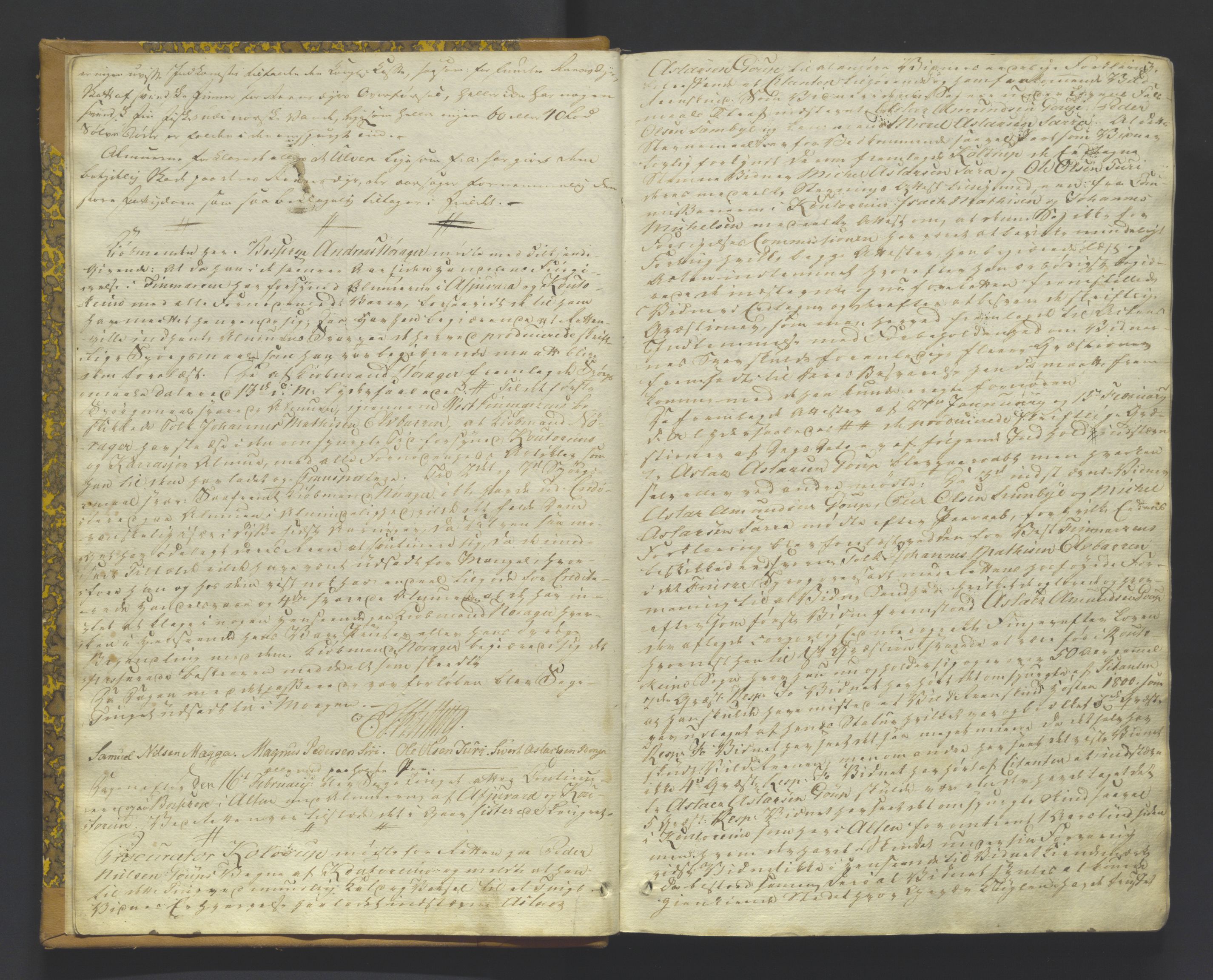
As a rule, but the devil is in the details. The thing, the one big thing I want to use multimodal LLMs for, is accessing the data in historical mostly handwritten texts.

None of the big LLMs do an acceptable job. This is a task a trained human can do, but it's a lot of work. You have to learn, not just the script style of the period (which can vary far more than people think), but even the idiosyncracies of a given writer. All the time, you run into an unreadable word, and you need to look around for context which might give a clue, or other places the same word (or a similar looking word) is used in cleaner contexts. It's very much not a beginning-to-end task, trying to read a document from start to end would be like solving a crossword puzzle in strict left to right, top to bottom order.

Maybe autoregressive models can eventually become powerful enough that they can just do that! But so far, they haven't. And I have a lot more faith in that the diffusion approach is closer to how you have to do it.

Re: TiDAR: Think in Diffusion, Talk in Autoregression

#23

Earlier quoted context omitted.

It's not a very promising direction because autoregressive LLMs still deliver better output quality per model weight, as a rule. Now, is it possible that a model can combine advantages of both? Combine fast generation and multidirectional causality of diffusion with precision, capabilities and generalization of autoregression? Maybe. This paper is research in that direction. So far, it's not a clear upgrade over auto…

As a rule, but the devil is in the details. The thing, the one big thing I want to use multimodal LLMs for, is accessing the data in historical mostly handwritten texts. None of the big LLMs do an acceptable job. This is a task a trained human can do, but it's a lot of work. You have to learn, not just the script style of the period (which can vary far more than people think), but even the idiosyncracies of a given w…

That looks like something that can be solved by autoregressive models of today, no architectural changes needed.

What you need is: good image understanding, at least GPT-5 tier, general purpose reasoning over images training, and then some domain-specific training, or at least some few-shot guidance to get it to adopt the correct reasoning patterns.

If I had to guess which model would be able to do it best out of the box, few-shot, I'd say Gemini 3 Pro.

There is nothing preventing an autoregressive LLM from revisiting images and rewriting the texts as new clues come in. This is how they can solve puzzles like sudoku.

Re: TiDAR: Think in Diffusion, Talk in Autoregression

#24

Earlier quoted context omitted.

As a rule, but the devil is in the details. The thing, the one big thing I want to use multimodal LLMs for, is accessing the data in historical mostly handwritten texts. None of the big LLMs do an acceptable job. This is a task a trained human can do, but it's a lot of work. You have to learn, not just the script style of the period (which can vary far more than people think), but even the idiosyncracies of a given w…

That looks like something that can be solved by autoregressive models of today, no architectural changes needed. What you need is: good image understanding, at least GPT-5 tier, general purpose reasoning over images training, and then some domain-specific training, or at least some few-shot guidance to get it to adopt the correct reasoning patterns. If I had to guess which model would be able to do it best out of the…

Try for yourself, if you want to:

https://urn.digitalarkivet.no/URN:NBN:no-a1450-rg60085808000...

Post reply on HN