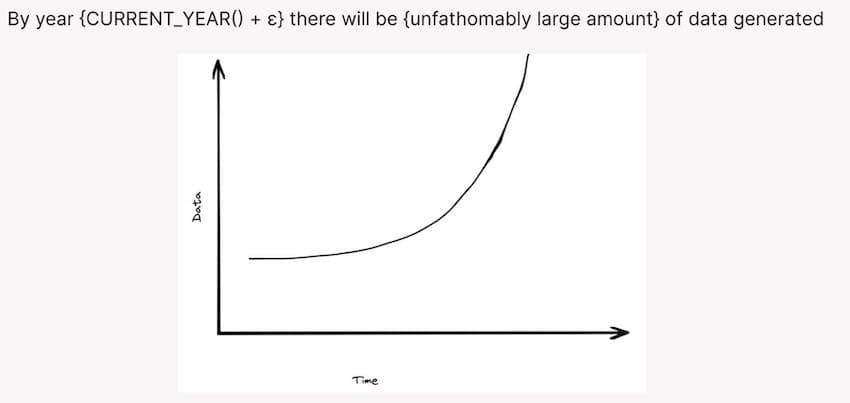
Not dead, it's just having it's winter time not unlike AI winter and once it has its similar "chatbot" moment, all will be well.
My take on the killer application is the climate change for example earthquakes monitoring. For a case study China has just finished building world's largest earthquake monitoring system with the cost of around USD1 Billion across the country with 15K stations [1]. Somehow at the moment is just monitoring existing earthquakes. But let's say there is a big data analytics technique can reliably predicts impending earthquake within a few days, that can probably safe many people and China now still hold the records of the largest mortality and casualty numbers due to earthquakes. Is it probable, the answer is a positive yes based on our work and initial results it's already practical but in order to do that we need integration with comprehensive in-situ IoT networks with regular and frequent data sampling similar to that of China.
Secondly, China also has the largest radio astronomy telescopes and these telescopes together with other radio telescopes collaborate in real-time through e-VLBI to form a virtual giant radio telescopes as big as the earth to monitor distance stars and galaxy. This is how the black hole got its first image but at the time due to logistics one of the telescope remote disks cannot be shipped to the main processing centers in US [2]. At that moment they are not using real-time e-VLBI onky VLBI, and it tooks them several months just to get the complete sets of the black holes observation data. With e-VLBI everything is real-time and with automatic processing it will be hours instead of month. These radio telescopes can also be used for other purposes like monitoring climate change in addition to imaging black holes, their data is astronomical pardon the pun [3].
[1] Chinese Nationwide Earthquake Early Warning System and Its Performance in the 2022 Lushan M6.1 Earthquake:
https://www.mdpi.com/2072-4292/14/17/4269
[2] How Scientists Captured the First Image of a Black Hole:
https://www.jpl.nasa.gov/edu/news/2019/4/19/how-scientists-c...
[3] Alarmed by Climate Change, Astronomers Train Their Sights on Earth:
https://www.nytimes.com/2024/05/14/science/astronomy-climate...