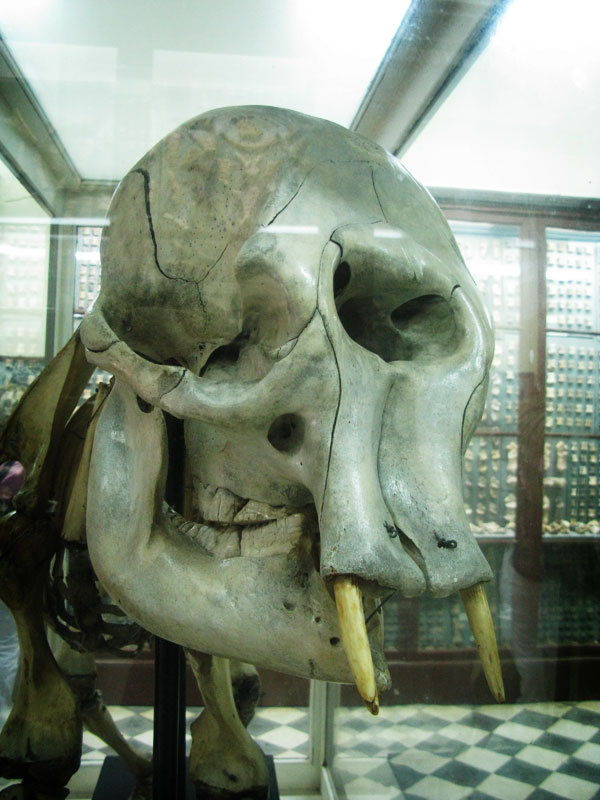
This is like the gif where everyone draws a picture on the back of the person in front and the end result is nothing like the original. Chinese whispers in art form!
I've never seen that, would love a link
21–30 of 44 posts
This is like the gif where everyone draws a picture on the back of the person in front and the end result is nothing like the original. Chinese whispers in art form!
But there must have been some kind of change between antiquity and middle ages that caused so much knowledge and international exchange to simply vanish.
I really wonder what exactly went on there.
Some of these are pretty wild. Makes me wonder if similar mischaracterized/illustrated of animal depictions were the source for the belief in dragons and other monsters
So, I know the meme that the European middle ages were some time of great civilizational downfall ("dark ages") is itself pretty much debunked by now. But there must have been some kind of change between antiquity and middle ages that caused so much knowledge and international exchange to simply vanish. I really wonder what exactly went on there.
So, I know the meme that the European middle ages were some time of great civilizational downfall ("dark ages") is itself pretty much debunked by now. But there must have been some kind of change between antiquity and middle ages that caused so much knowledge and international exchange to simply vanish. I really wonder what exactly went on there.
I recommend David Hackett fishers "the great wave" for one take
So, I know the meme that the European middle ages were some time of great civilizational downfall ("dark ages") is itself pretty much debunked by now. But there must have been some kind of change between antiquity and middle ages that caused so much knowledge and international exchange to simply vanish. I really wonder what exactly went on there.
At its peak it was a huge unified empire, it should be expected a lot of commerce and knowledge would move freely within its borders. The (slow) fall of the Roman Empire would be like watching the end of civilisation, a dystopian fiction of the survivor-apocalyptic kind.
The following centuries, all the way to our modern age, rulers tried to claim the title of Cæsar (Kaiser, Czar, ...), tried to claim a continuity of the empire (e.g. Nazi's III Reich) or even invoked past roman imagery (the roman eagle ["aquila"] is also present as a symbol of power in the USA [american eagle], in Russia [romanov coat of arms], in Germany [both the nazi's eagle and the bundestag's eagle]).
It's as if the world is still trying to "get over" the end of the Roman Empire.
So, I know the meme that the European middle ages were some time of great civilizational downfall ("dark ages") is itself pretty much debunked by now. But there must have been some kind of change between antiquity and middle ages that caused so much knowledge and international exchange to simply vanish. I really wonder what exactly went on there.
Doesn't the fall of the Roman Empire explain it? At its peak it was a huge unified empire, it should be expected a lot of commerce and knowledge would move freely within its borders. The (slow) fall of the Roman Empire would be like watching the end of civilisation, a dystopian fiction of the survivor-apocalyptic kind. The following centuries, all the way to our modern age, rulers tried to claim the title of Cæsar (K…
Perhaps even more clearly than the adoption of the American bald eagle echoing the Roman eagle is the bronze fasces in the House rostrum, a direct replication of the Roman symbol of authority from which, also, Italian fascism derives its name.
So, I know the meme that the European middle ages were some time of great civilizational downfall ("dark ages") is itself pretty much debunked by now. But there must have been some kind of change between antiquity and middle ages that caused so much knowledge and international exchange to simply vanish. I really wonder what exactly went on there.
Doesn't the fall of the Roman Empire explain it? At its peak it was a huge unified empire, it should be expected a lot of commerce and knowledge would move freely within its borders. The (slow) fall of the Roman Empire would be like watching the end of civilisation, a dystopian fiction of the survivor-apocalyptic kind. The following centuries, all the way to our modern age, rulers tried to claim the title of Cæsar (K…
I wonder if one could define e.g. an "elephant horizon" - some point in time where, before, how an elephant looks was common knowledge (among the educated) and after which the knowledge was lost or replaced by myths so we got depictions like in the OP.
[1] https://en.m.wikipedia.org/wiki/Late_antiquity
> Precise boundaries for the period are a continuing matter of debate, but Brown proposes a period between the 3rd and 8th centuries AD.
[2] https://de.m.wikipedia.org/wiki/Ende_der_Antike (German only unfortunately)
The page is from 2008 - unfortunately a lot of links to the original pictures do not work anymore.
When I research something that's important to me, I take screenshots or save the source code because I know that the referenced web page is likely to disappear within a few years.
And it'd be nice to have a tool to automatically replace broken links with copies of your saved screenshots.