Live data from Hacker News

Cement is the source of 8% of the world's CO2 emissions (2018)

bbc.com

21–30 of 158 posts

Re: Cement is the source of 8% of the world's CO2 emissions (2018)

#21
post #14
post #8

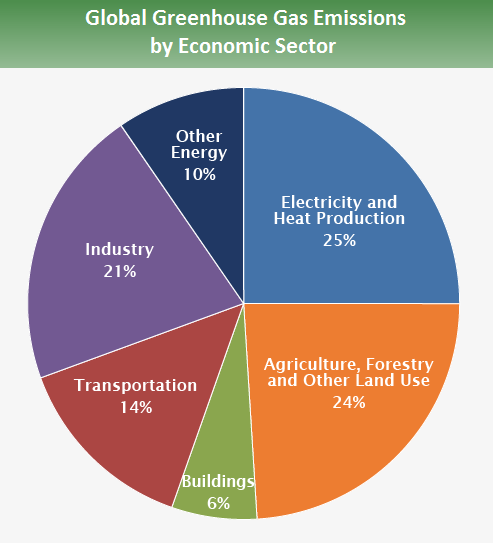
Is there a serious source ranking all global CO2 emissions? Where percentages add up to 100%?

I don't have the answer, but I can imagine this is hard to compile because so many things emit CO2 all over their supply chain. So the question becomes, when do you consider something the 'final' product in the line. If it's cement, you presumably can't count 'construction' as it would be double-counted. Do you count an iPhone just during production? Or do you include shipping? If you include shipping, you can't have…

I would argue cargo ships don’t need their own category in that case since they don’t exist for any other reason than to be part of the supply chain or other goods. All cargo ship pollution can be attributed to the cargo they’re transporting.
Re: Cement is the source of 8% of the world's CO2 emissions (2018)

#22

Very interesting, didn't expect it to be that high. Another thing I came across recently : The fashion industry is responsible for 10 % of annual global carbon emissions. Source : https://www.worldbank.org/en/news/feature/2019/09/23/costo-m...

So the biggest polluters are food, clothing and shelter - I'm seeing a pattern here...

Yes, but the question is, how much of these emissions come from the basics, and how much from extravagance?

Re: Cement is the source of 8% of the world's CO2 emissions (2018)

#23
The article doesn't mention one alternative: CLT (cross laminated timber) as a building material for houses and flats. See https://www.bbc.com/future/article/20190717-climate-change-w... for example.

Using CLT (and passive house principles) can reduce the total CO2 emmissions of a house by 90% in its total life span. The wood in CLT stores carbon and the passive house principles reduces energy needs.

Re: Cement is the source of 8% of the world's CO2 emissions (2018)

#26

Very interesting, didn't expect it to be that high. Another thing I came across recently : The fashion industry is responsible for 10 % of annual global carbon emissions. Source : https://www.worldbank.org/en/news/feature/2019/09/23/costo-m...

Statistics on how much CO2 something emits can vary wildly. For instance, meat consumption has high CO2 emissions when you include the CO2 emitted by transporting grain to feed animals. But most typical studies would include that under emissions due to transportation. Hence why you can have some studies claiming meat accounts for a double-digit percentage of emissions while others claim that all agriculture contributes to ~3% of emissions.

The citation for this claim doesn't seem very robust. It links to the Ellen MacArthur foundation website, but just to the front page. After some of my own Googling it looks like it's coming from this publication [1]. This study drew up some estimates on the amount of textiles produced and discarded as well as a simple conversion of 4.7 Kg of CO2 for every Kg of textiles produced. The source for this ratio of CO2 to kilogram of textiles simply says "McKinsey Analysis"/

1. https://www.ellenmacarthurfoundation.org/assets/downloads/pu...

Re: Cement is the source of 8% of the world's CO2 emissions (2018)

#28
Setting aside CO₂ concerns for a moment, I was explaining cement to a young child today and was suddenly struck by how marvelous cement is: It’s poured as a liquid yet solidifies into rock, and has been known since ancient times [1].

[1]: https://en.wikipedia.org/wiki/Cement#History

Re: Cement is the source of 8% of the world's CO2 emissions (2018)

#29
post #15
post #7

Earlier quoted context omitted.

this is a much more depressing number. steel and cement are necessary to the development of all nations, designer clothes are not.

Garments that are high quality are designed to last and be worn for a long time. High end selvedge jeans might run a couple hundred bucks, but they will last a decade. I suspect cheap, disposable clothing is driving much more emissions.

> High end selvedge jeans might run a couple hundred bucks, but they will last a decade.

Is there any data supporting this? Because while I think this is our intuition, i.e. "it's expensive therefore it's better quality," I wonder if there's any way we could verify this other than anecdotal evidence.

Post reply on HN