[deleted]
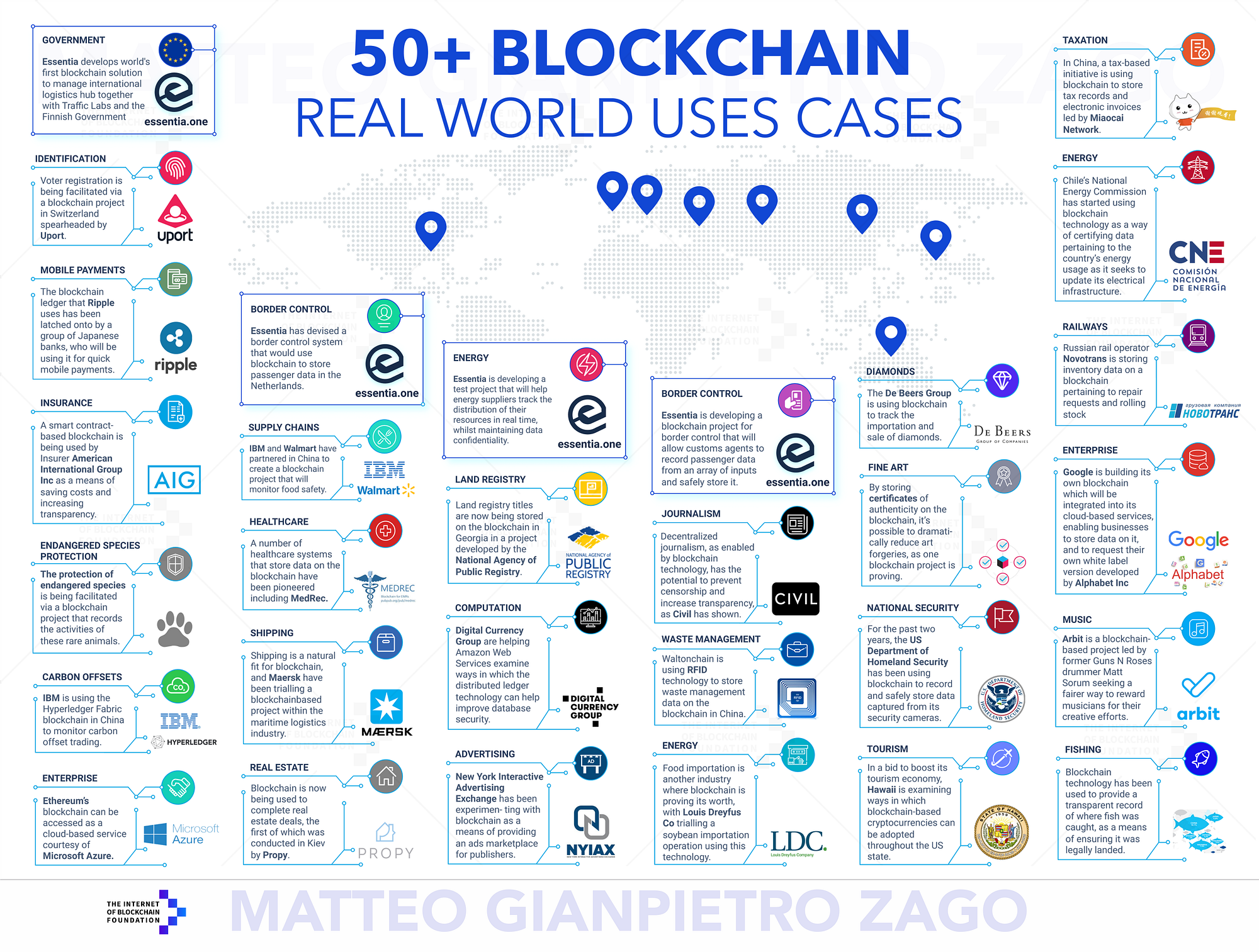
50+ real world use cases built on blockchain architecture
21–30 of 44 posts
Re: 50+ real world use cases built on blockchain architecture
#22Ripple? Mobile payments? How can a bloated ledger with thousands of tps be good for running on mobile. It's more like interbank thing.
Re: 50+ real world use cases built on blockchain architecture
#23Earlier quoted context omitted.
Namecoin is the best example of a real world use case, a proper replacement of a DNS with no central authority. This is clearly one which is very difficult to replicate reliably without a blockchain.
Even if blockchain DNS systems were production quality - which they're far from - why is a 'central authority' inherently bad? The entirety of cloud computing, and the modern internet, is based on the pretense of giving your entire infrastructure to a centralized authority. "Oh, but what if your centralized cloud provider is actually evil and incompetent", the free markets allow you to change providers until you have…
If my cloud provider is bad, I can switch to another one or self-host.
You can't switch from the ICANN, no matter which domain you chose, it depends on them, they effectively have a monopoly. I want to self host my domain name.
Re: 50+ real world use cases built on blockchain architecture
#24Time to mount a 51% attack and steal land in Georgia. "It doesn't work like that"?
Indeed it doesn't. 51% attacks don't allow you to steal something you've never owned, because there's no valid transaction that transfers ownership to you.
The only way a 51% attack allows you to steal anything is by reverting a transaction you made that sends something from you to me, and immediately replacing it with a transaction that sends the same thing from you to yourself.
This is only useful if you convinced me to give you something in return for the money you paid me in between you sending the original transaction and subsequently reverting it. Once all is said and done, even if I can't prove it (for some definition of proving it), I still _know_ you stole from me, which has its own consequences.
51% attacks _do_, however, allow you to wreak havoc on the chain state, which can sometimes be an attack worth performing.
Re: 50+ real world use cases built on blockchain architecture
#25Almost all of these would have been possible without a blockchain. Either through a web of trust or even simple cryptographically signed messages with timestamps stored in a normal DB. Some of these aren't even "real world use cases" like Hawaii trying to boost tourism by something-something blockchain. Civil is a notable exception, though I'm not unconvinced that it couldn't be done without one. In the end though, i…
Namecoin is the best example of a real world use case, a proper replacement of a DNS with no central authority. This is clearly one which is very difficult to replicate reliably without a blockchain.
Noon question: does the P2P network bootstrap with traditional DNS to find peers?
Re: 50+ real world use cases built on blockchain architecture
#26Earlier quoted context omitted.
Even if blockchain DNS systems were production quality - which they're far from - why is a 'central authority' inherently bad? The entirety of cloud computing, and the modern internet, is based on the pretense of giving your entire infrastructure to a centralized authority. "Oh, but what if your centralized cloud provider is actually evil and incompetent", the free markets allow you to change providers until you have…
If my cloud provider is bad, I can switch to another one or self-host. You can't switch from the ICANN, no matter which domain you chose, it depends on them, they effectively have a monopoly. I want to self host my domain name.
There's a fair point to be made there. But then I would ask which solution is best: lobbying hard enough to democratize the organizational structure of ICANN, creating a competitive ecosystem, or resorting exclusively to a ledger of entries with no capacity to be modified according to legalities, attacks, or otherwise? What if someone spams the ledger with too many names? What if someone takes domains that should be illegal for them to possess? What if someone takes someone else's private key? What if an organization gets their private key stolen? The vectors for exploitation don't just disappear because you have a decentralized system. The exploitative behaviour just changes.
Re: 50+ real world use cases built on blockchain architecture
#27Earlier quoted context omitted.
Namecoin is the best example of a real world use case, a proper replacement of a DNS with no central authority. This is clearly one which is very difficult to replicate reliably without a blockchain.
Even if blockchain DNS systems were production quality - which they're far from - why is a 'central authority' inherently bad? The entirety of cloud computing, and the modern internet, is based on the pretense of giving your entire infrastructure to a centralized authority. "Oh, but what if your centralized cloud provider is actually evil and incompetent", the free markets allow you to change providers until you have…
> Even if blockchain DNS systems were production quality - which they're far from
That's not an argument against building something...
> which they're far from - why is a 'central authority' inherently bad?
They're not. Sometimes you want a central authority, and sometimes you don't. Both modes can be good. But previously central authorities were necessary due to the physics of DNS. Blockchain enables a new mode. Now the two modes can compete, and we can reach a new equilibrium with both, or one can win out. That's what's cool about it.
Re: 50+ real world use cases built on blockchain architecture
#28Time to mount a 51% attack and steal land in Georgia. "It doesn't work like that"?
Indeed it doesn't. 51% attacks don't allow you to steal something you've never owned, because there's no valid transaction that transfers ownership to you. The only way a 51% attack allows you to steal anything is by reverting a transaction you made that sends something from you to me, and immediately replacing it with a transaction that sends the same thing from you to yourself. This is only useful if you convinced…
You can prove it, you have the signed transaction from him that can't be included in the blockchain because their inputs were spent. If you know who you were dealing with that did the double spend, you likely would have a very good case against them of fraud.
Re: 50+ real world use cases built on blockchain architecture
#29Earlier quoted context omitted.
Even if blockchain DNS systems were production quality - which they're far from - why is a 'central authority' inherently bad? The entirety of cloud computing, and the modern internet, is based on the pretense of giving your entire infrastructure to a centralized authority. "Oh, but what if your centralized cloud provider is actually evil and incompetent", the free markets allow you to change providers until you have…
> Even if blockchain DNS systems were production quality - which they're far from That's not an argument against building something... > which they're far from - why is a 'central authority' inherently bad? They're not. Sometimes you want a central authority, and sometimes you don't. Both modes can be good. But previously central authorities were necessary due to the physics of DNS. Blockchain enables a new mode. Now…
>That's not an argument against building something...
At which point did I argue building things is bad? I actually took a lot of time to learn Ethereum smart contract development just to get to the bottom of the whole blockchain ecosystem. Learning and building are almost never bad things.
I'm not bashing the idea of competition between blockchain and traditional centralized authorities either. I'm extremely pro-competition. I'm bashing the fact that all - yes, all - blockchain applications provide negative value compared to their traditional counterparts. The argument that blockchain enthusiasts use to justify their support for such low-quality infrastructure is this philosophy that having no centralized authority is, by itself, valuable. This is what I'm bashing.
Re: 50+ real world use cases built on blockchain architecture
#30Almost all of these would have been possible without a blockchain. Either through a web of trust or even simple cryptographically signed messages with timestamps stored in a normal DB. Some of these aren't even "real world use cases" like Hawaii trying to boost tourism by something-something blockchain. Civil is a notable exception, though I'm not unconvinced that it couldn't be done without one. In the end though, i…
Even if blockchain really just means dressed up encryption, I would never trust a security solution that is built and marketed on lies.