Apple Inc. isn't taking this development lightly. It even prohibited WeChat from using the term "app" as applied to mini programs.
Glad to see Apple once again using its tight grip on its developers to look out for Apple.
21–30 of 104 posts
Glad to see Apple once again using its tight grip on its developers to look out for Apple.
Didn't know why this is hyped so much, and there is nothing revolutionary about this. It makes the Chinese internet even more becoming WeChat's own walled garden.
Their "revolution" is using federated logins and an integrated pay service. So a google account or the like and google pay. About the only interesting take home here is that developers would do well to keep their app sizes down and to design for their market. Everything else, you can get from android and from ios today.
The revolution alludes to the fact that one app is taking over everything from social networking, mobile payments, food, ticket sales, ride-hailing, financial products, bill payments, and much more.
This is praising WeChat for having a built-in web browser that supports single sign-on and credit card autofill.
I find it difficult to understand how these things are revolutionising. Perhaps it has something to do with the culture background of the users?
TL;DR, the mini program is basically WeChat's own chrome web store, web app with proprietary API to interact with WeChat. Didn't know why this is hyped so much, and there is nothing revolutionary about this. It makes the Chinese internet even more becoming WeChat's own walled garden.
And just because of that, most of the businesses and companies start to live off of wechat's user base and features. For example, there are subscription accounts where you get subscribed articles regularly so you don't need to build a news app anymore for content, and individual content producers can also publish just as easily, so the spiral gets deeper and deeper into the wechat system. And when payment started to come around on WeChat in 2014 (iirc), even Alipay is taking a hit, because now you literally can just keep WeChat open on your phone.
I think that, if you build an IM product and suddenly become the only app people ever use, this is just amazing.
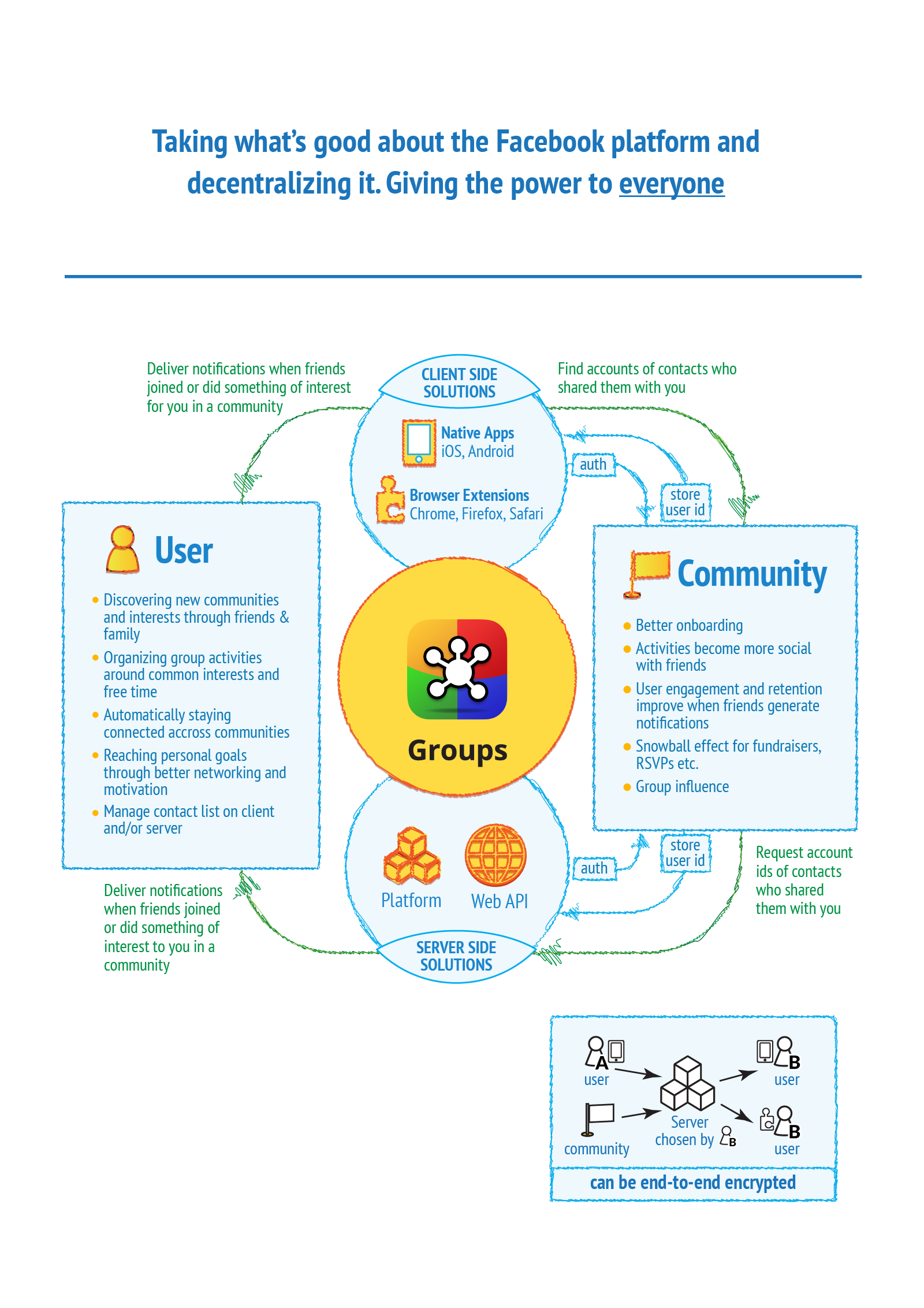
If we don't succeed in decentralizing user identity then centralized platforms like Facebook and WeChat will win. We need the Web to win in order for platforms to stay open, and innovation to flourish, and power dynamics to be more healthy. Here is me pontificating at length about it in a video: https://m.youtube.com/watch?v=WzMm7-j7yIY
I don't think you should take it as a given that decentralization of login is good. I do not want my credentials stored on every personalized web site that I go to, so appreciate when I can sign in with one of my existing ids.
Only the people who you want to share your ids on other services with will know. Such as your friends. You might tell only a few people that you are CrackerJack on porn.com, but you might tell everyone that you are FooManChu22 on Instagram. It's all up to you. And it should be seamless and automatic – when you arrive at a new service, you should already have the ids of all your friends on that service who shared it with you by now. You send this list to the service in order to connect with those friends. And you can also get notifications when a friend joins a service.
This is truly decentralized, private, secure, and social. Here's a diagram: https://qbix.com/diagrams/groups.png
And if you want to learn more, go here: https://qbix.com/platform or email me.
WeChat's "App Revolution" is by no means a technical revolution, as several other commenters have pointed out. There's nothing new with embedding a web browser, nor with SSO, or integrated payments. The revolution is the fact that this is an app with an install base approaching one billion users (846M monthly active users as of Q3'16). Anything they do is potentially revolutionary by virtue of sheer scale. They are a…
I wouldn't be surprised to see a phone from them in near future