How come the original post has 55 upvotes, but the karma of of original poster is only 18 (6:33 PM GMT)?
My first DDoS attack for a $200 ransom
21–30 of 67 posts
Re: My first DDoS attack for a $200 ransom
#22Roughly, a somewhat lackluster response to a somewhat lackluster DDoS attempt. They tried blocking specific ip addresses, which didn't work, because the attack was somewhat distributed. They then just turned on some caching, which allowed the site to function, albeit with an unknown excess bandwidth charge pending. And, the DDoS itself can't of been terribly impressive, as all it took to mitigate was a bit of caching…
I was shocked that 12 requests/second could take down any site. I use async logic (previously OpenResty, more recently NodeJS and Go) and largely pregenerated sites, so 2500 requests/second is a minimum baseline -- on a much lower end instance than an m4.xlarge. There's a reason I don't use PHP (or any primarily synchronous language like Ruby) any more.
A well configured small / medium instance should easily handle 100 requests/second. My test PHP setup on micro instances serves 1000 requests/second before any signs of slowdown. [1]
[1] https://nestify.io/wp-content/uploads/2015/10/loader.io_.png
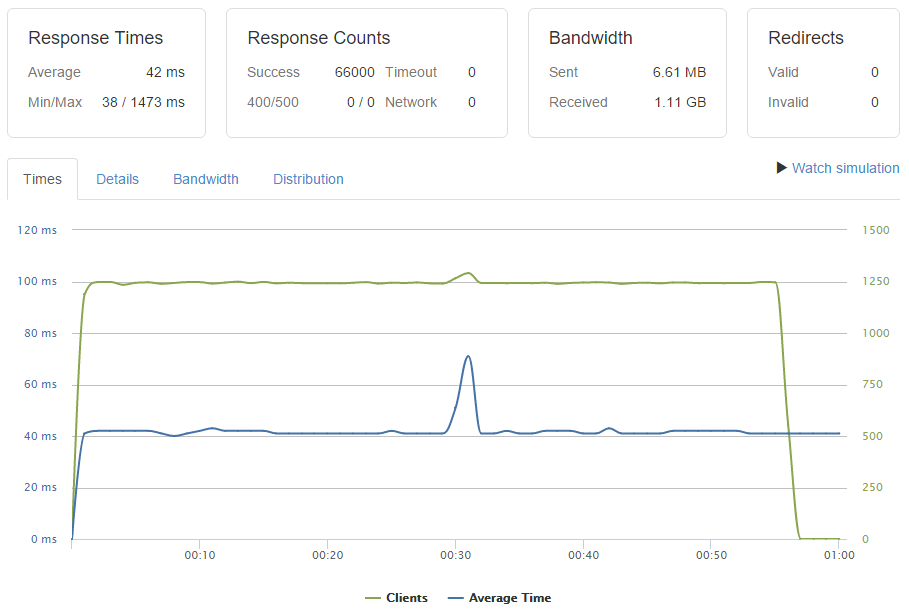
Re: My first DDoS attack for a $200 ransom
#23This is an amazingly weak DDoS, put your site behind CloudFlare or similar free service and go take a nap. They'll tank this without raising an eyebrow.
Re: My first DDoS attack for a $200 ransom
#24I wonder what would happen if GET / only returned a redirect to somewhere (either an HTTP code or an HTML with window.location='http:/yoursite.com/new_page'
Re: My first DDoS attack for a $200 ransom
#25> 40 cores [m4.10xlarge], but still unable to process 10 requests/sec my goodness.
That's php for you. Although I use php myself quite often, it can be a resource hog if you're lazy about optimization. A customer I was working with was using wordpress, and their homepage took about 5 seconds to load due to a hideously inefficient wordpress module that was doing the exact same sql query thousands of times! With a little bit of optimization I managed to get it down to about 1 or 2 seconds.
For my own sites, I mostly use static html or server-parsed html.
Re: My first DDoS attack for a $200 ransom
#26Roughly, a somewhat lackluster response to a somewhat lackluster DDoS attempt. They tried blocking specific ip addresses, which didn't work, because the attack was somewhat distributed. They then just turned on some caching, which allowed the site to function, albeit with an unknown excess bandwidth charge pending. And, the DDoS itself can't of been terribly impressive, as all it took to mitigate was a bit of caching…
Thinking on this some more, this story makes even less sense. He first mentions having to change Apache to recognize X-Forwarded-For, because there is Amazon Elastic Load Balancing between his site and the internet. This means, of course, that the "attacking ips" aren't making direct connections to his EC2 instance. They are proxied connections, all from the internal ELB service. So later, when he mentions trying to…
You might use ELB + one EC2 to serve an SSL certificate. That takes the encryption load off of EC2 and is durable. AWS has a new SSL service though, but this was a recommended way until recently.
Re: My first DDoS attack for a $200 ransom
#27Earlier quoted context omitted.
And there are 73 persons on it right now if I believe Google Analytics
[ Edit: I'm almost certain it's an ipv6 vs ipv4 issue. the ipv4 addresses resolve to github pages land, the ipv6 address resolves to somewhere inside OVH - the issue being that if the viewer's network infrastructure prefers ipv6, they will get a holding page from OVH stating that that "Site not installed / The site ghirardotti.fr is not yet installed" ] Dig: dig ghirardotti.fr ;; ->>HEADER Both ip's belong to Github,…
If they're using OVH they already have free DDoS protection. I use OVH myself and I've had a few mitigated DDoS attacks that I barely noticed.
Perhaps 10 requests/sec is below OVH's detection threshold. My last one was 8.4Gbps @ 1 million packets per sec. 10 requests/sec would be difficult to even notice :)
Re: My first DDoS attack for a $200 ransom
#28Earlier quoted context omitted.
I was shocked that 12 requests/second could take down any site. I use async logic (previously OpenResty, more recently NodeJS and Go) and largely pregenerated sites, so 2500 requests/second is a minimum baseline -- on a much lower end instance than an m4.xlarge. There's a reason I don't use PHP (or any primarily synchronous language like Ruby) any more.
A well configured small / medium instance should easily handle 100 requests/second. My test PHP setup on micro instances serves 1000 requests/second before any signs of slowdown. [1] [1] https://nestify.io/wp-content/uploads/2015/10/loader.io_.png
Every application is different and has different requirements. I know absolutely knowing about the original author's application so I can't comment on any specifics. But just because your "test PHP setup" can handle X amount of r/s does not suggest that any other application should be able to do the same.
Re: My first DDoS attack for a $200 ransom
#29How come the original post has 55 upvotes, but the karma of of original poster is only 18 (6:33 PM GMT)?
Users receive one karma for one comment upvote, but one submission upvote yields less than one karma for the user.
Re: My first DDoS attack for a $200 ransom
#30This is an amazingly weak DDoS, put your site behind CloudFlare or similar free service and go take a nap. They'll tank this without raising an eyebrow.
probably because I've been playing an mmo, but i like the use of the word 'tank' here