Live data from Hacker News

It’s mostly a demand shock, not a supply shock, and it’s everywhere

bridgewater.com

191–200 of 478 posts

Re: It’s mostly a demand shock, not a supply shock, and it’s everywhere

#191
post #91

Just a warning that this is an article by a hedge fund expressing a view of our current inflationary period that I would argue is heterodox among the economic mainstream. I suggest reading Paul Krugman and Claudia Sahm for dovish views, or Adam Ozimek for a more critical view. In particular, the idea that “inflation expectations” can perpetuate inflation via a self-fulfilling prophecy effect has been called into ques…

Claudia Sahm? Krugman? I rather listen to the hedge fund guys, at least they have skin in the game, don't they? Claudia Sahm is extremely partisan, and so is Krugman. You know it's going to be bad when we are starting to hear from the media that inflation is actually a good thing --because people have more disposable income to spend on things. First, it was just a blip, then they told us it would go away in half a ye…

If I remember correctly, I think Krugman's view is less that there won't be sustained inflation pressure (he's speculated it's transitory, but expressed a lot of uncertainty about it), but rather that the Fed tightening to address that pressure won't necessarily lead to a recession (although of course getting the timing right is tricky).

(I remember him discussing it in detail in this [1] debate with Larry Summers, although it's been a while since I watched it).

That view doesn't seem to contradict the original article, which says prices will increase "unless there is a significant boost in productivity so supply can catch up with demand, or policy makers shift to a tighter stance".

[1] https://www.youtube.com/watch?v=EbZ3_LZxs54

Re: It’s mostly a demand shock, not a supply shock, and it’s everywhere

#192
post #91

Just a warning that this is an article by a hedge fund expressing a view of our current inflationary period that I would argue is heterodox among the economic mainstream. I suggest reading Paul Krugman and Claudia Sahm for dovish views, or Adam Ozimek for a more critical view. In particular, the idea that “inflation expectations” can perpetuate inflation via a self-fulfilling prophecy effect has been called into ques…

Claudia Sahm? Krugman? I rather listen to the hedge fund guys, at least they have skin in the game, don't they? Claudia Sahm is extremely partisan, and so is Krugman. You know it's going to be bad when we are starting to hear from the media that inflation is actually a good thing --because people have more disposable income to spend on things. First, it was just a blip, then they told us it would go away in half a ye…

I rather listen to the hedge fund guys, at least they have skin in the game, don't they?

A significant role in bringing the world economy to its knees in the financial crisis - that sort of thing?

Re: It’s mostly a demand shock, not a supply shock, and it’s everywhere

#193
post #25

Earlier quoted context omitted.

USA never stopped consuming, they just import more and more. Trade balance is even more negative now than before the great depression, there should be a correction happening real soon: https://tradingeconomics.com/united-states/balance-of-trade

What sort of correction?

On average countries has a trade balance of 0, it means that a country buys as much goods and services as it sells. USA is buying more and more goods and services without selling more, as you can see in that graph, and that has been going on for 50 years now. The correction would be that USA no longer can import goods without paying anything back, stopping all the shipment problems you have now since people no longer want to ship goods to USA. That would be a trillion worth less of raw imports per year according to the current deficit.

Re: It’s mostly a demand shock, not a supply shock, and it’s everywhere

#194
post #167
post #106

Earlier quoted context omitted.

5 year SPY chart is hillarious. Covid was seemingly a blip only a tad bigger than the blip in december 2018, we've been right back into the bull market trend for like a year now. The positive slope from march 20 2020 alone to today has just been insane, just a straight line up with hardly any deviation. So amazingly bullish. Fear doesn't exist in the markets anymore, we've seemed to have abandoned it. Just buy your l…

The 1920s have something to say about markets that climb without reference to underlying production.

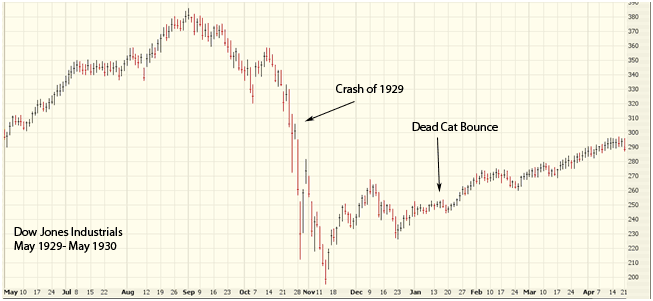
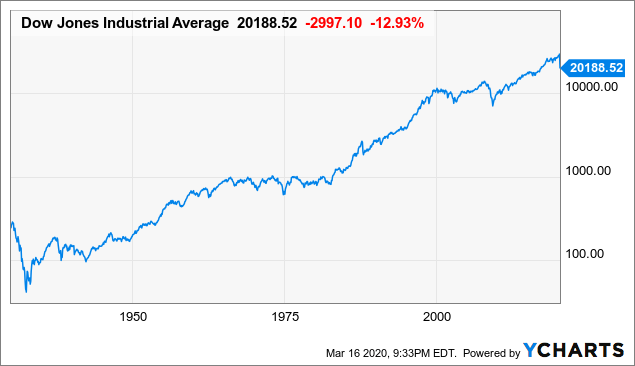
If anything the great depression supported this thesis of stocks always going up, and you can safely forget sweating the actual underlying economics. If you held through the crash or bought at the bottom you'd obviously be doing fine. Look at this chart (1). Seem familiar? Looks a lot like the great recession or March 2020 to me: a big plunge that took headlines followed by an unstoppable bull trend, in this case one that kept advancing for decades and decades to today (2).

Keep in mind what is key with this thesis is not some fantastical belief that stocks always go up out of magic. It's the understanding that the actions undertaken by the federal government and major banks that run the global economy will always generate increasing stock prices no matter any local blip or bloop or crash or fall in that moment. Buy the dip and take advantage of the sale price, then enjoy the guaranteed ride upwards supported by every major financial institution and first world government on earth, is what the past 100 years of macroeconomics have taught us.

1. https://static.seekingalpha.com/uploads/2011/8/4/763684-1312...

2. https://static.seekingalpha.com/uploads/2020/3/16/saupload_b...

Re: It’s mostly a demand shock, not a supply shock, and it’s everywhere

#195

What this doesn’t really address is the why? Yeah there’s more money floating around, so perhaps more people want to spend it, but why? Most people aren’t getting materially more stuff or even need that much more stuff, consumption’s already god damn conspicuous. Maybe everyone can afford a jet ski all of a sudden? No, the stims didn’t really do /that/ kind of wealth expansion. To me, this still looks like the bullwh…

Your hypothesis of "bullwhip effect" would predict that global inventories are increasing (thus causing a surge in demand). However it doesn't square with all the graphs in the article that show inventories across the world at global lows.

Overall, I believe the Bridgewater story to be more correct.

Re: It’s mostly a demand shock, not a supply shock, and it’s everywhere

#196
post #154
post #140

Earlier quoted context omitted.

So what exactly happens in between the fed purchasing mortgage bonds and allegedly consumer driven supply runs on everything from toilet paper to golf clubs?

The cost of servicing debt decreases and disposable income increases.

People are borrowing money to buy toilet paper and golf clubs? I think you are missing some details in the path from mortgage bonds -> your average consumer buying average consumer goods. I'm not being cynical or anything, I'd just like to understand this relationship a bit better.

Re: It’s mostly a demand shock, not a supply shock, and it’s everywhere

#197
post #150
post #140

Earlier quoted context omitted.

So what exactly happens in between the fed purchasing mortgage bonds and allegedly consumer driven supply runs on everything from toilet paper to golf clubs?

Bond rates move inversely to price. As the fed buys bonds, it raises the price which lowers the rate. As rates are lowered for things like mortgages and corporate bonds, people and corporations have more money to spend. Which they do generally spend which stimulates the economy. Lower rates also cause corporations and people to borrow more which in a fractional reserve banking system actually creates money out of thi…

Not everyone is a homeowner and on top of that not every homeowner has refinanced their home during covid. I don't think people are borrowing money to buy toilet paper or a golf club. How do lower rates for corporate loans affect behavior that's at the consumer level? I'm trying to understand this relationship better.

Re: It’s mostly a demand shock, not a supply shock, and it’s everywhere

#198

Earlier quoted context omitted.

Turo* is AirBnb for cars. I’ve used it a few times and it worked well. * http://www.turo.com

Yeah I imagine Turo is exploding. When I traveled this summer my options for a 5 day rental were $2,200 from all the rental car companies, or $375 from Turo.

How do they deal with insurance? I'm not sure I'd feel very comfortable trusting a random stranger to use my car for 5 days, unless I was sure I'd be paid out in full (or more) if they were to damage or total the vehicle.

Re: It’s mostly a demand shock, not a supply shock, and it’s everywhere

#199
post #135

Earlier quoted context omitted.

We can't afford not to import goods. The cost of manufacturing in the U.S. are too high relative to other parts of the world. Can't do anything about that on our end of the deal short of tarriffing ourselves into total economic isolation and being forced to produce everything nationally.

But you can't just import goods without exporting anything forever, at some point USA needs to start to deliver value back to the rest of the world. Note that the trade balance includes services like ads etc, that is the entire thing.

> at some point USA needs to start to deliver value back to the rest of the world

First they already receive something of value, which is our money.

No one forces them to sell their stuff for our money.

Nor does selling us $1 of goods entitle them to get anything above and beyond $1 of our money. They have already been paid with sufficient value.

Now they must spend that dollar in America somewhere. So they have a choice

a) buy some other good or service from America (trade is balanced)

b) buy some American asset like a bond, share of stock, etc. Then the trade deficit goes up by $1.

The world is choosing to do b). No one is forcing them to. The moment they stop doing b) and start doing a), the trade deficit will be balanced. The moment they sell their existing dollar investments and buy US goods, the trade deficit will reverse. It is their choice, not America's choice.

The input of the U.S. in influencing this choice is merely the setting of interest rates. By setting rates, they determine the overall returns obtained from option b). Thus they can make option b) more attractive by raising rates, and less attractive by lowering rates. But our rates are basically zero already. Does it appear to you that the U.S. is running high interest rates in order to attract foreign investment? No, we don't really take the trade deficit into account when setting rates, we focus on inflation.

Now we could take steps to change the regime and strongly discourage imports. This would be the equivalent of

a) taxing foreign investment, so that there is a wedge between the interest rate obtained by foreigners and our domestic policy rate for fighting inflation. At a high enough tax, the rest of the world will collectively want to pull their money out of America, sell their dollar assets, and then buy American goods to get out from under the tax.

b) Subsidizing domestic production. The problem here is that business will tend to pocket the money. Option A is the more efficient approach.

Option A also attacks our status as the global reserve currency - it's about time we stop being the gold standard for the rest of the world. All of these deficits are the result of us being burdened with reserve currency status, which on the one hand gives us a lot of power to punish other nations, but on the other hand destroys the domestic manufacturing base.

I look forward to the time when we are no longer the world's banker but merely any other nation that needs to run balanced trade. For that to happen, we need to make our assets unappealing to foreign purchasers.
Re: It’s mostly a demand shock, not a supply shock, and it’s everywhere

#200
post #153
post #85

Earlier quoted context omitted.

What everyone is going to have a real hard time wrapping their head around for the next few years: We built a highly efficient economy for a set of behaviors. A shock happened that caused a lot people to change their behaviors (probably for a long time, since they've had 2 years of 'practice'). Our economy, which was built for those old behaviors (living in cities, riding public transit, eating at restaurants, travel…

> Natural gas extremely expensive? Let me introduce you to renewables, which btw are getting better and better every year. Shutting down a natural gas pipeline that people depend upon just before winter, and then lecturing them about solar panels is not a good look. Artificially increasing the price of natural gas causes famines, it causes food and fertilizer to be more expensive, and it makes it hard for people to h…

I sympathize with this, but if climate experts are to believed, we’ve stalled to the point where we have perhaps a decade to get emissions under control in order to meet targets, and most countries haven’t even begun to make significant changes. At some point there will be pain. The question is, “do we want a little pain now or a lot of pain down the road?”. And to be clear, “wearing a coat inside during winter” may just constitute “a little pain” compared to the famines and wars that are likely if we fail to get our emissions to zero in time.
Post reply on HN