Live data from Hacker News

The Great German Energy Experiment

technologyreview.com

171–180 of 209 posts

Re: The Great German Energy Experiment

#171

I guess the problem with a long article, even an interesting long article like the one submitted here, is that it is hard to read to the end. Near the end of the submitted article is this paragraph: "A second problem is that even when it comes to alternative energy sources, Germany doesn't reward carbon dioxide reduction. Rather, its policy establishes well-defined subsidies for specific technologies: a kilowatt-hour…

This isn't a decision grounded in economics, obviously. This is about minimizing side-effects from energy production. The sun blasts roughly 10,000 times our electricity needs at us each year. (And that's just what directly impacts the surface.) I'd say we have some wiggle room in which it makes sense to focus on being cleaner rather than more efficient.

We should worry about efficiency if we have serious scarcity issues, but I don't think we really have a scarcity problem at the moment. (We could definitely get there surprisingly quickly, but I think the cleanliness risk is serious and immediate, and we shouldn't focus on hypotheticals.)

Re: The Great German Energy Experiment

#172
post #14

Great article - upvoted. That it's inconceivable that the US or UK government could think about spending such an amount (~5% of GDP!) on a long-term science and engineering project speaks volumes about why the Germans are where they are, and why we're where we are, economically speaking. From an engineering point of view I think it's foolish to turn off the nuke plants, but public opinion is what it is, and this caus…

I don't think it's reasonable to count incidental benefits from projects, such as the WWW from CERN. The same basic problem of sharing information between scientists would still have existed without CERN, and who's to say it or something even better, with fewer of HTTP/HTML's limitations wouldn't have been developed if TBL had been working on a different project? The space race argument is another old sore, it turns…

Governments are quite often rather inefficient, but they are really large. For example, rockets could not have been developed by private enterprise, because it took something like thirty years (and substantial investment) to build somewhat reliable rockets. [1]

A bit more abstract: businesses are good at small incremental development steps, since most of the steps need to have a market. In contrast a government can invest in projects which are both very long term and very expensive, because they have a reliable revenues (taxes).

[1]much longer version of the argument: http://www.slate.com/articles/technology/future_tense/2011/0...

Re: The Great German Energy Experiment

#173

Earlier quoted context omitted.

In the case of the US, a shockingly massive benefit. We import between $350b and $500b per year worth of petroleum products (depending on the price of oil).

The only way the amount of petroleum we import matter is compared to how much we would have to spend to get the same energy with out importing anything. If the cost of stopping importing oil was that we had to spend $1000b a year on synthesizing oil from corn (for example), then the amount we spend on foreign oil is actually a good deal.

It does matter quite a lot to the oil market price. Third world farmers pay the same price for oil as the "I'd rather drive the SUV" suburbanites.

Re: The Great German Energy Experiment

#174
post #159

Earlier quoted context omitted.

You said "In my opinion, government is as efficient as the private sector." Directly refuting you is not a strawman.

I'm sorry, maybe you can explain it like I'm five. What does the efficiency and cost-effectiveness of the public or private sector have to do with a centrally-planned economy? Or, let me be charitable (because I think I know what you were getting at...) and instead put it to you this way: Let's say government-financed or government-run health care is more efficient or more cost-effective than privately-run health car…

I think we are getting hung up on different usages of the word "efficient."

Government can be efficient at delivering a well-defined service, or meeting a well-defined goal. For example Medicare is a pretty efficient program, and we did make it to the Moon with NASA.

Efficiency can also refer to the allocation of capital toward innovations with the greatest expected payoff or outcome. This is where freely operating private markets outperformed government planning by a large margin during the 20th century.

I thought we were discussing this usage of "efficient" since cturner referred to "picking winners".

Re: The Great German Energy Experiment

#175
post #50

Earlier quoted context omitted.

That's exactly what jsilence is saying. Energy from the grid is so incredibly cheap that you're using it without a second thought on things you would never consider doing without a grid. It could go up hundredfold before becoming expensive. Also, kWh/hour is just a kilowatt.

Here is an explanation of power and energy term confusion from wikipedia... http://en.wikipedia.org/wiki/Kilowatt_hour#Confusion_of_kilo...

Ironic that you should link to that page, given that your grandparent post contains the phrase "250W per hour or essentially a .25kW-hour".

Re: The Great German Energy Experiment

#176
post #166
post #158

Earlier quoted context omitted.

> since my cutoff is pretty much at "any nuclear waste" Really? So I guess there is not much point in talking to you further. (Although I guess other people are also reading these threads.) It might help your case if you explained why, but I'm betting it's irrational fear, not anything you could explain. Me, I prefer to measure my pollution in terms of damage caused, not fear. There is a pollution action day in my ci…

Nah, fear isn't really the issue here, I would say that I have a rather calculated understanding of why I find radioactive waste so problematic (and since you asked, you'll have to endulge the full explanation). For me, it comes down to what kind of pollution we are talking about and radioactive pollution is particularly nasty to me as it represents a chaotic pollution that is just exceptionally hard to deal with. Le…

> and since you asked, you'll have to endulge the full explanation

That's fine.

And I read your explanation, and while it is coherent, I don't agree with it, and I find it to be fear based, not science based.

Of all pollutions radiation is by far the easiest to detect and track (which is why people hate it so much - it's very easy to find). Other types of pollution are much harder to track, so less is made known about them, and they get less attention - but they cause more damage!

And that's in a nutshell my position: Other pollution is worse. I accept that there will always be some pollution, and I seek the best.

I like that we can find radiation so easily: It means we can clean it when necessary. Other pollutions can't be found so easily, so no one is told when they get exposed to it. Since they are never told, they never worry - but it still causes damage!

I do my best to keep track of other pollutions, I subscribe to air quality alerts. If radiation was released in amounts that cause the exact same damage as the bad air, you could bet people would be screaming. Yet, non-radiation pollutions (mostly) get a pass unless they get really bad.

I tell people that the air quality is bad today and I get mocked, or more often just indifference. Do people not care? I should tell people there is lots of radiation in the air instead..... :)

> At minimum, it always carries a risk of mucking with your DNA or giving you a higher chance of cancer down the road (we have differed on how "horrifying" this prospect is, before).

You misunderstood me. Cancer is bad - my point was that nuclear power is less likely to cause cancer in both, the general public, and the miners. So nuclear power is not horrifying - it's a blessing since it causes less cancer.

Pollution from other energy sources also causes cancer, and causes more of it than nuclear power. Nuclear power gets the headlines, sure, but the day to day poison is everything else.

> Why is it "because of people like [me]"?

When I said "people like" I meant "people opposed to nuclear power", which you are (seem to be), and therefor you are like them.

> Maybe it's time for me to get off your lawn?

If it was just you then fine. But it's a lot more people than just you, and most of them have an even worse fear/knowledge ratio than you, and are impossible to argue with.
Re: The Great German Energy Experiment

#177
post #167
post #162

Earlier quoted context omitted.

> radioactive waste in general being hard to top in terms of pollution What? It's extremely easy to top radioactive waste. Every single pollution tops radioactive waste since radioactive waste sits in a storage cask, and the other types of pollution go in the air I breathe. Your position makes no sense. > I just happen to think waste from nuclear fuel is easier to "not produce" right now. So instead you want more fly…

> Every single pollution tops radioactive waste since radioactive waste sits in a storage cask Of course, preferably, every type of pollution should sit in a storage cask. I was under the impression that we were discussing the potential of pollution of different pollutants. If we compare storage casks, we get to actually compare how dangerous they are. In that comparison, radioactive waste should win the battle for w…

> discussing the potential of pollution

No, the actually of pollution, not the potential.

> coal plants. Where did I say I support those?

You didn't - except that by blocking nuclear power you end up with it by default, so you have to accept that you are implicitly supporting it.

> why is it different for alternative, renewable sources of energy?

Because there aren't any. Sun and wind can do a portion, and I'm glad for it (except photovoltaics).

But what about the rest? There is no renewable source of energy than can do the rest of the job, so we need something, and it's either natural gas, coal, or nuclear.

> Pollution bothers me - there. Radioactive pollution bothers me most.

But why?! Yes, I know the potential is worse. But the actually is better! Why do you look at the potential instead of the actuality?

> sounds very old fashioned and boring

???

> Renewable sources of energy are also just "lying around" ready to be "mined" by us.

But there is not enough of it. Not unless we cover the earth with energy collectors, and I don't want that. I assume you don't either.

> most of it in wind, followed by hydro and your dreaded solar at a distant third place. In any case - I would think that's substantial enough to render your original assertion moot.

It's not moot though. Hydro is maxed out. Wind could probably take a larger share - but then what? What about the final 70%?

Re: The Great German Energy Experiment

#178
post #161

Earlier quoted context omitted.

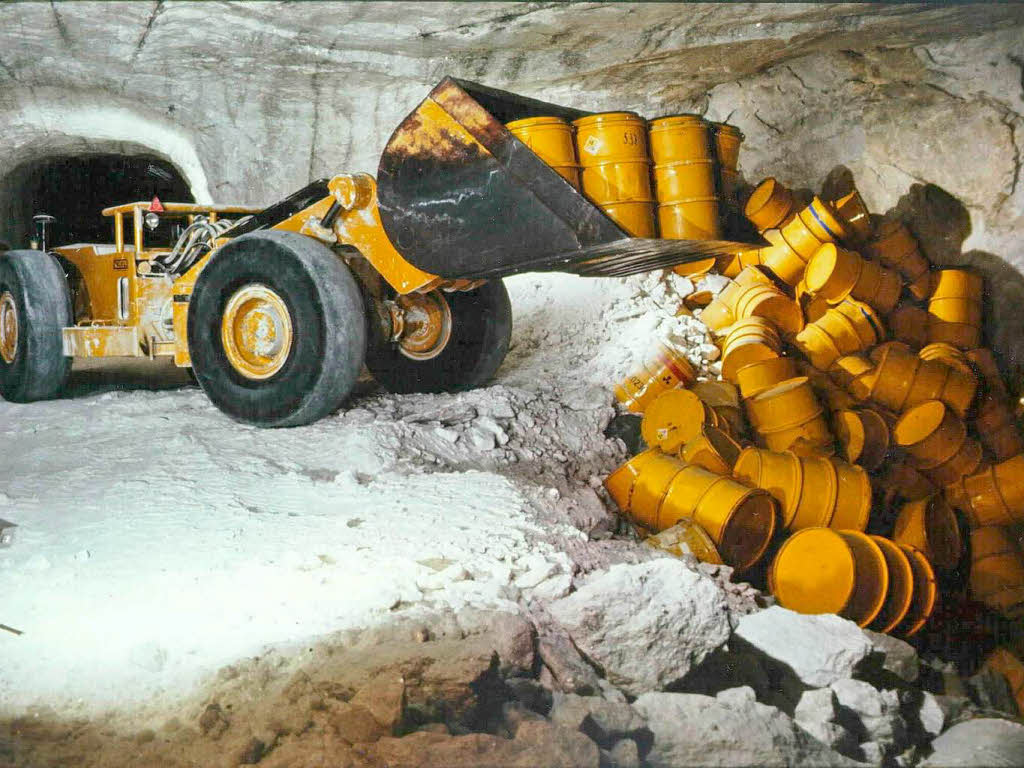
U.S. citizen here. The storage site is on hold (not scrapped) only because of fear-mongering folks like yourself. There is no technological reason to fear the rail shipment of nuclear waste. It is not difficult to engineer enclosures that will withstand the most energetic possible train wreck. And obviously they are well shielded for radiation.

> There is no technological reason to fear the rail shipment of nuclear waste. It is not difficult to engineer enclosures that will withstand the most energetic possible train wreck. Actually, it is difficult and there is considerable dissent over whether the currently used technology is safe enough or as safe as advertised. [1][2] > And obviously they are well shielded for radiation. They are shielded, but how well…

> Not finding any amount of radiation acceptable is where I seem to be losing most of the people who understand themselves to be pragmatic supporters of nuclear energy in this discussion.

Because background radiation means we are always exposed to it. So setting a no tolerance policy doesn't make sense.

People go to these http://resources.yesican-science.ca/trek/radiation/final/ear... places for a vacation, to enjoy the warmth!

http://en.wikipedia.org/wiki/Linear_no-threshold_model vs http://en.wikipedia.org/wiki/Radiation_hormesis

Re: The Great German Energy Experiment

#179
I'm living in Germany and to support this 'Energiewende', I'm only buying green electricity. It is more expensive but I'm happy to pay more if I can boost the industry around it and also help our environment. Many young people think like this.

Re: The Great German Energy Experiment

#180
post #91

Earlier quoted context omitted.

That is a disputed fact (when taking into account the radioactive waste and thinking about what "into the atmosphere" means, at least that is what I remember from the reports about the last study concerning this), on one hand, but even if it were right: It's less than the radiation generated in the event of a disaster and not bundled into a pile of radioactive waste you can't place nowhere. Edit: For the downvoters:…

It's not very convincing. For instance: "What it really means is that radiation emissions to the environment from an operating nuclear power plant actually are lower than the radioactivity emitted from a coal plant through fly ash residues. That’s because the reactor vessel, fuel rods, and any radioactive waste on site are well shielded, whereas fly ash, with small amounts of deadly radioactive substances, simply is…

In practice, we certainly dont (http://2.bp.blogspot.com/_PzJdv4K9pOY/TNpvMuWL58I/AAAAAAAAA6...) store the waste in a way so we know for sure it will not be used to fertilize the crops of future generations.
Post reply on HN