Earlier quoted context omitted.
> They mean whether Safari is as backwards and holding the web back as IE6 was for ages. Safari is holding back the mobile web the exact same way IE held back the desktop web for the exact same reason: native apps. > while Safari was... at the top of the heap Lol? I know very few (none?) web developers who uses Safari as their primary target browser. ES6 support or not. > cherry picked pro-Safari blog post https://jo…
> Safari is holding back the mobile web the exact same way IE held back the desktop web for the exact same reason: native apps. That's a classic tinfoil theory, but with absolutely no substance. First, Apple sells hardware, first and foremost, not apps (it's the inverse with Microsoft). Their app store profits are negligible compared to all else. Second, Apple has consistently made the best mobile web browser for man…
If you think that consumers are purchasing iPhones so that they can rock out on Safari and Mail, you are mistaken. A year ago over the App Store hit 100B cumulative app downloads:
http://www.statista.com/graphic/1/263794/number-of-downloads...
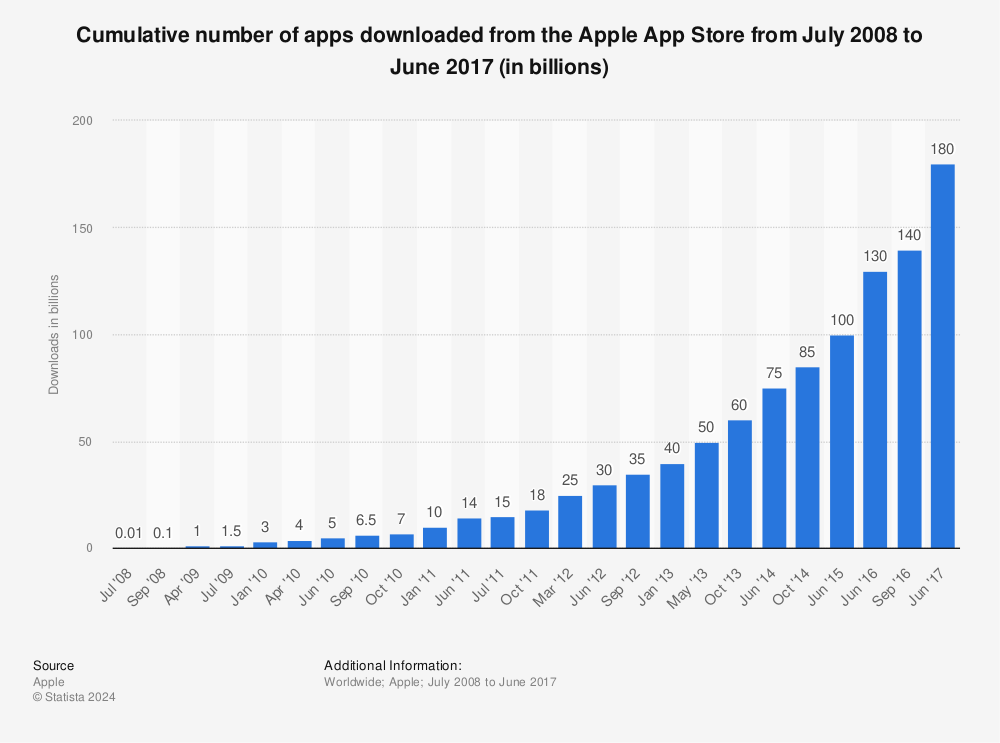
Native apps drive hardware purchase decisions for consumers. That's the lesson of Windows Phone.
> Safari's engine is what Chrome has been based on, and for most of its life it has been one and the same codebase.
You misunderstand how a browser is constructed. Browsers are much more than just a rendering engine like Webkit. Chrome and Safari have different JavaScript engines, support different web standards (no WebRTC for Safari!) and are architected in completely different ways. You might find this a helpful place to start:
http://arstechnica.com/information-technology/2013/04/does-w...