Within a second of seeing the 'improved' ones I spot what is, to my mind at least, an immediate failure - the detail resolution is far too small. It doesn't account for the printing limitations on small fabric tags, never mind the ability of old fogeys such as myself to be able to squint that hard and actually read them. I have no idea even looking on my screen here what the difference between the first three is supp…
Laundry symbols make no sense
161–170 of 237 posts
Re: Laundry symbols make no sense
#162I have always found laundry symbols confusing. I agree with other comments that this proposed replacement has too many problems to be acceptable, but surely someone can do better than "crossed-out triangle", "underlined water cup", "Cylon wearing a jaunty cap", and my personal favorite, "literally just a circle". Weird fact: Despite having been around for decades, laundry symbols have not been assigned Unicode code p…
Are the benefits of an improvement worth the cost? Do you know how to do your laundry despite not knowing how to read the symbols?
All I'm saying is that maybe, with the full power of graphic design, we could have something a little more self-explanatory than triangle = bleach, circle = dry clean. The iron symbol is perfectly clear, for instance.
Re: Laundry symbols make no sense
#163Earlier quoted context omitted.
Compare to the other symbols in that set: a square refers to the drying process, with the contents being how to dry it. A circle instead of a square means no drying process, so it shouldn't get wet in the first place - hence dry-cleaning. At least that's how I see it, it could also just have been the last obvious symbol remaining after square/triangle were taken.
Since dry-cleaning isn't "dry" (it still uses liquids, just not water) it should be a simple drop of water symbol with the universal "NO" bar across it like this: https://www.istockphoto.com/vector/blue-drop-or-droplet-of-w...
Re: Laundry symbols make no sense
#164Earlier quoted context omitted.
Shocking as it will be to you -- I'm just realizing that this differs between US and rest of world -- a home washing machine in the US can only go as hot as what comes out of the faucets. It cannot wash at 90C water, and likely can't even do 60C water. It can only do as hot as the "hot" tap water, which depends on what the hot water heat is set at, which is usually somewhere between 120F (49C) and 140F (60C).
Do people really boil clothes? Obviously that's not a thing in the US, but I could see it being useful for whites, perhaps.
It's usually for really sturdy whites you want to disinfect after they've been soiled for instance. Use of that program has definitely gone way down over time. The energy requirements alone make it not a routine wash thing.
It's also used to basically deep clean the washing machine itself.
Re: Laundry symbols make no sense
#165Earlier quoted context omitted.
Interesting! I don't believe that's how USA washing machines work, they usually just say "hot", "warm", and "cold". Apparently USAians are washing machine philistines who don't need more than three temperatures and don't know what they are? Anyway, this shows another challenge in these icons, the international diversity of washing techniques and technology. (Edit: I found one possible answer online -- Euro washing ma…
In Latin America our home washing machines are usually connected to ‘cold’ water only. Except in homes with separate cold/hot water pipes.
Re: Laundry symbols make no sense
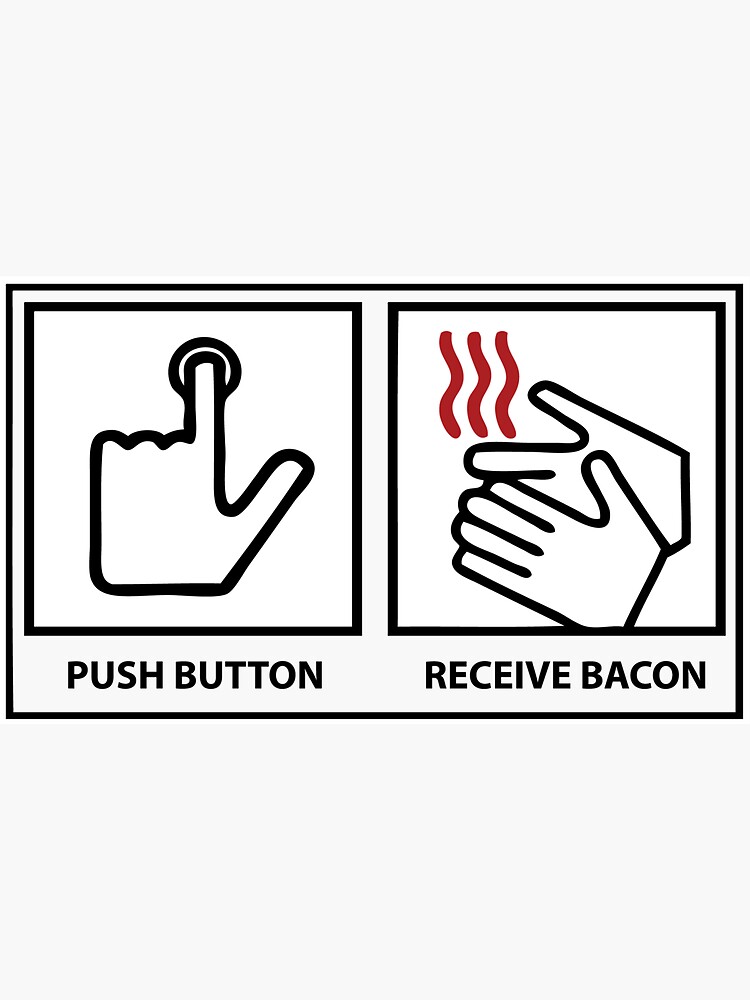
#166Designer must be midwesterner: push button, get bacon.
Re: Laundry symbols make no sense
#167Within a second of seeing the 'improved' ones I spot what is, to my mind at least, an immediate failure - the detail resolution is far too small. It doesn't account for the printing limitations on small fabric tags, never mind the ability of old fogeys such as myself to be able to squint that hard and actually read them. I have no idea even looking on my screen here what the difference between the first three is supp…
I really find the idea that "having to know, or lookup stuff", as a problem, offensive. Laundry is literally filled with things to know, outside of these symbols. Household tasks are. I don't see labels on bleech bottles, saying not to mix it with vinegar or you could die. Yet people have done that in the wash, so why not start there? Here's what each sane person should do, who actually takes time to look at tags. (a…
Have you looked? Mine says “STRONG OXIDIZING AGENT: Mix only with water. Mixing this product with chemicals […] may release hazardous gases”
Re: Laundry symbols make no sense
#168Within a second of seeing the 'improved' ones I spot what is, to my mind at least, an immediate failure - the detail resolution is far too small. It doesn't account for the printing limitations on small fabric tags, never mind the ability of old fogeys such as myself to be able to squint that hard and actually read them. I have no idea even looking on my screen here what the difference between the first three is supp…
There isnt much point in making a competing standard as we already know what happens (more confusion, more fractured knowledge, etc.)
Instead, just print a laundry chart and leave it with the washer.
As for whitegoods manufacturers: they could, as a minimum, describe their various wash and dry settings using the appropriate symbols rather than marketing terms.
Re: Laundry symbols make no sense
#169Earlier quoted context omitted.
I really find the idea that "having to know, or lookup stuff", as a problem, offensive. Laundry is literally filled with things to know, outside of these symbols. Household tasks are. I don't see labels on bleech bottles, saying not to mix it with vinegar or you could die. Yet people have done that in the wash, so why not start there? Here's what each sane person should do, who actually takes time to look at tags. (a…
Are people seeing some huge benefits from paying attention to these symbols? I've been, as the kids say, "adulting" for some time, and pay no attention to them. I couldn't draw a single one from memory. If you showed me one, I'd only be able to guess at the meaning. All I do is not wash stuff that says "dry clean only" (it always just says it in text, I have no idea if there even is a symbol for that) and favor coole…
And yes, I do pay attention (to the special cases). T-shirt? It's a t-shirt.
Winter coat? Fancy suit? See what it says. Or send it to be professionally cleaned.
Where it usually fails (with everyday stuff) is that people DNGAF and dry their clothes at 90C then come to heavily shrunk garments. Or with faded colors.
Re: Laundry symbols make no sense
#170Earlier quoted context omitted.
I really find the idea that "having to know, or lookup stuff", as a problem, offensive. Laundry is literally filled with things to know, outside of these symbols. Household tasks are. I don't see labels on bleech bottles, saying not to mix it with vinegar or you could die. Yet people have done that in the wash, so why not start there? Here's what each sane person should do, who actually takes time to look at tags. (a…
I would highly recommend reading some UX classics such as: - The Inmate Are Running The Asylum by Alan Cooper - The Design of Everyday Things by Donald Norman (and I'm sure there are many more good resources that are recent than that.) It's very easy as tech-savvy people like us to underestimate how hard technology, even conventions like laundry symbols, are. I personally have printed out a legend explaining the laun…
I myself recognize that I've seen a few of them, but since they are as cryptic as Egyptian hieroglyphs to me, I ignore them.