Live data from Hacker News

The pandemic has deepened an epidemic of loneliness

mcc.gse.harvard.edu

161–170 of 254 posts

Re: The pandemic has deepened an epidemic of loneliness

#161

Earlier quoted context omitted.

Back in the 60s, people were buying homes in their early 20s or even late teens because it was that affordable. Obviously that is a bit of a historical anomaly, but it's almost a necessary complement to the idea you're supposed to become an adult and mature and grow up after age 18.

Up to the 1990s it was possible to buy a home on a single income in NL.

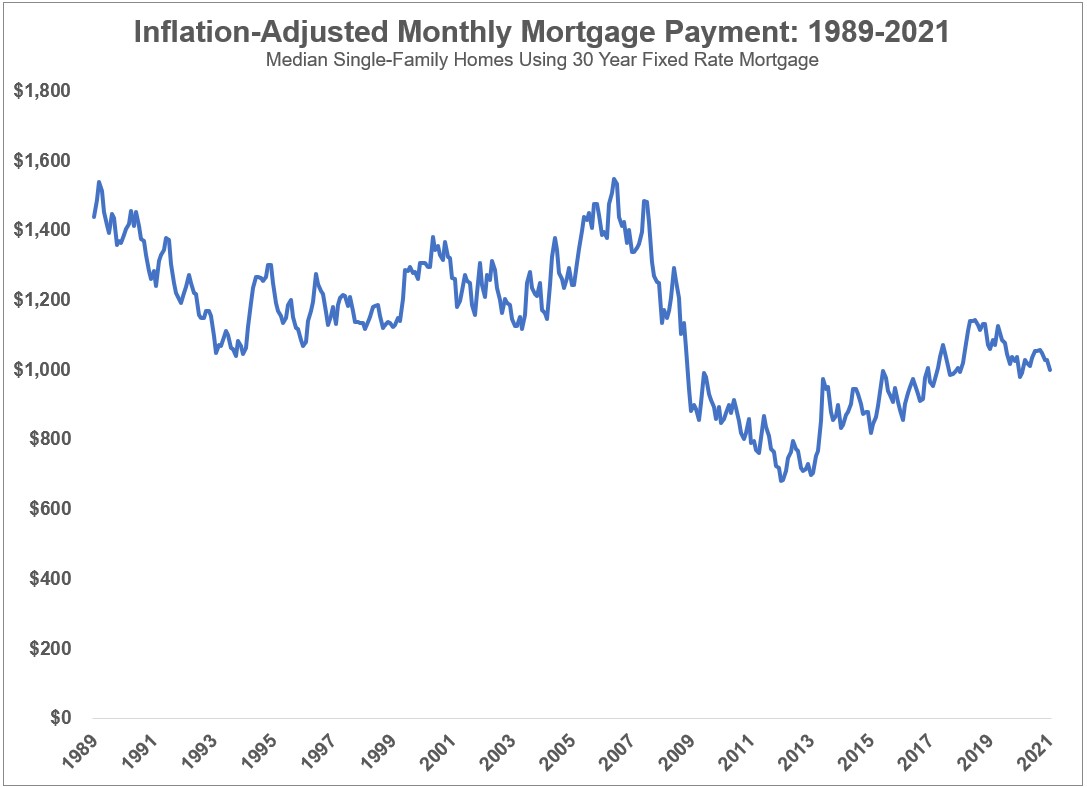
Source? At least in the US mortgage payments (adjusted for interest rates and inflation) have been trending down since the 90s.

https://awealthofcommonsense.com/wp-content/uploads/2021/03/...

Re: The pandemic has deepened an epidemic of loneliness

#162

Earlier quoted context omitted.

Or, perhaps a more charitable reading may be "if you’re not staring at a screen perhaps you’ll meet people while out and form social bonds"? If you’re very online and you’re lonely being very online then proposing that you change what you’re doing to perhaps get different results is not the same thing as "have you tried not being sad????"

And why do people think someone just going offline will magically start talking to people (where? with whom?) It's like telling an obese person to go exercise. It is meaningless advice. "Oh but can they figure it out right" Well, if they could maybe they wouldn't be so lonely. And even more in boomer style "just take your printed CV to McDonalds to get a job" pulling people offline might be just cutting the only soci…

> And why do people think someone just going offline will magically start talking to people (where? with whom?)

Necessary (but not sufficient) for change in life to occur is for the person wanting change to desire it happen and make effort for it to happen.

To answer where: whatever activity you choose to do with other people, assuming you choose an activity that can be social - typically something based on your interests, and if you're not sure what those are, try a bunch and see which ones you enjoy. Part of building a social circle is developing interests of your own and then finding people who share those interests with you.

To answer with whom: the people that are doing these activities that are there to do them but also be social. There are tons of places out for hobbies and activities where you can meet people, but you have to go to those places, put in the effort with the activities, and be open to making connections with people, and even then, that may not work, but you'll never know unless you try.

Let me give you an example from my life. In my early twenties I was lonely and I spent most of my time forum posting and chatting on IRC/AIM. I was talking to people but not making connections. An acquaintance of mine who had a lot more friends and connections suggested that perhaps I was spending too much time forum posting and chatting and not enough actually out doing things. I resisted this change for about a year, but I found that continuing to do what I was doing wasn't changing my situation. I decided to make a change in my life and to start pursing interests and connections. Weekday, I would go to work (which required me to be online as a computer programmer), but then to limit my online time at home and make an effort to go out and meet people. I didn't go out every night, but I spent some time away from the screen - I got better at cooking, I started reading more, and I focused on discovering new interests.

In some cases, this was having a drink (not necessarily an alcoholic one if you're not into alcohol) in a bar during a football game to meet other football fans. Another was to go bowling once a week which turned into joining a league. Another was to go to a farmer's market to pick up fresh vegetables. The last was joining a local Linux users group. Starting all of these activities, engaging in them with the mind of being social, coupled with learning about myself, led to both personal and professional connections being made - I met my wife, I met a future employer and hopefully startup co-founder, and I met friends that I still bowl with to this day. It was my desire to go to these events, to be open, to talk to people who were open to being talked to, and to meet regulars and connect with them that helped me move forward. I don't want to make it sound like it was all sunshine and roses - it left me tired, some of the activities I tried left me physically sore because I wasn't really fit enough for them, some of the people I met ended up being terrible people and I had to learn to cope with that/cut them out, and I had a few failed relationships along the way which bruised my heart. None of that would have happened if I just stayed on forums and chat and never made an effort to change. There is also the chance that I wouldn't have met people out and doing this, but I never would have had the opportunity if I hadn't tried.

> It's like telling an obese person to go exercise. It is meaningless advice.

If someone is obese and asks for advice on how to become more healthy then suggesting exercise (along with some exercises they can get started with - see above for my analogous answer to that) is not meaningless. If someone is obese, asks you for advice, you give them advice, they don't follow it, and then they complain about how things aren't changing and that it was meaningless that you gave them advice then the obese person might bear some responsibility for their situation not changing.

> And even more in boomer style "just take your printed CV to McDonalds to get a job" pulling people offline might be just cutting the only social link most of them have, instead of leveraging it.

Anyone that is suggesting that you go _completely_ offline is wrong - I am not suggesting that at all! You cannot go _completely_ offline and be productive, educated, and social these days. Many of the social opportunities that I mentioned above these days are organized online, so you will need to be online in some cases to know when they're happening and to keep in contact with the people you meet there. What people are suggesting is that you limit the amount of time you spend online outside of work and the necessary time to find these activities, learn about them, and maintain the connections you make while doing them.
Re: The pandemic has deepened an epidemic of loneliness

#163

Earlier quoted context omitted.

When was having a partner a precondition for buying a home? Furthermore, what’s the point of finding a partner when the cost of a permanent place together might exceed both your incomes put together, much less a place big and safe enough to raise a family.

> When was having a partner a precondition for buying a home? When you make an offer on a house you're bidding against two-earner households. For a lot of us in tech the salience of this fact is diminished by the industry's high salaries, but for most folks this is a really big deal.

> When you make an offer on a house you're bidding against two-earner households.

what does that matter aslong as your bank has approved the mortgage. I don't see why seller would care.

are you saying that ppl are bidding for mortgages that high that bank needs both of their incomes? wow.

Re: The pandemic has deepened an epidemic of loneliness

#164
post #4

It's a bit paradoxical. I have a tech company and most staff want to come to the office 1 day a week. Getting them to come is very tough. Many of my staff and friends don't want to have kids, make no effort to find a partner and find all sorts of excuses. Netflix, the internet and these things are part of the problem, but I have no clue what the solution is. There is only one way to not be lonely - be with people who…

All I can think: turn off the internet. Internet in the morning. Have your coffee, catch up on the news, your social. Then put the internet down for the rest of the day. Go out, ride a bike with a friend, go hike with a friend, go to a coffee shop, library....

> go to a coffee shop, library....

Don't forget your mask. The pandemic is still on.

Re: The pandemic has deepened an epidemic of loneliness

#166
post #90

One of thing that is obvious to me is the bizarre cultural norm that, in the US, people are expected to move away from home at the age of 18 and then relocate more-or-less permanently far away from family and childhood friends. To my American friends this seems totally normal, and suggesting something different is ridiculed. An obvious consequence of this is that American adults have 3 or 4 "social fabric ruptures" a…

the ability to live, work and raise a family in a very limited geographic region is a privilege. For thousands of years, those who did not have that privilege moved.

They moved to different regions, different countries and even different continents. That is the human story.

I expect you are from western europe as that is one of the few places on the planet where a hundred kilometres really is a long way. Even in Europe, people from the East move. They move west.

The "american cultural norm" isn't something unique to north america as you've framed it although i do agree that it is quite common there.

Re: The pandemic has deepened an epidemic of loneliness

#167
post #14

Earlier quoted context omitted.

They need stable, actionable futures. Homes they can afford to own, communities they can raise kids in, an environment that won't go up in flames; they need systems that have their back.

> Homes they can afford to own In Germany where I live home owners are in the minority (40%). In Europe on average homeownership is about 70%. Yet, we are one of the richest countries in Europe. Furthermore, buying a house on credit does not mean you own it — since as long as you pay your debt it’s the bank that owns it really. Finding a partner and maintaining a relationship got nothing to do with owning a home. I a…

Being a tenant in Germany cannot be compared to being a tenant in the US.

Being a tenant in Germany is essentially as stable (if not more stable) as taking a mortgage on a home in the US. This is still the type of stability the state provides, which is quickly disappearing worldwide as all funds go into real estate due to a decade of zero (or negative) interest rates.

Re: The pandemic has deepened an epidemic of loneliness

#168

Earlier quoted context omitted.

> When was having a partner a precondition for buying a home? When you make an offer on a house you're bidding against two-earner households. For a lot of us in tech the salience of this fact is diminished by the industry's high salaries, but for most folks this is a really big deal.

> When you make an offer on a house you're bidding against two-earner households. what does that matter aslong as your bank has approved the mortgage. I don't see why seller would care. are you saying that ppl are bidding for mortgages that high that bank needs both of their incomes? wow.

It might not be a strict precondition, but it's still a pretty strong precondition. Maybe "precondition" isn't the best word here, but I think my original point still stands. Suppose someone claims that people are deciding not to have kids for whatever reason (eg. global warming, unaffordable healthcare, expensive houses)[1], and I retort by saying that people aren't bothering finding a partner[2], so they're not meeting their "precondition". Sure, you can theoretically raise a kid without a partner, but if you're not even bothering to find a partner, then maybe it's fair to say that's the main reason, rather than blaming global warming or whatever?

[1] analogous to your comment https://news.ycombinator.com/item?id=29473019

[2] analogous to my reply https://news.ycombinator.com/item?id=29473223

Re: The pandemic has deepened an epidemic of loneliness

#169
post #59

What's striking to me is that it also deepened the supply of assholes. One would think that after one year under effective house arrest people would be happy to see others and be nicer to each other, but the opposite is true.

You think people would be nicer to others if they were prevented from socializing, a basic human function, and taught to fear their fellow man—for two whole years?

Re: The pandemic has deepened an epidemic of loneliness

#170
post #4

It's a bit paradoxical. I have a tech company and most staff want to come to the office 1 day a week. Getting them to come is very tough. Many of my staff and friends don't want to have kids, make no effort to find a partner and find all sorts of excuses. Netflix, the internet and these things are part of the problem, but I have no clue what the solution is. There is only one way to not be lonely - be with people who…

I think a big reason we don't do that is that our societal narrative is one that focuses on self. In the US in particular we have a strong cultural disposition towards "self reliance" and "individuality", which often shows up in our politics as throwing our neighbors under the bus to save a few cents on our tax bill. We are encouraged not to think about the effect we have on the people around us and believe that we 'deserve' and have 'earned' things as an individual because that mindset is easier to sell to. Self-sacrifice is for other people. We even idolize rich celebrities and sociopathic billionaires.

I mean, just look at this comment further down:

> I've chatted with a couple of people who feel that their country (USA) is descending into chaos, and they don't feel like investing in a doomed future. I agree with the general feeling, but I'm trying to use it to motivate myself to have more fun.

Post reply on HN