Live data from Hacker News

After the pandemic, we can’t go back to sleep (2020)

theanarchistlibrary.org

161–170 of 253 posts

Re: After the pandemic, we can’t go back to sleep (2020)

#161
post #80

Earlier quoted context omitted.

> Did you expect a new country wise economic model to be purposed in this article? No, I didn't, but I'm frankly growing tired of cookie-cutter article like this one that just enumerate problems that have existed since the literal dawn of civilization. The entire "economy bad" brigade is, as parent comment puts it, "r/im14andthisisdeep". They see problems everyone else sees, but they don't have any actual insight, ju…

There are quite a number of solutions on offer - they just have a difficult time gaining traction in our media (and therefor in the public debate). Part of that has to do with the fact that a majority of those with economic and political power - those who have succeeded in the current system - still refuse to recognize that the problems are systematic. They refuse to recognize that the problems are intrinsically caus…

Not one single line of what you wrote is a concrete and actionable thing you would do. It's frankly a whole bunch of rethoric. I'll pick the bits that seem like they mean something real:

> legally structured businesses as institutions democratically run by those working in them

This already exists, they are called cooperatives, many of them actually work pretty great. Try to guess what happens when they grow and they need to hire employees...

> what would happen if we simply banned people from making money directly from their money in all forms?

No banks, no loans, no credit cards. No way to protect against inflation with financial instruments as basic as a target-date fund.

Oh, and 0% public debt, of course.

> Money is just a representation of property

It's not and you know it's not, you're just playing with words.
Re: After the pandemic, we can’t go back to sleep (2020)

#162

Earlier quoted context omitted.

I wrote: > that this is just the natural state of the world (for which they have thousands of years of evidence to point to). You write: > And there was a wide range of economic systems prior to that. That is my point. every single one of those 'wide range of economic systems' (including the ones directly intended to produce equality) produced inequality.

That didn't seem like the point you were making, what you seemed to imply is that some form of the current system has existed forever. But lets work with your new point. Saying "all the economic systems we've tried produced inequality" with the implication being there's no point in attempting to devise new ones is rather like saying "all materials we've devised produced some amount of friction". Sure. But some produc…

Which other systems are you referring to? Feudalism, fascism, and communism all produced more inequality than free-market capitalism. Note that equality or inequality involves more than just income and assets.

Environmental degradation is more a function of overpopulation and technology than the economic system. With free-market capitalism we at least have the potential to price in the environmental degredation externality in a fair and consistent way through taxes. That approach has been underutilized so far, but with most other economic systems it's not even an option.

Re: After the pandemic, we can’t go back to sleep (2020)

#163

Earlier quoted context omitted.

Did you expect a new country wise economic model to be purposed in this article? I believe the author was trying to say, "Poor people are getting screwed, some jobs dont pay well, the environment is bad, lets do something and not forget it." It is a solution? No. I don't think it is trying to be though. It's just trying to be a reminder that letting everything go back to the way it was is the easiest route forward an…

Agreed. This article is pretty clear about its intent: don’t be lulled into a false sense of economic security after the pandemic and build this experience into our understanding of our system. The first step of any solution is convincing people there is a problem. Not just the obvious “things are bad,” but an understanding that these issues are systemic in a way that challenges American ideology. These articles frus…

Based on what gets up and downvoted, most of people on HN are ancap or fascists.

I guess it makes sense - startups are gold rush, VC's are the ones giving away shovels for portion of gold should there be any, and founders are people who either found gold or believe they will.

I wonder if most of people have political outlook like this. If they do, it is both sad and comforting, because then the humanity is doomed to kill ourselves via climate change, but we would deserve it.

Re: After the pandemic, we can’t go back to sleep (2020)

#164

Earlier quoted context omitted.

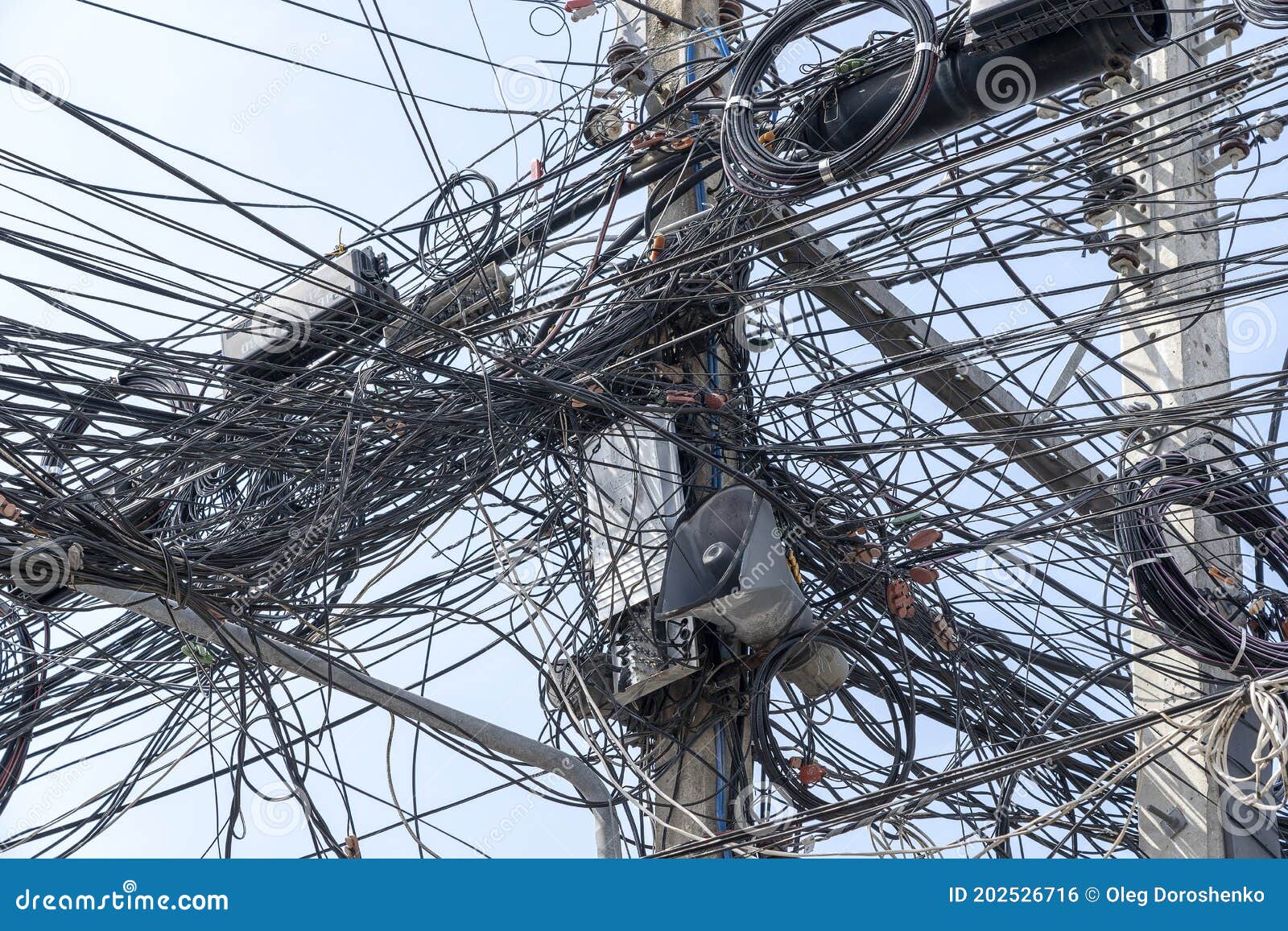
>I believe that David Graeber was an Anarchist not a Marxist. Anarchism can be capitalist or communism. Anarcho-communism for example. In a proper free market, the telephone poles would have 50 wires, most of which wouldn't be functioning. Afterall, how would anyone provide you internet? Without government regulation any startup has to put their own wires up. This leads to rats nests of wires. Tons of expensive wires…

> In a proper free market, the telephone poles would have 50 wires, most of which wouldn't be functioning. Afterall, how would anyone provide you internet? Without government regulation any startup has to put their own wires up. Seems like a poor example. If there’s all these unused wires owned by people who are losing money, surely a startup could rent capacity on an existing network, or outright buy it if the capit…

>Seems like a poor example. If there’s all these unused wires owned by people who are losing money, surely a startup could rent capacity on an existing network, or outright buy it if the capital was already available.

Real life examples.

https://thumbs.dreamstime.com/z/chaos-cables-wires-electric-...

Thailand doesnt have regulations in which the government picks a monopoly over a media and then forces them to provide near cost access to competitors. Typically, copper telephone vs cable vs fiber.

Therefore you get that utter mess, and there's no way those wires are properly utilized. It's a high cost to society, aesthetics aside, copper is expensive, fiber is expensive. You would be better to manage it so that you can assign those resources more efficiently.

However, this becomes 1 spot where free market no longer exists. Here in Canada we have Bell Canada who lobbied the regulator and effectively gave themselves a monopoly. The regulated market doesnt get near cost access to the wires.

Re: After the pandemic, we can’t go back to sleep (2020)

#165

Earlier quoted context omitted.

That didn't seem like the point you were making, what you seemed to imply is that some form of the current system has existed forever. But lets work with your new point. Saying "all the economic systems we've tried produced inequality" with the implication being there's no point in attempting to devise new ones is rather like saying "all materials we've devised produced some amount of friction". Sure. But some produc…

> That didn't seem like the point you were making, what you wrong seemed to imply some form of the current system has existed forever. My meaning was very plain. I said many people would be unconvinced that anything could be done to achieve equality. I then stated they could point to thousands of years of human life (which, as you correctly stated, contained many economic systems). If you put both points together, yo…

> My meaning was very plain.

Your meaning was not plain, you wrote a few very broad sentences and in your clarifications it seems you were talking about a single problem - equality. The original post was outlining many problems, inequality being one of them and the systems being proposed potentially address many problems.

But that's fine, such is the nature of dialog over text.

> Studies show that family fortunes in the United States do not form dynasties as they do in other economic systems (like monarchist mercantilism, for example). Most family wealth dissipates by the third or fourth generation

This is likely to be an outdated statistic at best. If you go back three or four genenerations, you will find yourself passing through a time when the US had very high inheritance taxes and a 90% top marginal tax rate. That period of time did likely prevent the formation of dynasties across it. However, those policies have since been repealed and current studies show very low social mobility and a significant increase in dynastic formation. [1, 2]

[1] https://www.theguardian.com/commentisfree/2021/mar/13/americ... [2] https://inequality.org/wp-content/uploads/2018/11/Billionair...

> Some systems produce little inequality, but lots of destitution. Others produce lots of inequality but little destitution.

If you're just measuring destitution and inequality, then you're getting a very narrow picture. You can't leave out things like environmental degradation from your calculation. The environmental degradation - in climate change - threatens to upend what gains there have been made in destitution and the current system is completely failing to respond appropriately to the threat. So the great likelihood is that if we stay with the same system on the same trendline, there's a cliff coming in our near future.

> For me, there's a hierarchy of needs here. First, destitution must end, then we can talk about equality. But ultimately, if the world is extremely unequal, but no one is destitute, then that economic system is good. And we're very close to that by continuing with current trends.

Saying "first destitution" must end before we consider any refactors of the current system makes very little sense. There are other options on the table than state socialism or returning to mercantalism. Systems that have the potential to increase equality, decrease environemntal degredation, and decrease destitution. All at the same time. Systems that haven't been tried in macro yet, but are working just fine in micro - for example the move to universal worker cooperatives funded by credit unions and crowd sourcing that I propose. And that's just one of many proposed possibilities. Those doing the work of proposing alternatives are absolutely including things like destitution in their calculations.

Throwing your hands up and saying "we can't do better than this" frankly runs counter to the very mindset that this website is supposed to represent. We can always do better.

Re: After the pandemic, we can’t go back to sleep (2020)

#166
post #69

The so called "dream work" of doing something for its own sake is the highest form of work, and the most human

Except few engage in this sort of work. If left to their own devices, most people would simply consume content produced by the 10-20% of people who would actually do anything useful. This is my observation. People are so weirded out when I tell them all the stuff I want to do. Most people just laze if left to their own devices and provided food. People have this image of hunter gatherer tribes doing interesting thing…

I mostly disagree with this dis on dream work:

"And if we simply stopped, it might be possible to make ourselves a much more reasonable set of promises: for instance, to create an “economy” that lets us actually take care of the people who are taking care of us."

There is a danger in focusing all our attention on utility. I am not disagreeing that humans can be lazy but don't think we should put the useful above the good, which is what I see this argument doing. Not that I know what the good is but I favor questioning or probing possibilities more than doing something "useful"

Re: After the pandemic, we can’t go back to sleep (2020)

#167
post #163

Earlier quoted context omitted.

Agreed. This article is pretty clear about its intent: don’t be lulled into a false sense of economic security after the pandemic and build this experience into our understanding of our system. The first step of any solution is convincing people there is a problem. Not just the obvious “things are bad,” but an understanding that these issues are systemic in a way that challenges American ideology. These articles frus…

Based on what gets up and downvoted, most of people on HN are ancap or fascists. I guess it makes sense - startups are gold rush, VC's are the ones giving away shovels for portion of gold should there be any, and founders are people who either found gold or believe they will. I wonder if most of people have political outlook like this. If they do, it is both sad and comforting, because then the humanity is doomed to…

I really hope dang sees this. It's a nice candidate for inclusion in his list of

   [f"most people on HN are {x}" for x in ridiculous_ideologies]

Re: After the pandemic, we can’t go back to sleep (2020)

#168
post #162

Earlier quoted context omitted.

That didn't seem like the point you were making, what you seemed to imply is that some form of the current system has existed forever. But lets work with your new point. Saying "all the economic systems we've tried produced inequality" with the implication being there's no point in attempting to devise new ones is rather like saying "all materials we've devised produced some amount of friction". Sure. But some produc…

Which other systems are you referring to? Feudalism, fascism, and communism all produced more inequality than free-market capitalism. Note that equality or inequality involves more than just income and assets. Environmental degradation is more a function of overpopulation and technology than the economic system. With free-market capitalism we at least have the potential to price in the environmental degredation exter…

There are many more options than feudalism, fascism, or communism. And my point is that the lack of awareness of them is part of the problem.

For example, there's the form of Democratic Socialism I propose above: where we replace the current business structure with worker cooperatives funded by regulated loans or crowd sourcing that compete with each other in a free market. We know worker cooperatives work, because there are many successful worker cooperatives operating well in the current capitalist economy. There's no reason to believe they would stop functioning well in a free market economy where all businesses are worker run.

That's just one example. The next system project has collected a number of additional ones: https://thenextsystem.org/systems

And like I said, I have a whole bookshelf full of alternative proposals. Some of which don't make a whole lot of sense. Some of which are very plausible. And some of which are already working in micro, just waiting to be tried in macro.

Re: After the pandemic, we can’t go back to sleep (2020)

#169

Earlier quoted context omitted.

Yeah this same thing you’re saying has been tried. Just newer words for the same thing. Unless you mean it should be an entirely voluntary system? More likely you’re thinking like the Bolsheviks and you’ll cause 20 million people to stave with your ideas. Remember Stalin was as evil as Hitler.

No, that was centralized state socialism - it was authoritarian and centralized. What I'm proposing is more akin to distributed democratic socialism. Our government is still democratically run. You still have independent banks (formed as credit unions) or crowdfunding to start businesses. The only difference is that once a business hires that first worker, then decisions start getting made democratically. And they co…

This is all bog-standard bolshevik/communist propaganda dressed up in modern lingo. Your "co-ops" are just "soviets" (literal definition "council"). These "worker councils" were officially democratic as laid out in various USSR constitutions, and even the names of some communist bloc countries such as East Germany (German Democratic Republic) and North Korea (Democratic People's Republic of Korea).

In practice of course, none of the freedoms of decision making we typically ascribe to western democratic nations existed despite these labels. The reason, as always, is that significant coercion and force is required to get people to give up control of their property and wealth. This inevitably leads to not only authoritarianism, but also wealth being transferred to the state instead of the people.

Re: After the pandemic, we can’t go back to sleep (2020)

#170

Earlier quoted context omitted.

That didn't seem like the point you were making, what you seemed to imply is that some form of the current system has existed forever. But lets work with your new point. Saying "all the economic systems we've tried produced inequality" with the implication being there's no point in attempting to devise new ones is rather like saying "all materials we've devised produced some amount of friction". Sure. But some produc…

> That didn't seem like the point you were making, what you wrong seemed to imply some form of the current system has existed forever. My meaning was very plain. I said many people would be unconvinced that anything could be done to achieve equality. I then stated they could point to thousands of years of human life (which, as you correctly stated, contained many economic systems). If you put both points together, yo…

> For me, there's a hierarchy of needs here. First, destitution must end, then we can talk about equality. But ultimately, if the world is extremely unequal, but no one is destitute, then that economic system is good. And we're very close to that by continuing with current trends

This strikes me as an excellent way to put it, and is really at the core of why I look upon “alternative solutions” with a cynical eye.

Every proposal I’ve seen results in limiting overall wealth of our society. That just doesn’t pass the smell test for me.

To put it another way - it’s far easier for a wealthy society to achieve equality than it is for an equal system to achieve wealth.

Ironically, this seems to more closely mirror the writings of Marx than the goals of the self-described Marxists I’ve encountered.

Post reply on HN