Live data from Hacker News

So where are all the AI apps?

answer.ai

151–160 of 448 posts

Re: So where are all the AI apps?

#151
Maybe the top 15,000 PyPi packages isn't the best way to measure this?

Apparently new iOS app submissions jumped by 24% last year:

> According to Appfigures Explorer, Apple's App Store saw 557K new app submissions in 2025, a whopping 24% increase from 2024, and the first meaningful increase since 2016's all-time high of 1M apps.

The chart shows stagnant new iOS app submissions until AI.

Here's a month by month bar chart from 2019 to Feb 2026: https://www.statista.com/statistics/1020964/apple-app-store-...

Also, if you hang out in places with borderline technical people, they might do things like vibe-code a waybar app and proudly post it to r/omarchy which was the first time they ever installed linux in their life.

Though I'd be super surprised if average activity didn't pick up big on Github in general. And if it hasn't, it's only because we overestimate how fast people develop new workflows. Just by going by my own increase in software output and the projects I've taken on over the last couple months.

Finally, December 2025 (Opus 4.5 and that new Codex one) was a big inflection point where AI was suddenly good enough to do all sorts of things for me without hand-holding.
Re: So where are all the AI apps?

#152

Earlier quoted context omitted.

Before LLMs, there were code sweatshops in India, Vietnam, Latin America, etc. and they've been pumping out apps and SaaS products for decades now.

And it was all crap software, no? EDIT: If it was crap, then that is still good for AI.

AI-powered devs are struggling to stand above it so it wasn't all crap, or, AI produced stuff is too

Re: So where are all the AI apps?

#153
Claude Code was released for general use in May 2025. It's only March.

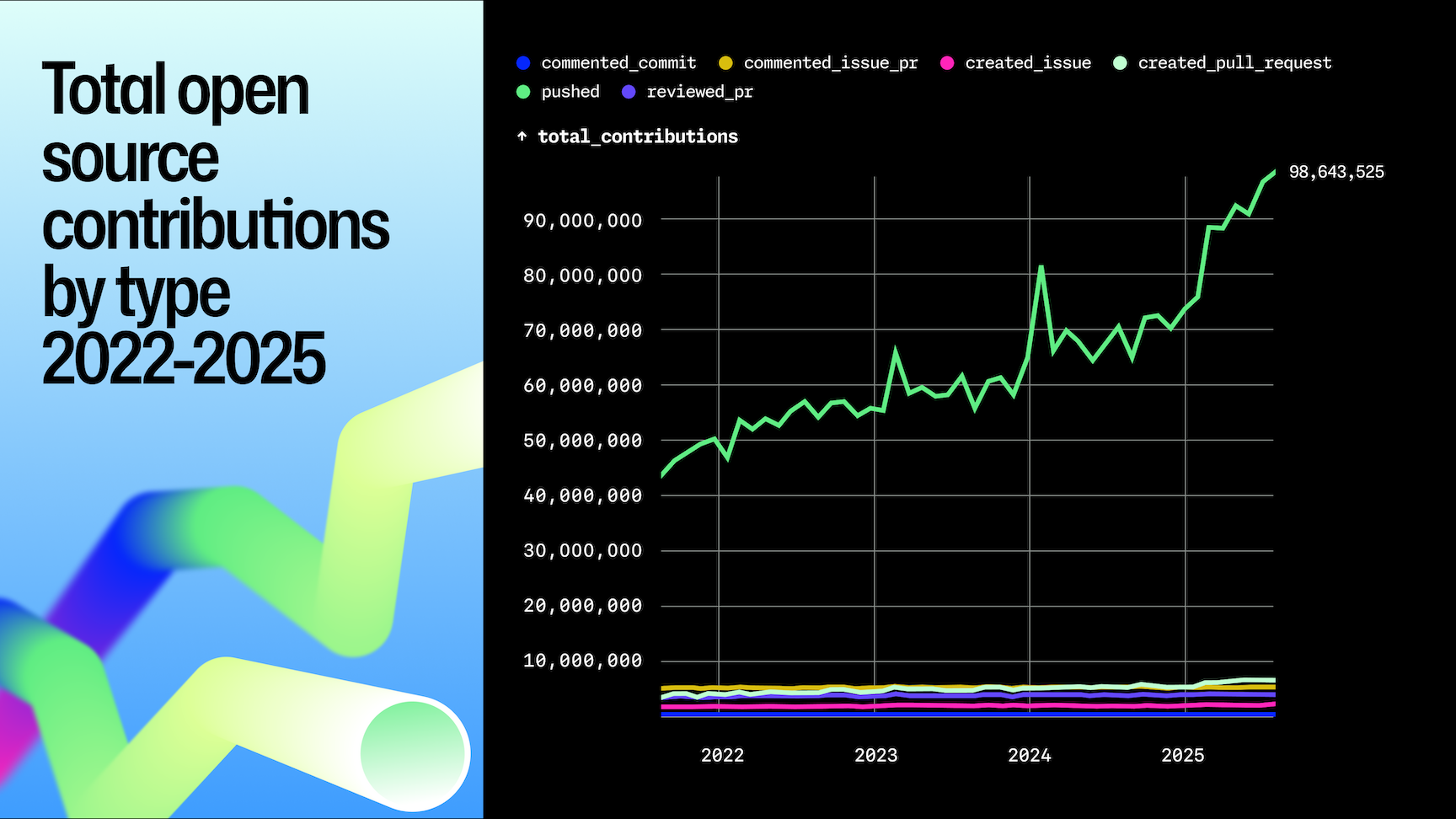
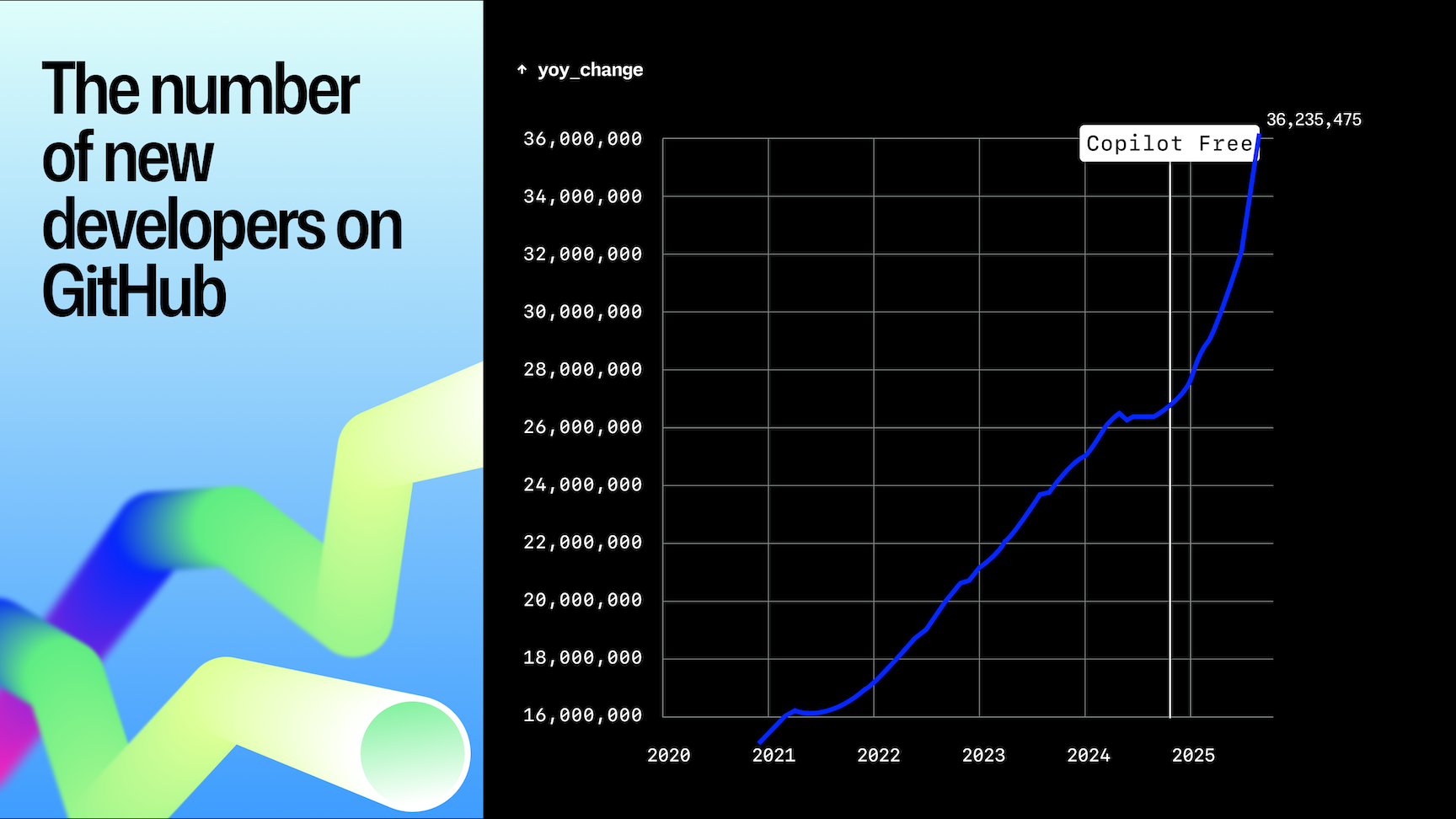
Also using PyPI as a benchmark is incredibly myopic. Github's 2025 Octoverse[0] is more informative. In that report, you can see a clear inflection point in total users[1] and total open source contributions[2].

The report also notes:

> In 2025, 81.5% of contributions happened in private repositories, while 63% of all repositories were public

[0]: https://github.blog/news-insights/octoverse/octoverse-a-new-...

[1]: https://github.blog/wp-content/uploads/2025/10/octoverse-202...

[2]: https://github.blog/wp-content/uploads/2025/10/octoverse-202...

Re: So where are all the AI apps?

#154
post #123

Earlier quoted context omitted.

That's fine and all, but how much are you ready to pay to Anthropic and OpenAI to be able to do this? Like, is it worth 100 bucks a month for you to have your own shopping app?

That is an excellent question. For me the answer is yes, but I'm unusual.

Haha great. I guess my wider point is that most people won't be ready to pay for it, and in the end there will be only two ways to monetize for OpenAI et al: Ads or B2B. And B2B will only work if they invest a lot into sales or if the business owners see real productivity gains one the hype has died one.

Re: So where are all the AI apps?

#156

By "apps" this author apparently means "PyPi packages". This is a bafflingly myopic perspective in a world of myopic perspectives. Do we really expect people vibecoding "apps" to put anything on PyPi as a result? They're consumers of packagers, not creators. I don't blame people for responding to the title instead of the article, because the article itself doesn't bother to answer its own question.

A better data set would have been the BigQuery Github stats.

Re: So where are all the AI apps?

#157
Does the data not support a 2X increase in packages?

Pre-ChatGPT, in ~2020, there were about 5,000 new packages per month. Starting in 2025 (the actual year agents took off), there is a clear uptick in packages that is consistently about 10,000 or 2X the pre-ChatGPT era.

In general, the rate of increase is on a clear exponential. So while we might not see a step change in productivity, there comes a point where the average developer is in fact 10X productive than before. It just doesn't feel so crazy because it can about in discrete 5% boosts.

I also disagree with the dataset being a good indicator of productivity. I wouldn't actually suspect the number of packages or the frequency of updates to track closely with productivity. My first order guess would that AI would actually be deflationary. Why spend the time to open source something that AI can gen up for anyone on a case by case basis specific to the project. it takes a certain level of dedication and passion for a person to open source a project and if the AI just made it for them, then they haven't actually made the investment of their time and effort to make them feel justified in publishing the package.

The metrics I would expect to go up are actually the size of codebases, the number of forks of projects that create hyper customized versions of tools and libraries, and other metrics like that.

Overall, I'd predict AI is deflationary on the number of products that exist. If AI removes the friction involved with just making a custom solution, then the amount of demand for middleman software should actually fall as products vertically integrate and reduce dependencies.

Re: So where are all the AI apps?

#158
post #148
post #28

It is incredibly easy now to get an idea to the prototype stage, but making it production-ready still needs boring old software engineering skills. I know countless people who followed the "I'll vibe code my own business" trend, and a few of them did get pretty far, but ultimately not a single one actually launched. Anyone who has been doing this professionally will tell you that the "last step" is what takes the maj…

> Anyone who has been doing this professionally will tell you that the "last step" is what takes the majority of time and effort. That's true, but even the "last step" is being accelerated. The 10% that takes 90% of the time has itself been cut in half. An example is turning debug logs and bug reports into bugfixes, and performance stats into infrastructure migrations. The time required to analyze, implement, and dep…

So, how many years until we'll see results, then?

Re: So where are all the AI apps?

#159
I think this article is making a pretty big assumption: that people making things with AI are also going to be publishing them. And that's just the opposite of what should be expected, for the general case.

Like I've been making things, and making changes to things, but I haven't published any of that because, well they're pretty specific to my needs. There are also things which I won't consider publishing for now, even if generally useful because, well the moat has moved from execution effort to ideas, and we all want to maintain some kind of moat to boost our market value (while there's still one). Everyone has reasonable access to the same capabilities now, so everyone can reasonably make what they need according to their exact specs easily, quickly and cheaply.

So while there are many things being made with AI, there is ever-decreasing reasons to publish most of it. We're in an era of highly personalized software, which just isn't worth generalizing and sharing as the effort is now greater than creating from scratch or modifying something already close enough.

Re: So where are all the AI apps?

#160
A bit tangential to the article themes, but I feel in some workplaces that engineering velocity has gone up while product cycles and agile processes have stayed the same. People end up churning tickets faster and working less, while general productivity has not changed.

Of course these are specific workplaces designed around moving tickets on a board, not high-agentic, fast-moving startups or independent projects—but they might represent a lot of the developer workforce.

I also know this is not everyone's experience and probably a rare favorable outcome of productivity gain captured by a worker that is not and won't stay the norm.

Post reply on HN