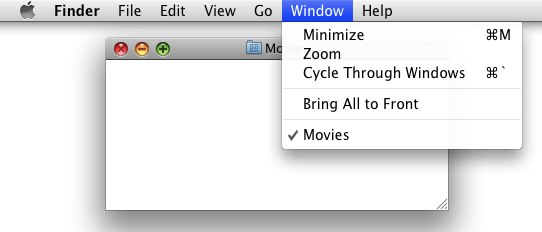
Each window has Close, Minimize and Maximize button on it. The "X", "-", and "+" symbols only appear when the mouse moves over these buttons.
The "+" symbol is Zoom, not Maximize. https://iili.io/H6a1uAG.png
151–160 of 185 posts
The "+" symbol is Zoom, not Maximize. https://iili.io/H6a1uAG.png
Earlier quoted context omitted.
Agreed. I think the new System Preferences was a big step back.
And for what reason? There were things that were so easy to do - like change network interface priority by reordering the list of interfaces - that have obvious method anymore (I want to prefer ethernet when it’s attached, for example). I can no longer navigate to settings I frequently used and need to search for just about everything. Perhaps I shouldn’t expect things to stay the same after 20 years(!), but for long…
Because why couldn't they put it in alphabetical order? I want to adjust my Keyboard settings ... where the eff is Keyboard ...
Wow, unbelievable that it was designed in 2001! It still looks fresh and modern, although maybe a bit too playful so that it appears a bit childish? But only barely. It appears to have all the basic functionality expected from a modern operating system, I instantly feel right at home although I've never used it. I find the review terrible though, one of the major changes was the user interface, revolutionary I would…
> It still looks fresh and modern, although maybe a bit too playful so that it appears a bit childish? The aesthetics is called „Frutiger Aero“. Lots of colors and especially of blue, lots of transparency effects and fake light reflections. It all is inspired by natural landscapes with blue skies or blue water surfaces. Also skeuomorphisms everywhere. Windows 7 could be called the pinnacle of the use of Frutiger Aero…
Windows Media Center was the origins of the Metro UI, Windows Phone 7 was the industries 21st century intro to a typography first flat design.
Sadly the good design aspects of Windows Phone 7 mostly got forgotten about by the time Windows 8 came along, IMHO it is because WP7 had a small dedicated design team compared to whatever large group I imagine did Windows 8.
I was deep into OS explorations in this period. I ran BeOS, Yellow Dog linux on PowerPC, had all flavors of NT, etc. My feeling about OS X at this time was that it was the right choice but that it was "too late" and that Apple took too long and the window of opportunity had passed. I take that now as startup advice: It isn't too late!
I need to remember to remind myself of this more often! The one I remember so clearly is back when I was using Pidgin (or Adium I think was another thing I used?) with a few different messaging apps, and my company was trying to figure out how to make chat work, maintaining an irc server that we of course couldn't get the non-nerds to use, looking at HipChat and a couple others that seemed really expensive for their…
Wow, unbelievable that it was designed in 2001! It still looks fresh and modern, although maybe a bit too playful so that it appears a bit childish? But only barely. It appears to have all the basic functionality expected from a modern operating system, I instantly feel right at home although I've never used it. I find the review terrible though, one of the major changes was the user interface, revolutionary I would…
> It appears to have all the basic functionality expected from a modern operating system The truth is, for the most part operating systems haven't really advanced that much, at least from a ux standpoint. Speaking as someone who started using computers in 1997 on windows 95 and a 133mhz pentium. All the basic metaphors and mechanisms have stayed the same. Tabs in browsers were considered like a huge leap (I know it's…
Earlier quoted context omitted.
I need to remember to remind myself of this more often! The one I remember so clearly is back when I was using Pidgin (or Adium I think was another thing I used?) with a few different messaging apps, and my company was trying to figure out how to make chat work, maintaining an irc server that we of course couldn't get the non-nerds to use, looking at HipChat and a couple others that seemed really expensive for their…
I remember ICQ and Aim. It's not even clear to me why they died and were replaced, but that sure did happen.
Earlier quoted context omitted.
> It appears to have all the basic functionality expected from a modern operating system The truth is, for the most part operating systems haven't really advanced that much, at least from a ux standpoint. Speaking as someone who started using computers in 1997 on windows 95 and a 133mhz pentium. All the basic metaphors and mechanisms have stayed the same. Tabs in browsers were considered like a huge leap (I know it's…
Search as the primary interaction method instead of menus and icons is pretty dramatic shift though; compare vscode command palette to traditional vs, or windows 7 and later start menu to its predecessors. Another thing, especially on Windows, is the de-emphasis or straight out removal of menu bars, once staple of desktop interfaces. As a more generic trend, I think modal dialogs with forms were far more common inter…
Earlier quoted context omitted.
I need to remember to remind myself of this more often! The one I remember so clearly is back when I was using Pidgin (or Adium I think was another thing I used?) with a few different messaging apps, and my company was trying to figure out how to make chat work, maintaining an irc server that we of course couldn't get the non-nerds to use, looking at HipChat and a couple others that seemed really expensive for their…
I remember ICQ and Aim. It's not even clear to me why they died and were replaced, but that sure did happen.
Earlier quoted context omitted.
> LLVM is because they don’t want GPLv3. LLVM and Clang are also about having a compiler stack that provides the information you need for a modern graphical IDE. For instance, GCC had made some decisions that made it difficult to point to which line of code caused a particular error message. Apple's Chris Lattner covered this in a 2007 tech talk he gave at Google introducing LLVM and the (then) new Clang project. htt…
> LLVM and Clang are also about having a compiler stack that provides the information you need for a modern graphical IDE. Is that why all GNU utilities shipped with OSX were also stuck at the GPLv2 versions and never upgraded?
Some things have good replacements with other licenses, like zsh. Others, AFAIK, don’t, like rsync.