Earlier quoted context omitted.
They don't. I think the commenter was guessing by generalizing from software/subscription service ToS's, which are ubiquitous; plus the fusion of hardware/software in inseparable packages, like the iPhone hardware, which is a brick without an ongoing Apple subscription.
> a brick without an ongoing Apple subscription This just isn’t true. You don’t have to give Apple another dime to use an iPhone perpetually. Any paid Apple subscriptions are optional for cloud or streaming services.
The boiling frog of digital freedom
141–150 of 467 posts
Re: The boiling frog of digital freedom
#142One factor this ignores is that there already exist tens of billions of general-purpose computing devices capable of running arbitrary code. They aren't going to magically disappear. They've already been made and they can't be unmade. Given enough nuisance, people would just stop upgrading. We've already seen this with Windows itself — I know people who are still, in 2023, using Windows 7 daily for the simple reason…
Mozilla has ended support for Firefox on Windows 7 (and 8). In a couple of years, less and less websites will work on that last-supported Firefox version. Other cloud-related software like Dropbox will also remove support sooner or later. The more difficult it gets to use online services and the web on Windows 7, the more people will switch. It will end up in a small hobbyist niche like people who run Haiku or Sereni…
Re: The boiling frog of digital freedom
#143Earlier quoted context omitted.
>I never understood why anyone would even want a banking app though; there is nothing int can do that a website can't. A mobile phone app can let users "deposit paper checks from home" without ever driving to the bank branch by taking a photo of the check with the smartphone camera. Last time I looked into it, a desktop website couldn't enable check deposits with a webcam. (EDIT: I don't mean technically not possible…
Meanwhile most of the world hasn't used checks in 20+ years. Thank god for that. But for completeness; browsers have been able to use cameras since before smartphones. So of course it can work just the same there. "Suspicious activity" is such a bad strawman argument, i'm not sure how to address it. "Just thought you'd want to know your money is gone, lol." Either you do N+1 factor authentication for real, or you jus…
True, but the key word you used is "most". E.g. My home insurance refunds an annual dividend back to me and their method to pay me is paper check. Not an electronic direct deposit, nor a VISA giftcard, nor even a "credit" that can be applied as a discount off year's premium. It's a paper check.
>So of course it _can_ work just the same there.
Sure but that's talking in hypotheticals. Today, I have the reality of a paper check to deal with and Bank of America and Chase websites do not have options to upload images of checks for deposit. (Chase does have a paper check scanner option that doesn't require mobile phones but that's only for commercial accounts: https://www.chase.com/business/banking/services/quick-deposi...)
>"Suspicious activity" is such a bad strawman argument, i'm not sure how to address it. "Just thought you'd want to know your money is gone, lol."
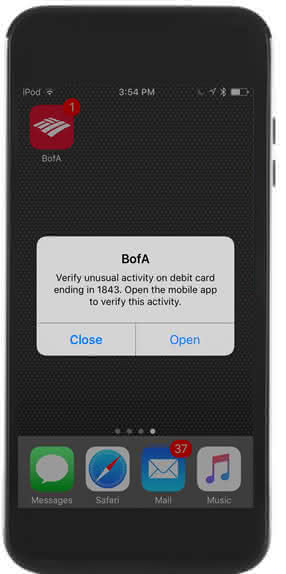
No, you misunderstand. The better banking smartphone apps will require interactive approval from you to allow a particular suspicious transaction to happen. This prevents your money from being gone. (Example screenshot: https://www2.bac-assets.com/online-banking/spa-assets/images...)
> Browsers have had push notifications for quite some time now too...
No, web push finally came to Safari in iOS 16.4 which was just a few months ago in April 2023.
From the tone of your reply, it seems like you'd rather be argumentative instead of acknowledging that bank apps have some extra features that's convenient for some users.
Re: The boiling frog of digital freedom
#144There is one interesting force acting against that though (or it would probably already have happened). It is the simple fact that most people that are competent enough to actually implement these things also understand the problems with doing so. For the most part anyway. If we could just agree to not do that... well, what are "they" going to do? And of course: we owe it to the web to use Firefox. The Chrome clones…
Re: The boiling frog of digital freedom
#145Earlier quoted context omitted.
They don't. I think the commenter was guessing by generalizing from software/subscription service ToS's, which are ubiquitous; plus the fusion of hardware/software in inseparable packages, like the iPhone hardware, which is a brick without an ongoing Apple subscription.
> a brick without an ongoing Apple subscription This just isn’t true. You don’t have to give Apple another dime to use an iPhone perpetually. Any paid Apple subscriptions are optional for cloud or streaming services.
[0] https://www.apple.com/legal/sla/docs/iOS16_iPadOS16.pdf (the iOS ToS)
(And I think it's noteworthy how that ToS' language bounces freely between "hardware" and "software"; how it fluctuates between "software license agreement" and "by using your iPhone ("device"), you are agreeing to...". Apple hardware and software are fused together: there is no practical difference).
Re: The boiling frog of digital freedom
#146The other day I read an HN comment that thought that when you buy consumer PC hardware, it comes with a ToS that limits your property rights as the owner. It's the kind of uncanny experience I run into more and more often lately: talking with people so immersed in our new normal of cyberpunk dystopia, they seem not to remember how things were in the before-times. So accustomed to exploitative corporate gaslighting, w…
> In the before-times, [...] You used to get full schematics along with the electronics you bought. And by "get", I do NOT mean that you'd have to ask for them. They'd be shipped WITH the products, on paper. It was a normal part of your purchase, just like the manual.
#1 reason I hack on vintage computers: top to bottom documentation and source, and still small enough to fit in one human's head.
Re: The boiling frog of digital freedom
#147Earlier quoted context omitted.
I think the ship has sailed for the web. Many apps don't even bother with making functional webapps any longer; the go to market are mobile apps for the censorship platforms. The web lost. Now it's just a transport layer for mobile app API requests.
Apps shouldn’t be web apps anyway. Local-first apps should be the default, in the context of digital freedom. The only exception being self-hostable web apps.
If a company is going to be gating their API behind some proprietary shovelware anyway, I would rather they write it in a plaintext scripting language (JavaScript) that runs inside a free software virtual machine (Firefox) which lets me intercept and control it.
*Yes, "program". How I hate "apps". Perverse term.
Re: The boiling frog of digital freedom
#148There is one interesting force acting against that though (or it would probably already have happened). It is the simple fact that most people that are competent enough to actually implement these things also understand the problems with doing so. For the most part anyway. If we could just agree to not do that... well, what are "they" going to do? And of course: we owe it to the web to use Firefox. The Chrome clones…
Yeah, chrome and google in general are the first in line to cause problems. There are many browsers, many apps, many everything... you can switch whenever... but the DRM and attestation pushes with browsers (and mobile devices) means, that sure, you can use a different browser, but your bank, your streaming service, your newssite might not work unless you're using chrome with drm and hardware attestation. This is alr…
You’ll end up with a fork of Chromium/Blink that doesn’t have WEI. And it will be used to surf web sites. While the official browser from Google would be used to access sites that require WEI attestations. Just like the Bank of America app would.
Corporate power in pushing Chrome for everything can be limited if we have open source alternatives. Look at Firefox and what it did to M$IE, which had the full power of Micro$oft behind it. That only happened because Netscape chose to OPEN SOURCE their code base. They couldn’t beat IE on their own, but the open source community could.
Well, that and WebKit, which was basically adopted by Apple (Microsoft’s competitor) from another open source browser, Konqueror! And that led to Chrome, Chromium and Blink etc.
In short — open source is the best way we can check corporate power on the software side.
On the hardware side, it’s far more difficult, and if the vendors choose to ban any “unapproved” apps (eg requiring Safari WebView rendering engine in all apps on non-jailbroken iPhones) then the best tool we have is government antitrust laws. Maybe one day, in that area too, open source hardware will be the people’s best weapon. But not today :-/
Re: The boiling frog of digital freedom
#149The other day I read an HN comment that thought that when you buy consumer PC hardware, it comes with a ToS that limits your property rights as the owner. It's the kind of uncanny experience I run into more and more often lately: talking with people so immersed in our new normal of cyberpunk dystopia, they seem not to remember how things were in the before-times. So accustomed to exploitative corporate gaslighting, w…
Looking at this list, open source software is the only thing that can help save us from this future. Whenever a corporation takes control of a widespread open source software (eg Oracle buying MySQL) it is forked by the community (MariaDB). If you don’t have access to the source code, you can’t fork it. And ALL the Web 2.0 platforms of today (on which we have our public forums) won’t give you their back-end software.…
Re: The boiling frog of digital freedom
#150The other day I read an HN comment that thought that when you buy consumer PC hardware, it comes with a ToS that limits your property rights as the owner. It's the kind of uncanny experience I run into more and more often lately: talking with people so immersed in our new normal of cyberpunk dystopia, they seem not to remember how things were in the before-times. So accustomed to exploitative corporate gaslighting, w…
> In the before-times, [...] You used to get full schematics along with the electronics you bought. And by "get", I do NOT mean that you'd have to ask for them. They'd be shipped WITH the products, on paper. It was a normal part of your purchase, just like the manual.