Live data from Hacker News

Milk alternatives produce up to 4.5x less greenhouse gas emissions as milk

ourworldindata.org

141–150 of 192 posts

Re: Milk alternatives produce up to 4.5x less greenhouse gas emissions as milk

#141
post #58

Earlier quoted context omitted.

Milk should be the beverage of choice for growing kids who do not have contraindications. 3.25% milk is recommended up until 2 years of age, and to continue into older age if there are no issues with obesity. (1) https://www.albertahealthservices.ca/assets/info/nutrition/i...

I have my doubts about such recommendations; aside from the influence of the dairy lobby, how many such nutrition guidelines account for high-quality non-dairy alternative sources of protein and calcium?

The only dairy alternative that has comparable protein quality (DIAAS) is soy, and AFAIK there aren't many studies of soy milk given to toddlers/small kids.
Re: Milk alternatives produce up to 4.5x less greenhouse gas emissions as milk

#142

This is why I only drink hamster milk.

You can milk a hamster?

It's a mammal. You can milk it. It just takes a lot of time and appropriate milking equipment.

Fortunately a full automated milking machine fits in a lunch pail. Sadly the equipment only gets you several thimblefuls per hamster-day.

Re: Milk alternatives produce up to 4.5x less greenhouse gas emissions as milk

#143

That's nice but it's not milk so ... apples to oranges. I'm not being unreasonable here, some people just won't give up real meat or milk, ever.

There is a death spiral that can occur when demand for dairy milk declines below a level where the supply chain can no longer support itself economically. Milk consumption is down 40% from the 70s in the US, 2730 dairy farms went out of business between 2018 and 2020, and if I had to hazard a guess, younger folks are going to prefer non dairy alternatives (for a variety of reasons). https://www.theguardian.com/food/2…

This is good. Bovine animal husbandry is one of the biggest contributors to climate change, and we as a society should allow the market to kill the industry before it kills us.

Re: Milk alternatives produce up to 4.5x less greenhouse gas emissions as milk

#144
post #131

Earlier quoted context omitted.

my understanding about this is that milk production is not subsidized so that poor people can afford it, but so that farmers can afford to continue producing it. in some places milk production is not profitable and farmers would go out of business without government support. the price they get paid for their milk does not depend on what the consumers would be willing to pay, but on the large milk production companies…

> milk production is not subsidized so that poor people can afford it, but so that farmers can afford to continue producing it. Yes, because poor people can't afford to pay the prices required to sustain enough production. And because dairy is a staple, especially in rough times, it's in governments' interest to maintain production.

according to some sources we have overproduction of milk worldwide. so stopping subsidies will not raise the price of milk on the market. it will only put those farmers out of business that don't have a profitable milk production.

the choice is between subsidizing farmers to produce milk or paying them welfare checks.

the EU is doing this, and they don't exactly have a problem with lots of poor people not being able to afford higher milk prices. more likely higher prices would lead to less consumption even among those that could afford it.

Re: Milk alternatives produce up to 4.5x less greenhouse gas emissions as milk

#145

Questions that come to mind: 1. What percentage of land use for dairy cows is arable? 2. What percentage of water consumed by dairy cows is recycled (eg from rain water), how does that compare to something like almonds? 3. What percentage of greenhouse gas emissions are added to the environment over already existing in the environment and just being moved?

Cows emit a lot of methane, and are in fact the single largest source of agricultural GHG emissions globally. As I understand it, there's a fair bit of research going into how to reduce emissions from cows, but it would also be good to reduce the number of cows if possible.

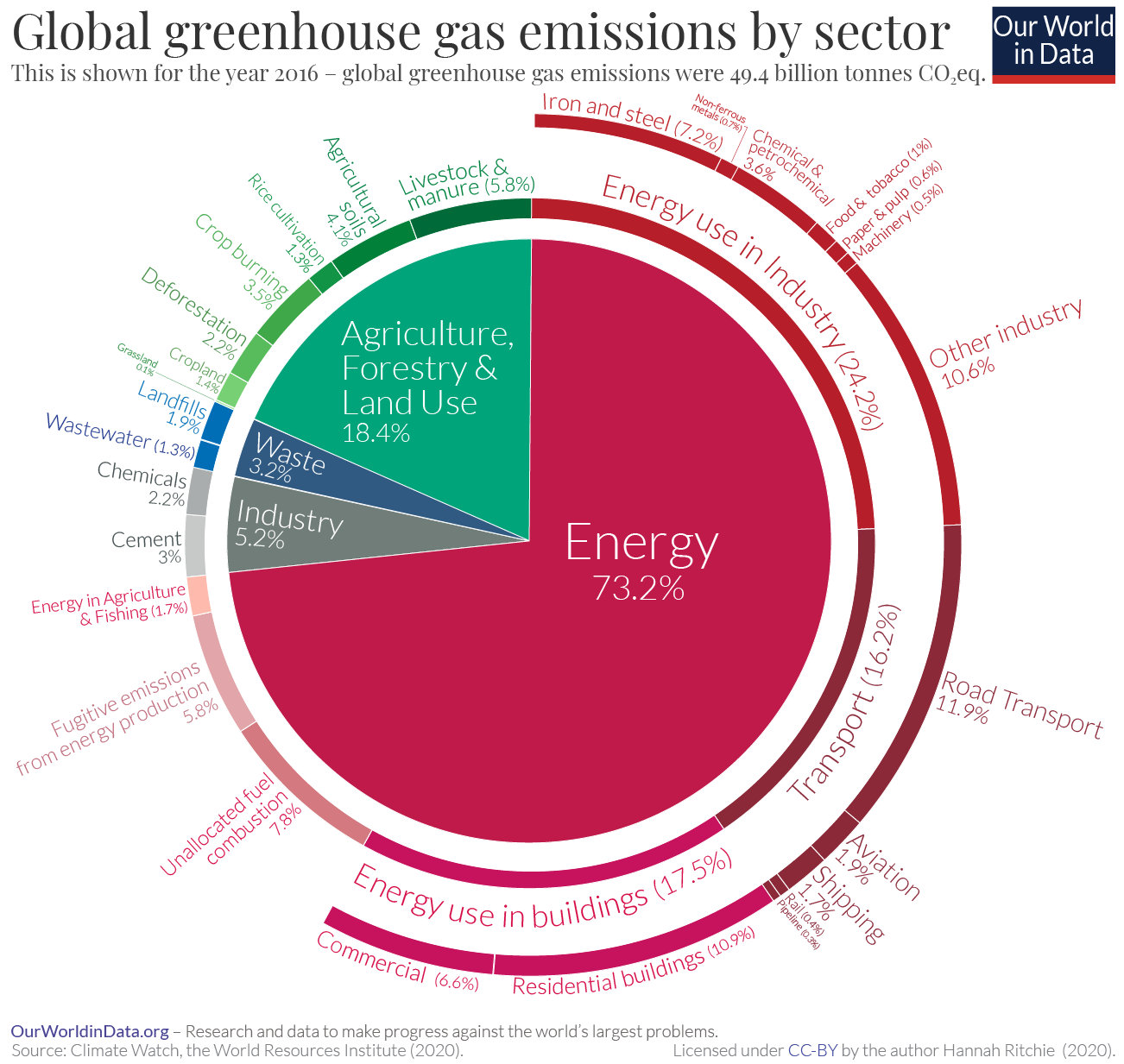
- Emmisions related to livestock are 5.8% of _all_ global CO2 and other GHG emissions [0]

- Methane leaks from Oil and gas drill sites and abandoned wells alone account for 5.8% of global emissions. [0]

Ethically I am aligned with animal welfare but rationally it is a lot more realistically that we force Oil&Gas to clean up their act than to expect everyone worldwide to switch to oat milk.

[0] https://ourworldindata.org/uploads/2020/09/Emissions-by-sect...

Re: Milk alternatives produce up to 4.5x less greenhouse gas emissions as milk

#146
post #131

Earlier quoted context omitted.

my understanding about this is that milk production is not subsidized so that poor people can afford it, but so that farmers can afford to continue producing it. in some places milk production is not profitable and farmers would go out of business without government support. the price they get paid for their milk does not depend on what the consumers would be willing to pay, but on the large milk production companies…

> milk production is not subsidized so that poor people can afford it, but so that farmers can afford to continue producing it. Yes, because poor people can't afford to pay the prices required to sustain enough production. And because dairy is a staple, especially in rough times, it's in governments' interest to maintain production.

Depends upon where you are in the world. In rich countries local producers are outcompeted by producers in lower cost regions. Without price supports the local industry would collapse.

If a country's food supply becomes completely dependent upon imports, then this gives the exporter political power over the importer, and also reduces the importer's resilience to disasters.

Re: Milk alternatives produce up to 4.5x less greenhouse gas emissions as milk

#147
post #144

Earlier quoted context omitted.

> milk production is not subsidized so that poor people can afford it, but so that farmers can afford to continue producing it. Yes, because poor people can't afford to pay the prices required to sustain enough production. And because dairy is a staple, especially in rough times, it's in governments' interest to maintain production.

according to some sources we have overproduction of milk worldwide. so stopping subsidies will not raise the price of milk on the market. it will only put those farmers out of business that don't have a profitable milk production. the choice is between subsidizing farmers to produce milk or paying them welfare checks. the EU is doing this, and they don't exactly have a problem with lots of poor people not being able…

I mean, keep in mind milk = cheese as well. Cream. Yogurt. All the derivative products like infant formula. Tons of canned and dry goods.

Re: Milk alternatives produce up to 4.5x less greenhouse gas emissions as milk

#148
post #144

Earlier quoted context omitted.

according to some sources we have overproduction of milk worldwide. so stopping subsidies will not raise the price of milk on the market. it will only put those farmers out of business that don't have a profitable milk production. the choice is between subsidizing farmers to produce milk or paying them welfare checks. the EU is doing this, and they don't exactly have a problem with lots of poor people not being able…

I mean, keep in mind milk = cheese as well. Cream. Yogurt. All the derivative products like infant formula. Tons of canned and dry goods.

yes of course. that doesn't change anything. infant formula is already very expensive. poor people can't afford anything but their own breast milk for their babies.

Re: Milk alternatives produce up to 4.5x less greenhouse gas emissions as milk

#149

Meanwhile 100 million oil barrels are extracted (each producing 0.5/0.7 ton of CO2 equivalent), 23 millions of tons of coal, and 365 thousand million of cubic feet of natural gas are consumed. All those numbers each day, and without counting leaks. And we are talking of fossil fuels, carbon that wasn't in the ecosystem for maybe many millions of years, compared with the relatively short lived and recycled methane tha…

This is talked about literally daily. Unfortunately your message comes off as whataboutism in disguise. Let's focus on the fact that milk alternatives are good and cow farming is problematic in this thread.

Re: Milk alternatives produce up to 4.5x less greenhouse gas emissions as milk

#150

Meanwhile 100 million oil barrels are extracted (each producing 0.5/0.7 ton of CO2 equivalent), 23 millions of tons of coal, and 365 thousand million of cubic feet of natural gas are consumed. All those numbers each day, and without counting leaks. And we are talking of fossil fuels, carbon that wasn't in the ecosystem for maybe many millions of years, compared with the relatively short lived and recycled methane tha…

100% this. These dairy cows aren't magically unlocking some deeply seated fossil carbon and farting it into the atmosphere. Nature already has a carbon cycle that works in harmony between plants and animals, let's try and work with it and emulate it rather than use even more energy and other resources to produce these highly processed goods. If you are vegan go for it, if you care about the environment stick with milk made from cows which graze on open grass land.
Post reply on HN