Earlier quoted context omitted.
You forgot the most important one, which is, has been, and always will be: 6. The inability for a central bank to print gold. I understand the various arguments for fiat money in advanced economies, and many of them make sense, but the one thing that should stop everyone from advocacy of CB-printed fiat is the Cantillion Effect [1]. Any system in which the first-at-the trough benefit exclusively to the detriment of t…
Okay but have you wondered about what will happen if Blackrock buys more Bitcoin than you do?
The Gold Standard and the Great Depression (1997)
141–149 of 149 posts
Re: The Gold Standard and the Great Depression (1997)
#142Earlier quoted context omitted.
> More gold or an increase in gold value is required to represent greater wealth. Not true. A restriction in supply can raise the price, and the discovery of new sources can lower it. Plus wealth is entirely subjective. Would you rather have a warehouse full of food, water, and ammunition during a crisis, or a warehouse full of gold? (Hint: people may not want to trade food for a soft metal that can't be fashioned in…
Yes, all of those bad things can happen. A gold standard is not perfect. The goal isn't to be perfect. It is to have a currency that is fair to the greatest number of people. Gold is a currency trusted by all, fiat is a currency of force. In crisis I would rather have the food, water, and ammunition. What a silly strawman. A warehouse full of survival supplies is incredibly valuable during crisis but it is not durabl…
> You have to trust that banks or governments aren't going to steal your gold. If you don't trust them you change your dollars back to gold.
> With any currency its value comes down to trust.
Do you see the problem here? The entire argument for the gold standard always goes back to trust of the institution that is promising to exchange paper for gold. There is a long, long history of banks and governments unable to produce lumps of metal when demanded, and that has caused panics and recessions. Even if they were sound but had logistical issues moving gold around and exchanging it.
Again, there is no difference between a piece of paper that promises to be worth some amount of gold and a piece of paper that promises not to mismanage a fiat currency. They both depend on full faith in the institution that made the promise.
> A gold standard allowed people a way to keep their wealth in a durable form in times of low trust with no conversion cost.
If they had the physical gold, there is always a conversion cost. A lot of immigrants use gold as a bank of sorts, and they always lose a few points when they sell and buy back. In a crisis, as we both agree, gold is worthless, or at least worth a lot less as everyone tries to sell theirs for food. Holding paper that should be exchangeable for gold has no more inherent value than a fiat currency.
> It allowed people to "take their ball and go home" so to speak. No governments needed to trust another country's fiat. The money exchanged in trade had a real, verifiable, persistent value.
It allowed people to have a piece of paper with a promise that they could "take their ball and go home" so to speak. No governments needed to trust another country's fiat, they needed to trust they weren't lying about their gold reserves and their management of it. The money exchanged in trade was a promise that it was backed by a real, verifiable, persistent value.
> Whatever excuses the US Government gave for ending the gold standard it still acted unconstitutionally. The government was facing a damaged economy and dwindling gold reserves as people and countries redeemed dollars for gold. The government saw their dwindling gold reserves as a problem instead of a function of a gold standard. This is the same as a casino
The government saw their inability to manage the money supply when it was tied to gold as an existential crisis to the Union. If you were in charge, based on your arguments here, you'd rather let the south secede or win the Civil War than tarnish the reputation of the gold standard. That's a bit more serious than a casino going bankrupt.
> It wasn't a problem with the currency it was a lack of trust in the issuer that the issuer saw as a reduction in "their" money that needed to be stopped. It was never "their" money to start with. It always belonged to the people. The people were just taking their ball home.
And when many of those people tried to take their ball and go home, there was no gold for them to collect. The system failed because the institution was mismanaged, or because there was a panic and they couldn't handle the logistics of moving lumps of metal around. That's the whole reason the world has moved away from the gold standard. I'm not sure how you see the long history of it's repeated failures as evidence that the problem is not the gold standard, but the lack of a perfect implementation of it.
Re: The Gold Standard and the Great Depression (1997)
#143Earlier quoted context omitted.
> In a way, Germany was incentivized for hyperinflation. The importance of that cannot be overstated. If you look at the major examples of hyperinflation, the majority fall into three buckets: * Losing a war that results in money printing to fund the effort. * Large foreign denominated debts that require domestic money printing. * Regime changes generally coinciding with civil war or social upheaval. See Roche (2011)…
Add economic sanctions (Venezuela) and intentional destruction of food production (Zimbabwe) to that list.
A quick history:
* https://clintballinger.com/2020/04/30/airplane-crashes-arent...
Another example of not bothering with the context of the situation:
> I am dismayed by the way writers insist on reporting the collapse of a currency as a “monthly inflation rate” with some ridiculous figure associated that helps a normal person not-at-all understand anything (e.g., Yugoslavia in 1992-94: highest monthly inflation rate = 313,000,000%!!!!)
> They had a war. Their government collapsed. They couldn’t tax. They couldn’t produce. Their currency collapsed. The idea that “313,000,000%” tells us anything of interest is ridiculous. A few newspaper headlines on peace treaties, troop movements, famine, reconstruction—literally anything— would be infinitely more informing.
* https://clintballinger.com/2021/01/12/the-myth-of-hyperinfla...
Re: The Gold Standard and the Great Depression (1997)
#144Earlier quoted context omitted.
Yes, all of those bad things can happen. A gold standard is not perfect. The goal isn't to be perfect. It is to have a currency that is fair to the greatest number of people. Gold is a currency trusted by all, fiat is a currency of force. In crisis I would rather have the food, water, and ammunition. What a silly strawman. A warehouse full of survival supplies is incredibly valuable during crisis but it is not durabl…
> Gold is a currency trusted by all, fiat is a currency of force. > You have to trust that banks or governments aren't going to steal your gold. If you don't trust them you change your dollars back to gold. > With any currency its value comes down to trust. Do you see the problem here? The entire argument for the gold standard always goes back to trust of the institution that is promising to exchange paper for gold.…
Every single argument you have made is that governments and banks cant be trusted with paper money even when it is backed by gold. So, why do you push for fiat currency?
If government and banks are not to be trusted with paper money then hard currency is the only solution left that doesn't require trust in anybody.
Re: The Gold Standard and the Great Depression (1997)
#145Earlier quoted context omitted.
It's worth noting that MMT is related to chartalism. I found Debt: The First 5000 Years very persuasive, though I only got about 1/4 the way though so far. https://en.wikipedia.org/wiki/Debt:_The_First_5000_Years
Thanks, you have reminded me I need to finish that book ahaha.
Re: The Gold Standard and the Great Depression (1997)
#146Earlier quoted context omitted.
The inflexibility of a gold standard is a benefit. More gold or an increase in gold value is required to represent greater wealth. The gold can be traded for or mined. However, the gold standard ensures that the dollar you earn today maintains purchasing power for as long as you care to keep it. Your gold backed dollar can't be made worthless in a generation by the excess of politicians seeking money, power, and cont…
> More gold or an increase in gold value is required to represent greater wealth. Not true. A restriction in supply can raise the price, and the discovery of new sources can lower it. Plus wealth is entirely subjective. Would you rather have a warehouse full of food, water, and ammunition during a crisis, or a warehouse full of gold? (Hint: people may not want to trade food for a soft metal that can't be fashioned in…
https://en.wikipedia.org/wiki/Great_Bullion_Famine
A long period of deflation followed by a long period of over-inflation doesn't scream stability to me!
Re: The Gold Standard and the Great Depression (1997)
#147Earlier quoted context omitted.
> Gold is a currency trusted by all, fiat is a currency of force. > You have to trust that banks or governments aren't going to steal your gold. If you don't trust them you change your dollars back to gold. > With any currency its value comes down to trust. Do you see the problem here? The entire argument for the gold standard always goes back to trust of the institution that is promising to exchange paper for gold.…
Would you be happy with no paper certificates for gold and just use gold coins? From your earlier argument I suspect the answer is no. Every single argument you have made is that governments and banks cant be trusted with paper money even when it is backed by gold. So, why do you push for fiat currency? If government and banks are not to be trusted with paper money then hard currency is the only solution left that do…
Everyone's answer is no. Even during the prime of the standard, people made transactions on paper currency promising they represented gold because no one is going to lug around heavy coinage, spend the time to authenticate it (since it's easier to counterfeit than modern paper/plastic currency), or have to decide between making trips to banks or having a pile of it they have to constantly guard.
> Every single argument you have made is that governments and banks cant be trusted with paper money even when it is backed by gold. So, why do you push for fiat currency?
Because for every person who isn't part of the aristocracy close to centers of power, there is no difference. If a currency is mismanaged, it doesn't matter whether it promised gold or low inflation. During all of the previous crises, the first things banks and governments did is suspend specie payments.
> If government and banks are not to be trusted with paper money then hard currency is the only solution left that doesn't require trust in anybody.
If you want to live in a nation state with a credible legal system, and I think everyone does, you have to trust them to some extent. You have to trust that they won't take away your property by force, throw you in jail to take your wealth, allow someone else to do those things without consequences, or mismanage their currency to the point where it hyper inflates.
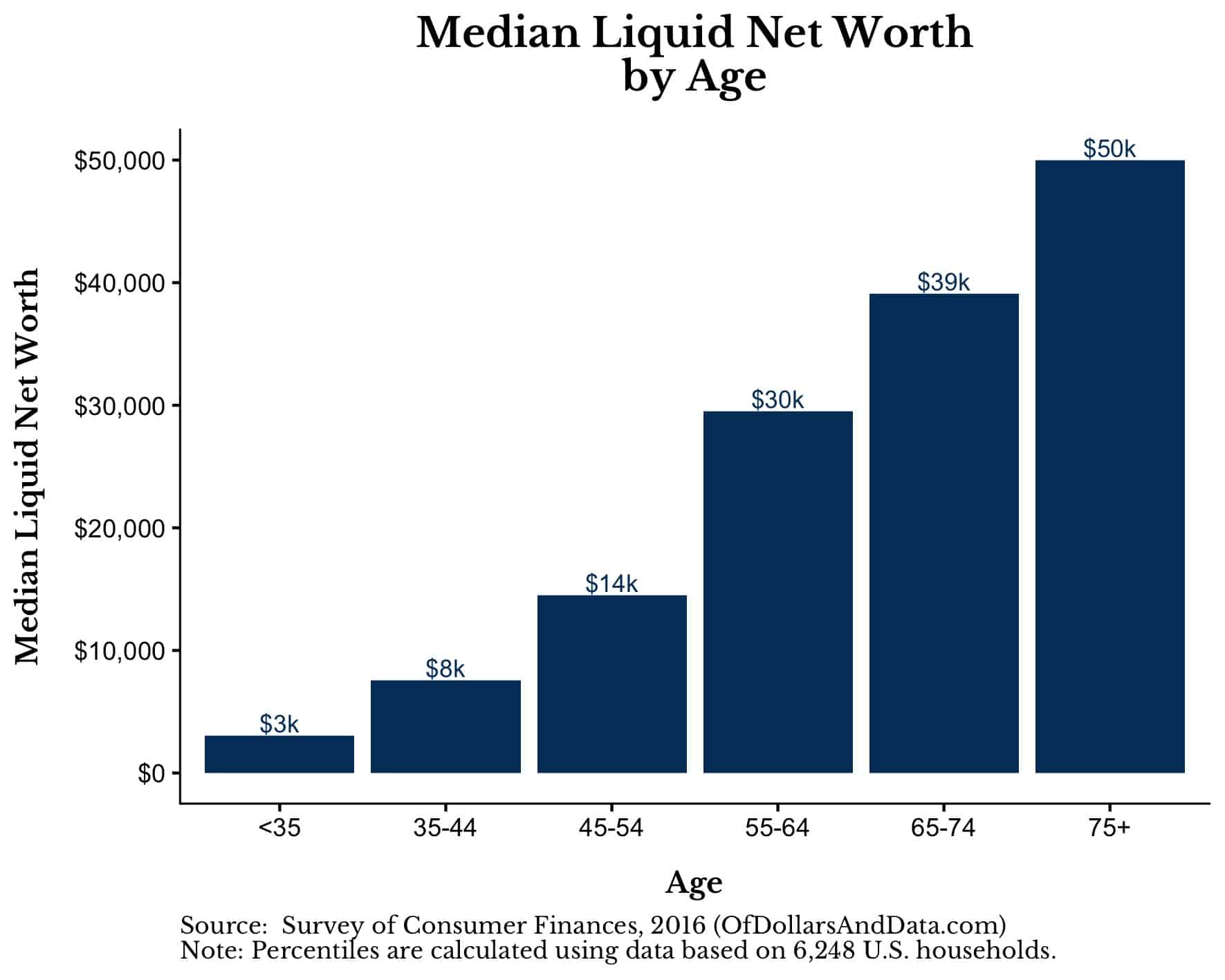
Credible governments have things like the FDIC so normal people don't have to worry about their local credit union going under as long as their account has less than $250k in it. Since the average liquid net worth of Americans is less than $50k[1], that pretty much covers everyone. It has virtually ended the problems of bank runs and panics except for black swan events like 9/11.
Even for things like the 2007 Financial Crisis, being on a gold standard wouldn't change anything. The policy mistake of removing the firewall between traditional banking and investment banking as well as leverage limits would have still led to over-speculation and CDO Ponzi schemes. The gold standard would have just added another knot to the crisis as well as provided some video footage of huge crowds trying to get specie payments and walking away empty handed. Nations like Canada avoided that entire crisis, except for what was unavoidable due to their relationship with the global economy.
[1] https://ofdollarsanddata.com/wp-content/uploads/2020/06/liqu...
Re: The Gold Standard and the Great Depression (1997)
#148Earlier quoted context omitted.
Would you be happy with no paper certificates for gold and just use gold coins? From your earlier argument I suspect the answer is no. Every single argument you have made is that governments and banks cant be trusted with paper money even when it is backed by gold. So, why do you push for fiat currency? If government and banks are not to be trusted with paper money then hard currency is the only solution left that do…
> Would you be happy with no paper certificates for gold and just use gold coins? From your earlier argument I suspect the answer is no. Everyone's answer is no. Even during the prime of the standard, people made transactions on paper currency promising they represented gold because no one is going to lug around heavy coinage, spend the time to authenticate it (since it's easier to counterfeit than modern paper/plast…
Re: The Gold Standard and the Great Depression (1997)
#149Earlier quoted context omitted.
> Would you be happy with no paper certificates for gold and just use gold coins? From your earlier argument I suspect the answer is no. Everyone's answer is no. Even during the prime of the standard, people made transactions on paper currency promising they represented gold because no one is going to lug around heavy coinage, spend the time to authenticate it (since it's easier to counterfeit than modern paper/plast…
Alright then, see you on the otherside of the currency collapse caused by your superior MMT.