Live data from Hacker News

Tiny Core Linux: a 23 MB Linux distro with graphical desktop

tinycorelinux.net

131–140 of 258 posts

Re: Tiny Core Linux: a 23 MB Linux distro with graphical desktop

#131
post #43

I've used many of these small Linux distros. I used to have Tiny Core in a VM for different things. I also like SliTaz: http://slitaz.org/en , and Slax too: https://www.slax.org/ Oh and puppy Linux, which I could never get into but was good for live CDs: https://puppylinux-woof-ce.github.io/ And there's also Alpine too.

Wondering if it would be a good idea to setup a VM with this. Setup remote connection, and intellij. Just have a script to clone it for a new project and connect from anywhere using a remote app. It will increase the size of the VM but the template would be smaller than a full blown OS Aside from dev containers, what are other options? I'm not able to run intellij on my laptop, is not an option I use Nvim to ssh into…

Ive experimented with several small distros for this when doing cross platform development.

In my experience, by the time you’re compiling and running code and installing dev dependencies on the remote machine, the size of the base OS isn’t a concern. I gained nothing from using smaller distros but lost a lot of time dealing with little issues and incompatibilities.

This won’t win me any hacker points, but now if I need a remote graphical Linux VM I go straight for the latest Ubuntu and call it day. Then I can get to work on my code and not chasing my tail with all of the little quirks that appear from using less popular distros.

The small distros have their place for specific use cases, especially automation, testing, or other things that need to scale. For one-offs where you’re already going to be installing a lot of other things and doing resource intensive work, it’s a safer bet to go with a popular full-size distro so you can focus on what matters.
Re: Tiny Core Linux: a 23 MB Linux distro with graphical desktop

#132
post #127

Earlier quoted context omitted.

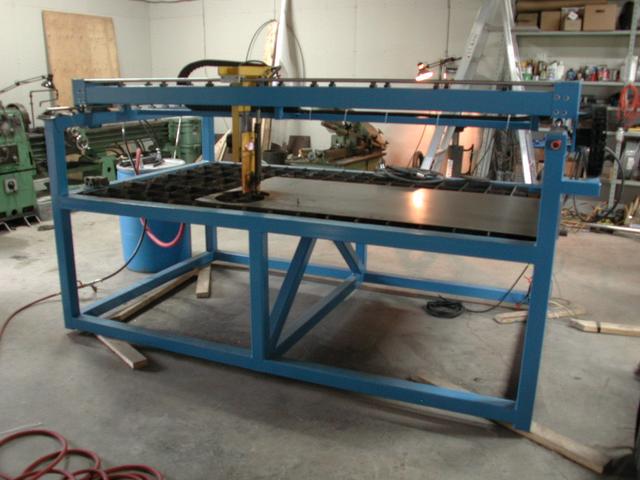
I used DSL for the control of a homebrew 8' x 4' CNC plasmacutter.

I was just thinking today how I miss my DSL (Damn Small Linux) setup. A Pentium 2 Dell laptop, booted from mini-CD, usb drive for persistence. It ran a decent "dumb" terminal, X3270, and stripped down browser (dillo I believe). Was fine for a good chunk of my work day.

I ran it on a Via single board computer, a tiny board that sipped power and was still more than beefy enough to do real time control of 3 axis stepper motors and maintain a connection to the outside world. I cheated a bit by disabling interrupts during time critical sections and re-enabling the devices afterwards took some figuring out but overall the system was extremely reliable. I used it to cut up to 1/4" steel sheet for the windmill (it would cut up to 1" but then the kerf would be quite ugly), as well as much thinner sheet for the laminations. The latter was quite problematic because it tended to warp up towards the cutter nozzle while cutting and that would short out the arc. In the end we measured the voltage across the arc and then automatically had the nozzle back off in case of warping, which worked quite well, the resulting inaccuracies were very minor.

https://jacquesmattheij.com/dscn3995.jpg

Re: Tiny Core Linux: a 23 MB Linux distro with graphical desktop

#133
post #56

I love lightweight distros. QNX had a "free as in beer" distro that fit on a floppy, with Xwindows and modem drivers. After years of wrangling with Slackware CDs, it was pretty wild to boot into a fully functional system from a floppy.

yeah but what can you do with free QNX? With tinycore, you can install many packages. What packages exist for QNX?

Re: Tiny Core Linux: a 23 MB Linux distro with graphical desktop

#134
post #70
post #56

I love lightweight distros. QNX had a "free as in beer" distro that fit on a floppy, with Xwindows and modem drivers. After years of wrangling with Slackware CDs, it was pretty wild to boot into a fully functional system from a floppy.

I never understood how that QNX desktop didn't pick up instanntly, it was amazing !

because it's not free and their aim was at developers and the embedded space. How many people have even heard of QNX?

Re: Tiny Core Linux: a 23 MB Linux distro with graphical desktop

#135
post #57

Earlier quoted context omitted.

If that is a lot less of things not needed for the specific use case, that is still a big plus.

It was GUI defined manually by pixel coordinates, having more flexible guis that could autoscale and other snazy things made things really "slow" back then.. Sure we could go back... Maybe we should. But there are lots of stuff we take for granted to day that were not available back then.

RISC OS has the concept of "OS units" which don't map directly onto pixels 1:1, and it was possible to fiddle with the ratio on the RiscPC from 1994 onwards, giving reasonably-scaled windows and icons in high-resolution modes such as 1080p.

It's hinted at in this tutorial, but you'd have to go through the Programmer's Reference Manual for the full details: https://www.stevefryatt.org.uk/risc-os/wimp-prog/window-theo...

RISC OS 3.5 (1994) was still 2MB in size, supplied on ROM.

Re: Tiny Core Linux: a 23 MB Linux distro with graphical desktop

#136
post #17

Not to disrespect this, but it used to be entirely normal to have a GUI environment on a machine with 2MB of RAM and a 40MB disk. Or 128K of ram and 400 kb disk for that matter.

A single 1920x1080 framebuffer (which is a low resolution monitor in 2025 IMO) is 2MB. Add any compositing into the mix for multi window displays and it literally doesn’t fit in memory.

The Amiga 500 had high res graphics (or high color graphics … but not on the same scanline), multitasking, 15 bit sound (with a lot of work - the hardware had 4 channels of 8 bit DACs but a 6-bit volume, so …)

In 1985, and with 512K of RAM. It was very usable for work.

Re: Tiny Core Linux: a 23 MB Linux distro with graphical desktop

#137
post #17

Earlier quoted context omitted.

A single 1920x1080 framebuffer (which is a low resolution monitor in 2025 IMO) is 2MB. Add any compositing into the mix for multi window displays and it literally doesn’t fit in memory.

The Amiga 500 had high res graphics (or high color graphics … but not on the same scanline), multitasking, 15 bit sound (with a lot of work - the hardware had 4 channels of 8 bit DACs but a 6-bit volume, so …) In 1985, and with 512K of RAM. It was very usable for work.

a 320x200 6bit color depth wasn't exactly a pleasure to use. I think the games could double the res in certain mode (was it called 13h?)

Re: Tiny Core Linux: a 23 MB Linux distro with graphical desktop

#138

Earlier quoted context omitted.

Wondering if it would be a good idea to setup a VM with this. Setup remote connection, and intellij. Just have a script to clone it for a new project and connect from anywhere using a remote app. It will increase the size of the VM but the template would be smaller than a full blown OS Aside from dev containers, what are other options? I'm not able to run intellij on my laptop, is not an option I use Nvim to ssh into…

Ive experimented with several small distros for this when doing cross platform development. In my experience, by the time you’re compiling and running code and installing dev dependencies on the remote machine, the size of the base OS isn’t a concern. I gained nothing from using smaller distros but lost a lot of time dealing with little issues and incompatibilities. This won’t win me any hacker points, but now if I n…

To really hammer this home: Alpine uses musl instead of glibc for the C standard library. This has caused me all types of trouble in unexpected places.

I'm all for suggestions for a better base OS in small docker containers, mostly to run nginx, php, postgress, mysql, redis, and python.

Re: Tiny Core Linux: a 23 MB Linux distro with graphical desktop

#139
post #111

Earlier quoted context omitted.

Licensing, and QNX missed a consumer launch window by around 17 years. Some businesses stick with markets they know, as non-retail customer revenue is less volatile. If you enter the consumer markets, there are always 30k irrational competitors (likely with 1000X the capital) that will go bankrupt trying to undercut the market. It is a decision all CEO must make eventually. Best of luck =3 "The Rules for Rulers: How…

This also underscores my explanation for the “worse is better” phenomenon: worse is free. Stuff that is better designed and implemented usually costs money and comes with more restrictive licenses. It’s written by serious professionals later in their careers working full time on the project, and these are people who need to earn a living. Their employers also have to win them in a competitive market for talent. So th…

The only reason FOSS sometime works was because the replication cost is almost $0.

In *nix, most users had a rational self-interest to improve the platform. "All software is terrible, but some of it is useful." =3

Re: Tiny Core Linux: a 23 MB Linux distro with graphical desktop

#140
post #43

I've used many of these small Linux distros. I used to have Tiny Core in a VM for different things. I also like SliTaz: http://slitaz.org/en , and Slax too: https://www.slax.org/ Oh and puppy Linux, which I could never get into but was good for live CDs: https://puppylinux-woof-ce.github.io/ And there's also Alpine too.

I tried a handful of small distros in order to give new life to an old laptop with an AMD C-50 and 2GB of RAM.

The most responsive one, unexpectedly, was Raspberry Pi OS.

Post reply on HN