Live data from Hacker News

Why does Swiss cheese have holes?

usdairy.com

131–140 of 264 posts

Re: Why does Swiss cheese have holes?

#131

Earlier quoted context omitted.

Americans are richer per capita than Europeans. Particularly when it comes to disposable purchasing power in a foreign country. A lot of European stereotypes about America are filtered through both tourist traps and cost constraints. (For a similar effect in respect of Europe, see the median Russian tourist summarizing Western Europe.)

Switzerland and Norway usually have a higher per capita gdp than the US. Most Western European countries are not so dramatically behind the US. But on the other hand, European countries have far less income inequality than the US, and less poverty. Then, not everything is about money. Culture matters a lot when it comes to food.

> Switzerland and Norway usually have a higher per capita gdp than the US.

But lower median disposable income. Europe mostly just poor.
Re: Why does Swiss cheese have holes?

#132
post #46

Earlier quoted context omitted.

It's like saying "cheddar". Cheese is assumed

Cheddar is a small town and a gorge in Somerset, UK. I live close by. Switzerland is an entire country with sodding great mountains and lakes, multiple towns, cities and a lot of worryingly loved leather clothing. How on earth can you reduce a nation that supplies the rather lovely Swiss Guard to the Vatican and rather a lot more (that word is working quite hard at this point and perspiring very heavily) to the entir…

I mean Switzerland in the USA is mostly know for cheese, chocolate, Nazi gold, money laundering, and tax evasion.

Re: Why does Swiss cheese have holes?

#133
post #46

Earlier quoted context omitted.

Cheddar is a small town and a gorge in Somerset, UK. I live close by. Switzerland is an entire country with sodding great mountains and lakes, multiple towns, cities and a lot of worryingly loved leather clothing. How on earth can you reduce a nation that supplies the rather lovely Swiss Guard to the Vatican and rather a lot more (that word is working quite hard at this point and perspiring very heavily) to the entir…

So, what's for dinner this Thanksgiving?

[deleted]

Re: Why does Swiss cheese have holes?

#134
post #53

Earlier quoted context omitted.

American cheese is just cheese with an emulsifier, sodium citrate, added that makes it so that it doesn’t break when melted. At most it adds a slight amount of acidity and makes for a very attractive melting property. There’s not really anything disgusting about it for most people because most people find its melting properties to be a positive. Hating American cheese is an affect people adopt for the same reason peo…

The technical definition of American cheese is that. In practice, unless you are going to look specifically for it, Kraft, Velveeta et. al. are more than happy to sell you "American cheese product" which does not meet FDA standards for labeling for American cheese, and in practice a lot of people criticizing American cheese are actually criticizing cheese product, which is what is super easy to find both in American…

Wait so when Europeans complain about American cheese, they are talking about Kraft/Velveeta? I always thought of those as their own independent thing, do they not purchase their cheese at the deli? Most foods exported across the Atlantic are not going to be the fresh kind...

Re: Why does Swiss cheese have holes?

#135

Earlier quoted context omitted.

I have heard that Denmark exports their best pigs and leaves the second best for home. Not sure why that should be any truer than what you heard regarding Switzerland and their strategy, but they seem to represent two differing strategies about how to best profit from strong points, it would be nice to figure if either is the dominant one. Perhaps we can ask Italy what they do with tomatoes and parmigiano.

In two minds as to your sarcasm level. Anyone who has eaten bacon in Denmark or Raclette in Switzerland or a fresh pasta sauce in Italy could testify that the best stays home

I am so confused as to why everyone is talking about Switzerland, the country, acting in unison when it comes to exports. That's not really how it works... Some Swiss companies are more export focused, others are more domestically focused. There's no single central agency that goes around the country and grades cheese manufacturers and creameries and forces some to export, and others to sell to local grocery store chains...

Re: Why does Swiss cheese have holes?

#136

> Properly formed eyes are a mark of quality. Except when I asked someone who makes cheese in Switzerland, they told me almost the opposite (and mostly that they export the junk cheese to the US and keep the good stuff). As an aside, what are the odds this article was written by AI? It has that feel (minus random bolding and bullet points).

[deleted]

Re: Why does Swiss cheese have holes?

#137
> In the U.S., we call it “Swiss” cheese, while in Switzerland, it’s known as Emmental.

What? I struggle to see how this sentence makes any sense. The two products can both have holes, I guess? But grocery store Swiss cheese in the US is a waxy bland cheese product with a slight tang, whereas Emmentaler is complex, funky and quite assertive by comparison. I doubt the fans of either product love the other.

Re: Why does Swiss cheese have holes?

#138
post #109

Earlier quoted context omitted.

they said bread, not sugar fluff with a brown outside. Don't get me wrong, shit's delicious. It's just not what bread should be.

If you can only find wonderbread I am surprised. Example of great bread: https://www.ibfoods.com/search.php?search_query=Bread

None of the breads listed there I would consider to be of the category "bread" as a German, and what I would be looking for when I wanted one.

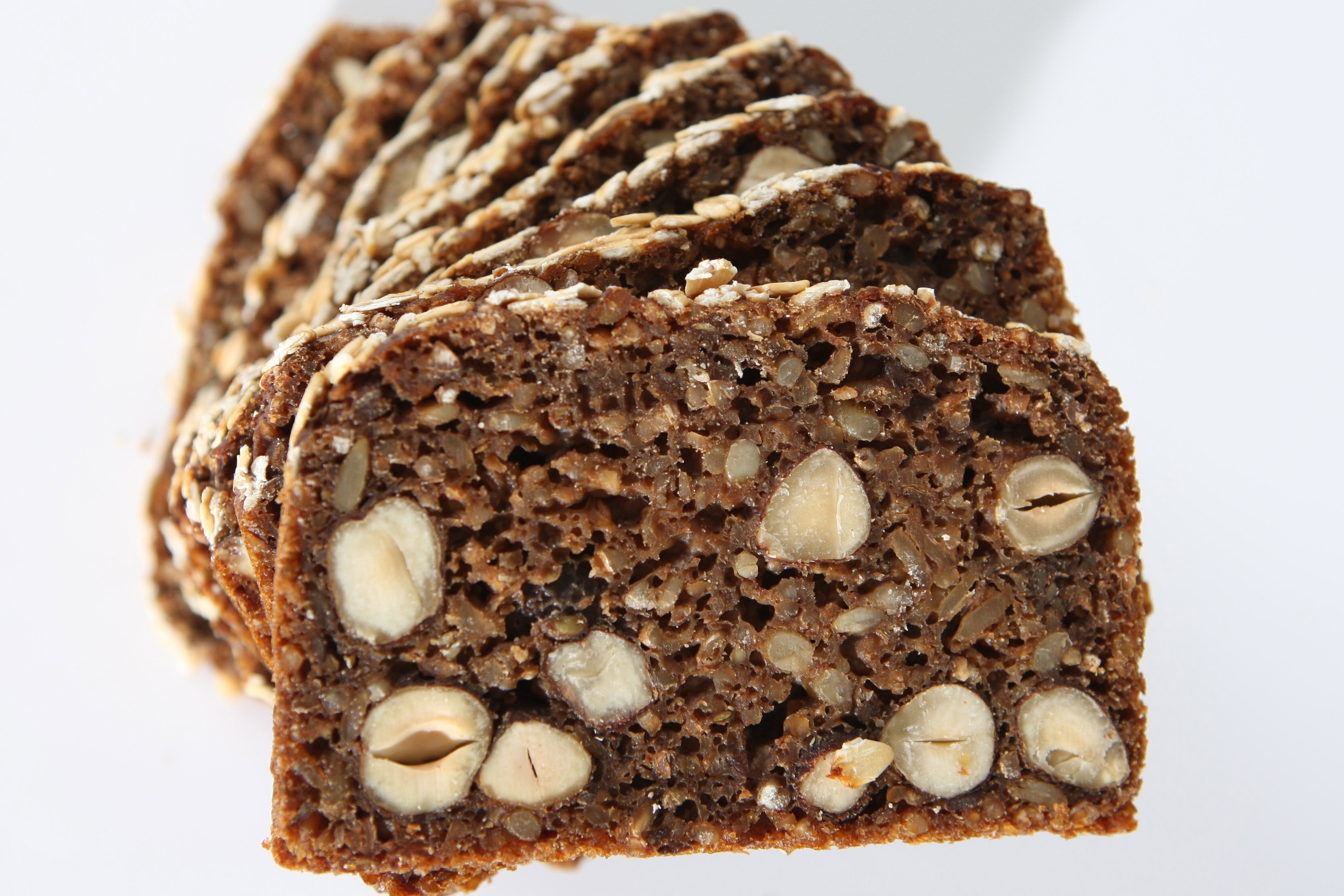
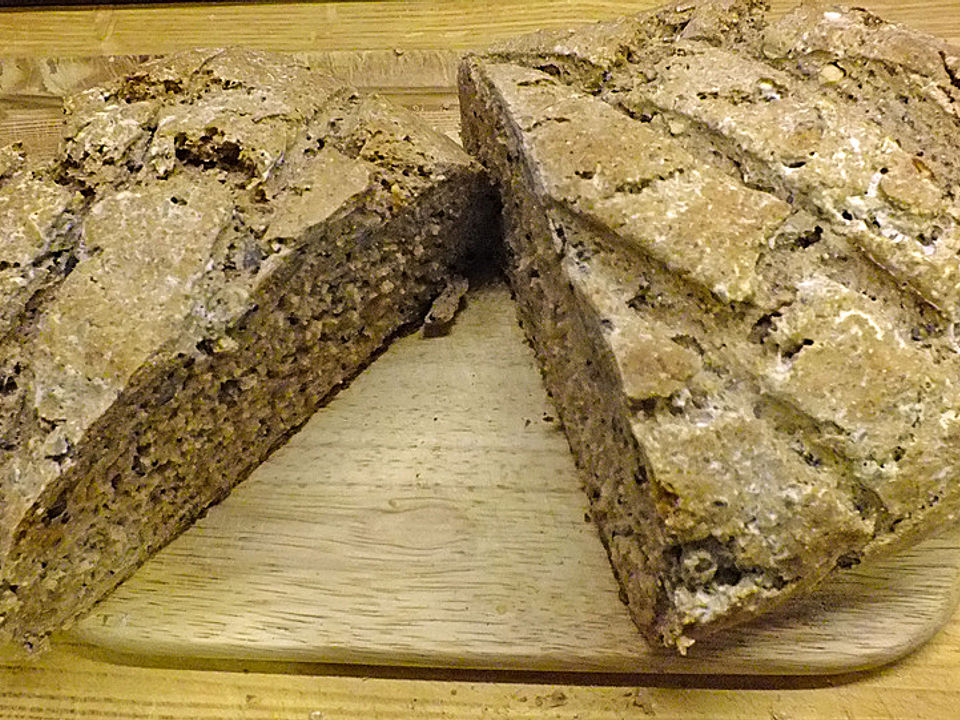
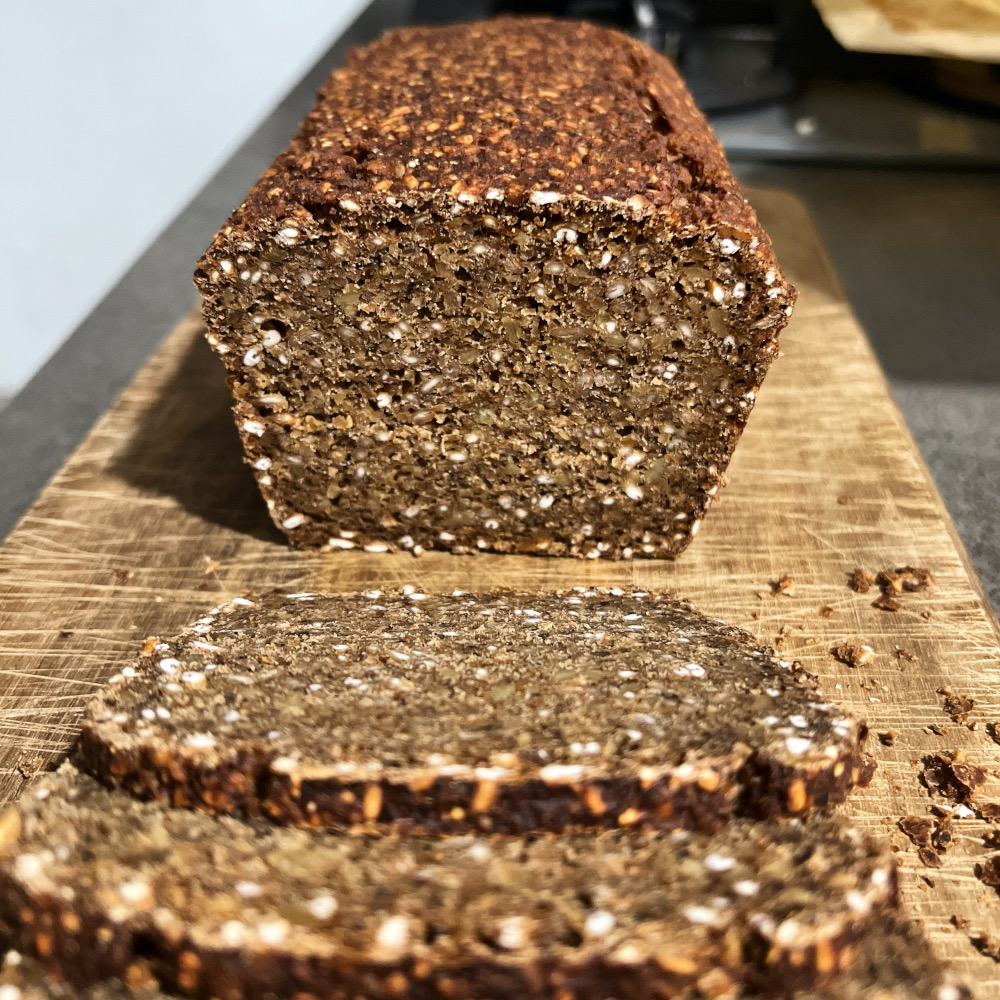
Yes, a French baguette-type soft white bread is formally "bread", but it is treated as a different/single category here, as "white bread". With examples of typical bread being, say: https://www.hofpfisterei.de/download/Hofpfisterei-Sortiment-... And I don't think the images really carry across the difference (and variety) in texture and density, to someone who simply never had this kind of "non-soft" bread. You can spread cold butter from the fridge on it without breaking it, maybe that gives away a hint towards the difference. Also note the variety of grain: rye, spelt, wheat, barley, oats, in different compositions and degrees of fineness. And this is just one brand/bakery.

Some more "typical German bread" images. I picked types that maybe convey the difference to "white bread" the best in viewing:

https://5-elemente.org/wp-content/uploads/2024/03/rheinische...

https://heicks-teutenberg.de/wp-content/uploads/2014/07/Honi...

https://img.chefkoch-cdn.de/rezepte/2468131388854443/bilder/...

Re: Why does Swiss cheese have holes?

#139

> Properly formed eyes are a mark of quality. Except when I asked someone who makes cheese in Switzerland, they told me almost the opposite (and mostly that they export the junk cheese to the US and keep the good stuff). As an aside, what are the odds this article was written by AI? It has that feel (minus random bolding and bullet points).

I don’t think this is true, wherever I’ve traveled the opposite has held - the finest materials are exported which is sad for the locals. Right away Wool stuck out as an example from Peru. I naively thought that going to Peru would guarantee me the finest wool at the best prices. Anyway I’d like to see some data that backs up the claim that junk Swiss cheese is exported to the US market successfully.

I think perhaps what is going on here is that the most commonly exported variety of cheese exported from Switzerland is Emmentaler, which matches the US taste profile (and has holes), but in Switzerland is considered a rather bland variety compared to e.g. Gruyere or Appenzeller. Maybe that got a bit exaggerated and it was labeled as "junk" cheese somewhere along the chain of communication.

Re: Why does Swiss cheese have holes?

#140

Earlier quoted context omitted.

I don't know what to make of that statement. It is arrogant, at least. Are you trashing just the 340 million people in the US with this comment, or everybody not-Swiss?

Most Americans aren’t exposed to enough quality foods of certain types at a young age to develop the taste for them. For example, most Americans think Hershey’s is what chocolate is supposed to taste like, because they grew up with it. Same with the mushy Chorleywood processed bread and most American “cheese”

I think this is certainly the root of the misunderstandings in this (and other) spaces.

At the very-local level of course there are exceptions, but generally speaking US food is terrible compared to European food. The US optimizes for volume and cost, Europe leans more towards quality.

Yes, there's a lot of cheap rubbish food in Europe, but those consuming it know it's cheap rubbish.

By contrast, and to your point, most Americans have never experienced really good food, and so it's harder to grasp that their "regular" quality is so low. We don't miss what we've never had.

My local, nothing special, supermarket stocks over 100 species of cheese. I remember going to the US and being confronted either 3 (American, whatever that is, Swiss and Cheddar. Um, which is unlike any cheddar I've ever had. Frankly the biggest difference seemed to be the color (which is artificial).

Think is, you can't describe sailing to someone who has never seen the ocean.

Increased travel, the growth of "American in Europe" YouTube videos, have slowly started permeating though and quality food is starting to appear here and there. But (naturally) its more expensive, so most Americans will be slow to adapt.

Post reply on HN