> There was no day, no single event when Return became Enter
Oh, never mind then...
Could've just titled it "The history of how Return became Enter" or "How Return became Enter"
131–140 of 179 posts
> There was no day, no single event when Return became Enter
Oh, never mind then...
Could've just titled it "The history of how Return became Enter" or "How Return became Enter"
> And the IBM PC – and later Microsoft Windows – went with Enter. (Actually, they first chose the ↵ arrow. I'd claim that the article draws its own wrong conclusions. The key was not renamed . On the IBM PC, the key got overloaded with two functions. The IBM PC keyboard was preceded by larger keyboards with the same mechanism, style and font for use with IBM's terminals. Those had two separate keys for ↵ and Enter. T…
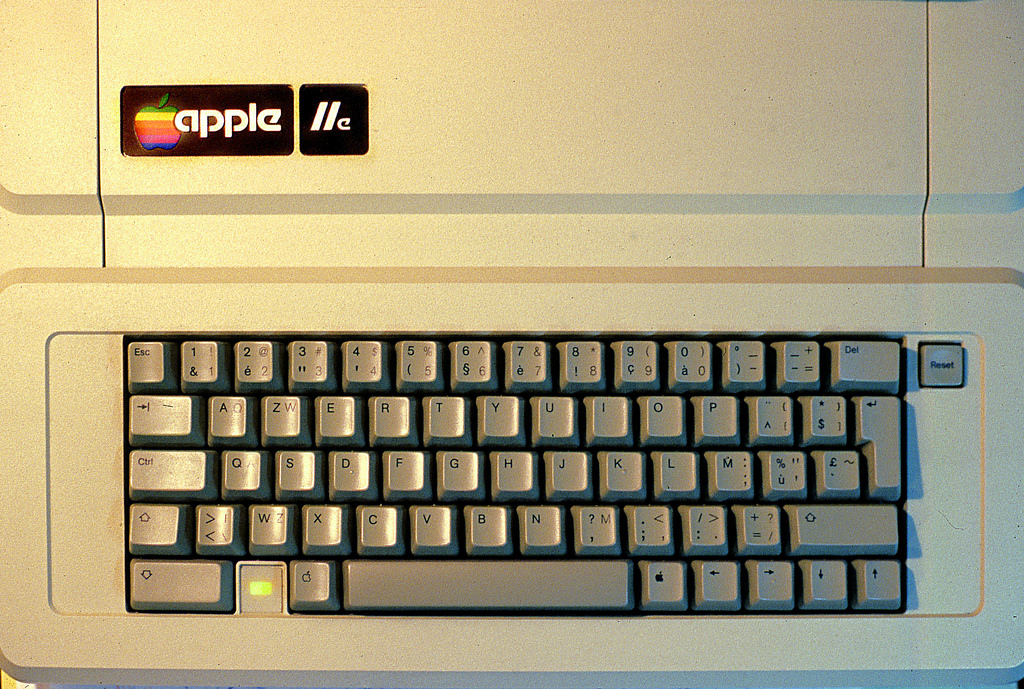
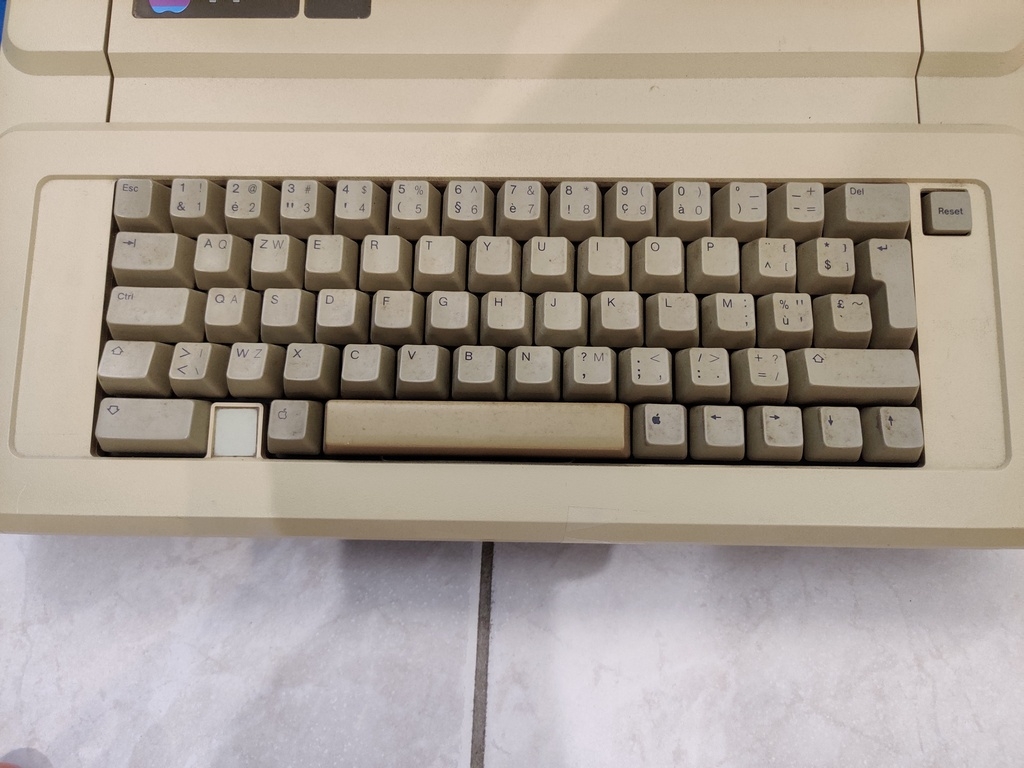
I still remember when the ⌘ key was "open apple".
It's a damn shame that the control characters for "Field Separator" (FS ASCII 28 decimal) and "Record Separator" (RS ASCII 30 decimal) weren't used instead of TAB and CR/LF. Then the whole CRLF vs CR vs LF for line endings in files would have been totally avoided, with CR returning the print-head/cursor to the left-most position (right-most on R-L languages) and LF literally moving the print-head/cursor down. The dri…
But we do NOT need to setup CRLF translation at all? Who in his sane mind uses CRLF even under windows? All my source codes are in UNIX format (aka LF only) and I use it consistent under Windows, Cygwin and UNIX.. Why make your life harder?
Hopefully nobody is using it for documents, but most text-based internet protocols, including SMTP and HTTP, use CRLF for line endings.
Nice history recap, most of which I lived through, but it's missing the Bill Gates/PCDOS botch of using CR and LF as the text line separator, a result of not doing a logical translation of the characters sent by the terminal. UNIX sort of did it right by just using LF, but it would have been better to use NUL as the terminator--then there wouldn't have been the need to strip off LF on input and add it back on output…
It's a damn shame that the control characters for "Field Separator" (FS ASCII 28 decimal) and "Record Separator" (RS ASCII 30 decimal) weren't used instead of TAB and CR/LF. Then the whole CRLF vs CR vs LF for line endings in files would have been totally avoided, with CR returning the print-head/cursor to the left-most position (right-most on R-L languages) and LF literally moving the print-head/cursor down. The dri…
> It's a damn shame that the control characters for "Field Separator" (FS ASCII 28 decimal) and "Record Separator" (RS ASCII 30 decimal) weren't used instead of TAB and CR/LF. No, it's not. That stuff is left over from 1940s-1950s schemes for polled multidrop teletype machines - multiple stations on one wire, taking turns. The idea was that you punched paper tapes locally and then put them into a reader. When it was…
> And the IBM PC – and later Microsoft Windows – went with Enter. (Actually, they first chose the ↵ arrow. I'd claim that the article draws its own wrong conclusions. The key was not renamed . On the IBM PC, the key got overloaded with two functions. The IBM PC keyboard was preceded by larger keyboards with the same mechanism, style and font for use with IBM's terminals. Those had two separate keys for ↵ and Enter. T…
Apple keyboards don't use the ⇥ symbol anymore, it's just labeled "tab" now (and the labels are lowercase). At least on a US keyboard, possibly it's different for others. I still remember when the ⌘ key was "open apple".
What a wonderful essay. I learned to type on a manual Underwood typewriter with a carriage return lever. I don't miss it, but there was something so satisfying about moving that lever and feeling the whole carriage move. It meant that I had typed another line, and had made progress. The thing I truly don't miss was not being able to afford a new ribbon, and having to move back over every character and type it again t…
I wonder if I should make a joke menubar program where every time you make a newline while typing it sounds a slide-ding noise! I might do that…
It was hilarious for a few minutes, then got old really quick, so it didn't last the day. The Oscar extension stuck around for months though ("I love it because it's trash!"). Computers were just so much fun back then...
> And the IBM PC – and later Microsoft Windows – went with Enter. (Actually, they first chose the ↵ arrow. I'd claim that the article draws its own wrong conclusions. The key was not renamed . On the IBM PC, the key got overloaded with two functions. The IBM PC keyboard was preceded by larger keyboards with the same mechanism, style and font for use with IBM's terminals. Those had two separate keys for ↵ and Enter. T…
Apple keyboards don't use the ⇥ symbol anymore, it's just labeled "tab" now (and the labels are lowercase). At least on a US keyboard, possibly it's different for others. I still remember when the ⌘ key was "open apple".
http://xahlee.info/kbd/i/Apple_IIe_keyboard_f91f4.jpg
https://www.applefritter.com/files/styles/95-percent/public/...
The IIgs keyboard had both the "open apple" and "looped square" symbols on that key, with the "closed apple" becoming option:
https://i0.wp.com/www.applerescueofdenver.com/wp-content/upl...
The extended keyboard had both keys on each side of the spacebar:
https://www.reddit.com/media?url=https%3A%2F%2Fi.redd.it%2Fa...
On the Mac, the keys were always officially called command and option, as far as I recall:
https://cdn.shopify.com/s/files/1/0653/6917/8326/products/25...
https://en.wikipedia.org/wiki/Apple_keyboards#Layout_and_fea...
Ive been finally learning a bit of Linux shell stuff and was disappointed when I realized that shells generally don't follow this paradigm unlike PowerShell consoles on Windows.
> And the IBM PC – and later Microsoft Windows – went with Enter. (Actually, they first chose the ↵ arrow. I'd claim that the article draws its own wrong conclusions. The key was not renamed . On the IBM PC, the key got overloaded with two functions. The IBM PC keyboard was preceded by larger keyboards with the same mechanism, style and font for use with IBM's terminals. Those had two separate keys for ↵ and Enter. T…
Speaking of overloading and Tab, piling on the ‘next field’ function is an endless source of pain.