Earlier quoted context omitted.
or just compare "White Rabbit" to "We Built This City"
I don't think I even have a starting point to make that comparison
[deleted]
131–140 of 150 posts
What is the measure of novelty? This seems like a useless thing to attempt to measure, and then to claim one group "beats" another in it. I could use an RNG to slam together a bunch of rules and I can pretty much guarantee novelty. There, I did it. I "beat" a professional designer. Is the game worth playing?
This kind of thing has been shown in all sorts of creative endeavour. But it ignores consistency, which is the main mark of professionalism. Yeah, if you disregard all rules and norms sometimes you come up with something AMAZING that no-one following the rules could ever conceive of. But most of the the time it's just crap.
Keep in mind that hobbyists sometimes spend as much, or more, time than professionals at a given craft. I've known people with incredible skill at specific trades, but they had something completely different as their day job.
Gene Wolfe (Wikipedia: "He was often considered to be not only one of the greatest science fiction authors, but one of the best American writers regardless of genre.") is another, he wrote most of his famous works while working a day job as an engineer and editor.
Earlier quoted context omitted.
A big part of the actual success of a game is the aesthetics and the marketing. How good the actual game is doesn't necessarily correlate. Indie games these days are as conservative as regular studios. Loads of a proliferation of the last big thing etc. The real standout indie genre is porn games and even those stick to a generally similar design. The problem for developers from larger studios is that the bizdev side…
Genuinely curious about porn games. They all seems to be either a show of pretty models with somewhat controllable animation or a "nothing special" game with explicit scenes thrown in for your enjoyment. Some of these games can be excellent, I am thinking about some Japanese visual novels here, but they all seem to be rather formulaic. Maybe I am missing something big here. I am not too much into porn games, and you…
The bit I find interesting is despite the porn industry in the west being big on tech like streaming and VR it’s not really there on games. Too much reliance on real people or something?
More generally I think it’s super interesting how puritanical the games market is in comparison with books or movies. Even within serious games.
Gamedev here. Sigh. One, the measurement of novelty is bad: it's basically the measure of whether the game exhibits a novel mashup of mechanics according to the BoardGameGeek ontology of mechanics. This is a terrible definition of novelty, as it ignores all of the other aspects of game design, both in gameplay (interesting systems, challenges, loops) and non-game play (fiction, setting, presentation, etc). Who measur…
Gamedev here. Sigh. One, the measurement of novelty is bad: it's basically the measure of whether the game exhibits a novel mashup of mechanics according to the BoardGameGeek ontology of mechanics. This is a terrible definition of novelty, as it ignores all of the other aspects of game design, both in gameplay (interesting systems, challenges, loops) and non-game play (fiction, setting, presentation, etc). Who measur…
>>> One, the measurement of novelty is bad: it's basically the measure of whether the game exhibits a novel mashup of mechanics according to the BoardGameGeek ontology of mechanics. >>> This is a terrible definition of novelty, as it ignores all of the other aspects of game design, both in gameplay (interesting systems, challenges, loops) and non-game play (fiction, setting, presentation, etc). Who measures novelty as "mashup of mechanics"?
Using the mashup of mechanics to measure novelty seems logical for two reasons. First, in creativity research, it is quite common to measure novelty as uniqueness or as distinctiveness regarding already existing "solutions." One way to do so is using the combinations of the base elements of the creative output. There is also similar research doing the same with patents. Second, the authors refer to the MDA framework in their method section as an explanation of why they use mechanics. Following this framework, mechanics are not only the core elements of a game but also the only thing a game designer is able to influence - not the dynamics (i.e., run-time behavior, which seems to be "gameplay" in your wording) nor aesthetics (i.e., emotional responses of the player, which seems to be "non-game play" in your wording).
>>> Two, the measure of knowledge diversity is based on BGG reports of how many genres the designers have worked in. This is, again, not only questionable, but also leads to weird effects: imagine knocking Salman Rushdie, JRR Tolkien, or Umberto Eco for having low knowledge diversity because Amazon says they write books in only one or two genres!
Why do you think using genres to measure knowledge diversity is questionable? What is your concern about doing so? Please elaborate if you seem to have such a strong opinion on that.
Again, there is quite some research (esp. in creative industries) about how working in specific genres might influence how you think/understand things, i.e., how you come up with solutions, what solutions you come up with, how you talk about them, and so on.
Regarding the proposed weird effect: you (illogically) compare a single author's knowledge diversity with a team's diversity. However, the authors do not compare a fantasy author against a fantasy/horror author, but how a team with low diversity (3 Tolkiens) would compete against a more diverse team (Rushdie, Tolkien, and Eco - for the sake of the example).
>>> And finally, the main problem is: sure, if you compare hobbyists (who make what they want for fun) with professionals (who are making a product that needs to sell more than a small handful of copies), of course you're going to find that hobbyists are more free to experiment with wild permutations of mechanics. But in doing so, they conflate personal ability with situational constraints. What about professional designers if they were able to work without commercial constraints, like hobbyists?
Although the last question might be interesting to answer, what you describe before is the direct effect of being a hobbyist, resp. professional on creativity. However, being a hobbyist, resp. professional is the moderation effect, hence the paper looks at "how the effect of diversity on creativity changes because being a hobbyist or professional."
All this, however, is described or at least referred to in the paper.
Earlier quoted context omitted.
Genuinely curious about porn games. They all seems to be either a show of pretty models with somewhat controllable animation or a "nothing special" game with explicit scenes thrown in for your enjoyment. Some of these games can be excellent, I am thinking about some Japanese visual novels here, but they all seem to be rather formulaic. Maybe I am missing something big here. I am not too much into porn games, and you…
Honestly I defer most of those questions to someone that understands the landscape better. It was an underserved market though and lots of people enjoy unrealistic depictions of sex so combining that with games is hardly rocket science. The bit I find interesting is despite the porn industry in the west being big on tech like streaming and VR it’s not really there on games. Too much reliance on real people or somethi…
A solution, of course, is to use prerecorded scenes. But if you lose interactivity, you might as well watch a movie, something there is no lack of and can be cheaply produced.
So while the idea is not rocket science, the execution may very well be.
Of course, there is always the solution of taking an existing game genre (visual novels are a common one) and add porn to it. But as good as the game might be and as hot as the porn can be, it isn't very interesting as a concept.
Earlier quoted context omitted.
A big part of the actual success of a game is the aesthetics and the marketing. How good the actual game is doesn't necessarily correlate. Indie games these days are as conservative as regular studios. Loads of a proliferation of the last big thing etc. The real standout indie genre is porn games and even those stick to a generally similar design. The problem for developers from larger studios is that the bizdev side…
Genuinely curious about porn games. They all seems to be either a show of pretty models with somewhat controllable animation or a "nothing special" game with explicit scenes thrown in for your enjoyment. Some of these games can be excellent, I am thinking about some Japanese visual novels here, but they all seem to be rather formulaic. Maybe I am missing something big here. I am not too much into porn games, and you…
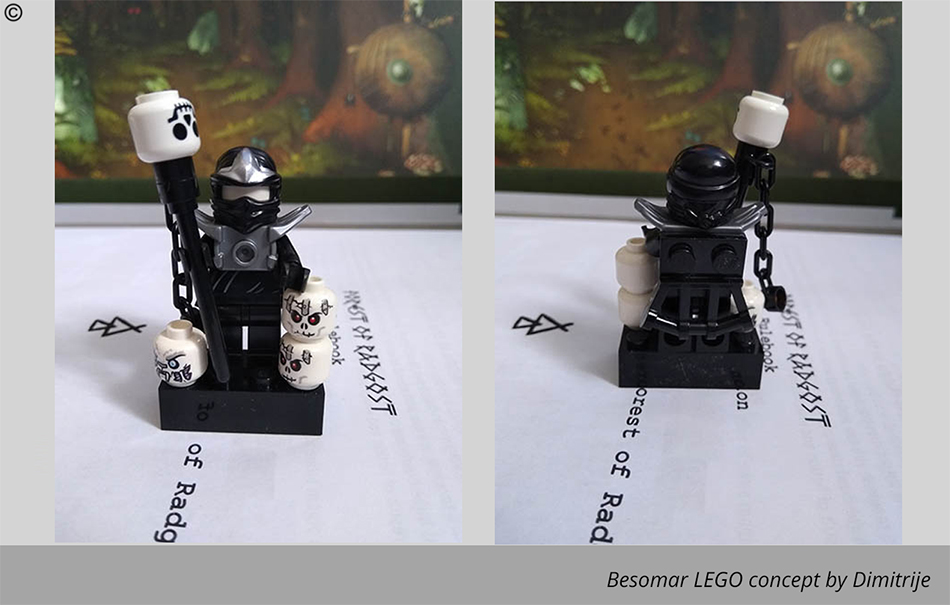
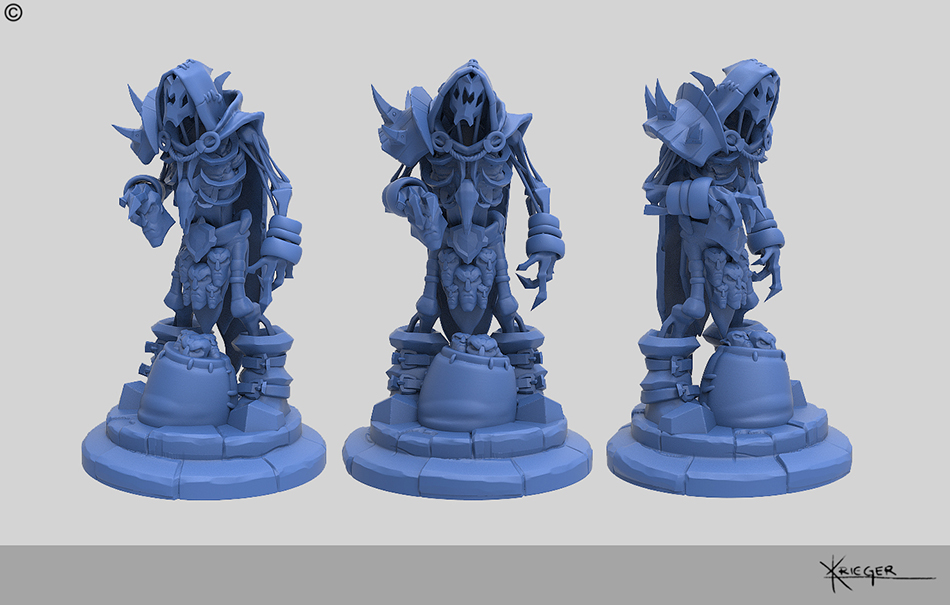
I have a friend who will love to hear this. He is an engineer who spent the last six years of his spare time (together with his family) developing an ambitious board game[1]. It started as an after-school project to do with his son... then it snowballed into something big... as he started hiring sculptors, designers, illustrators... outsourced testing to board game clubs... and now he's about to face D-Day... A launc…
That looks incredible and such a cool origin story about a father nurturing his son's idea into fruition.
Prototype: https://www.radgostforest.com/images/creatures/besomarLego.j...
Sculpt: https://www.radgostforest.com/images/creatures/besomar3dMode...
Gamedev here. Sigh. One, the measurement of novelty is bad: it's basically the measure of whether the game exhibits a novel mashup of mechanics according to the BoardGameGeek ontology of mechanics. This is a terrible definition of novelty, as it ignores all of the other aspects of game design, both in gameplay (interesting systems, challenges, loops) and non-game play (fiction, setting, presentation, etc). Who measur…