Earlier quoted context omitted.
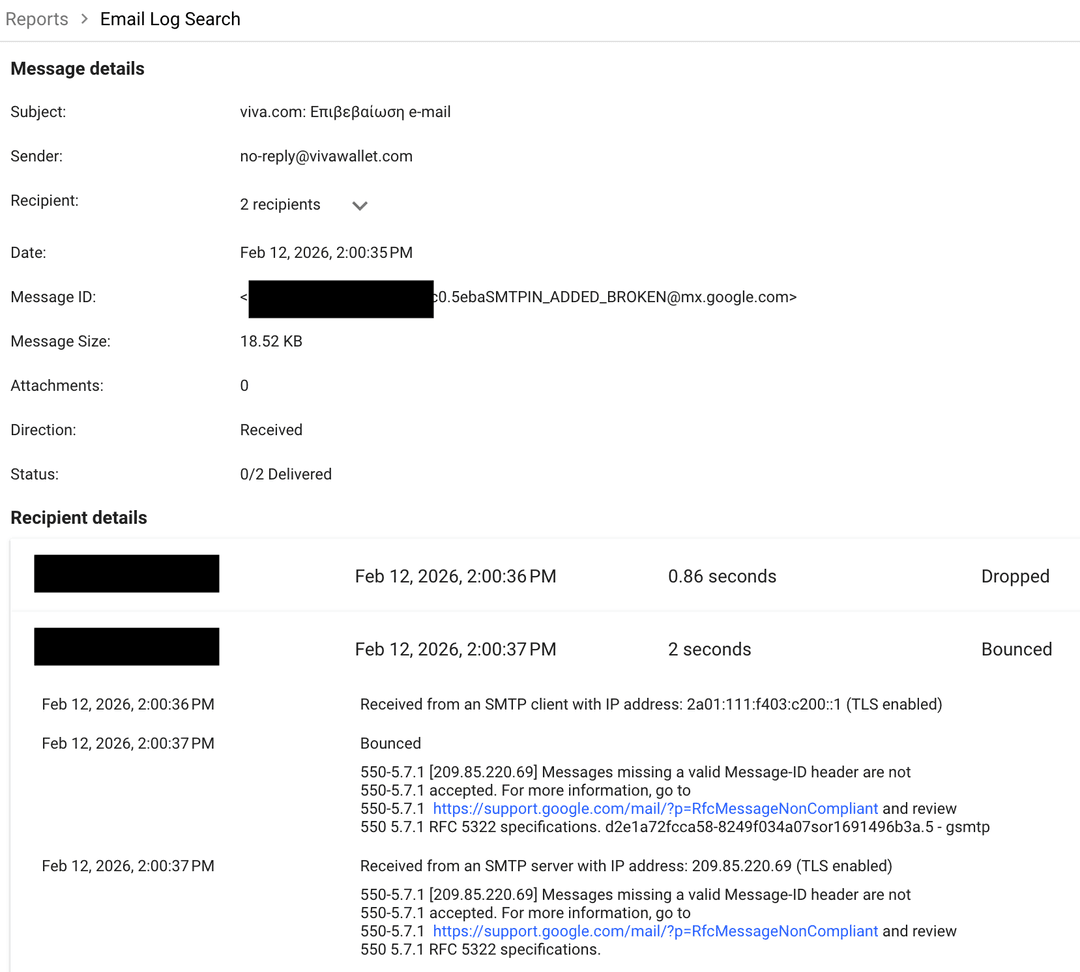
You can argue that you not obligated to use message-id but if you don't use it you should blame only yourself that your messages are not accepted. In requiring message-id I would side with google (though in general I think they anti-spam is too aggressive and lacks ways to report false positives). Full RFC compliance (as in not only MUST but also SHOULD unless you have a very good reason) is the easiest part of makin…
What is the point of SHOULD then? (No seriously, I’m asking; are there examples of where it’s actually different from a MUST)? Also this reminds me of something I read somewhere a long time ago: when specifying requirements don’t bother with SHOULD. Either you want it or you don’t. Because if it’s not a requirement, some people won’t implement it. I guess the one time it’s good is if you want an optional feature or a…
SHOULD means that if you don't that, bad things are likely to happen, but it will not immediately break at the protocol level and during discussion in the IETF some people thought there could be valid reasons to violate the SHOULD.
Typically, IETF standards track RFCs consider the immediate effects of the protocol but often do not consider operational reality very well.
Sometimes operational reality is that a MUST gets violated because the standard is just wrong. Sometimes a SHOULD becomes required, etc.
Certainly for email, there is a lot you have to do to get your email accepted that is not spelled out in the RFCs.