Live data from Hacker News

Reference count, don't garbage collect

kevinlawler.com

121–130 of 415 posts

Re: Reference count, don't garbage collect

#121
post #84

Is there such a thing as a compacting RC?

Backup compaction can be useful, like backup tracing can be, but you can also use all the initial increments in a coalescing RC collector to determine which pointers need to be fixed up for copying, without tracing. See http://users.cecs.anu.edu.au/~steveb/pubs/papers/rcix-oopsla... pages 8 and 9 on "Defragmentation with Opportunistic Copying" e.g.
Re: Reference count, don't garbage collect

#122

Earlier quoted context omitted.

> P&L research What’s P&L? > Java's verbose semantics Does Java have verbose semantics? I think Java’s semantics are pretty neat and concise. Where’s the verbosity?

Not OP, but someone who has gotten paid to write Java for several years. I would say that isn't that Java's semantics are that verbose, it's that the way Java is traditionally written, with every line actually 3 lines on your screen of public function makeItalicTextBox(String actualTextIWantToBeItalic) { ItalicTextBox itb = italicTextBoxFactoryGenerator.GenerateFactory().buildItalicTextBox(actualTextIWantToBeItalic);…

The builder pattern with method chaining is unfortunate and should usually be replaced by named/optional parameters, in any sensible/modern programming language at least.

IDEs are an enabler for horriblyLongIdentifierNames because they enter them for you automatically without requiring you to type them on a keyboard.

Re: Reference count, don't garbage collect

#123

For how strongly worded this article is, you'd think the author would provide some substance in their reasoning. Reference counting, even atomic, is quite expensive. Not only because it can invalidate the cache line, but depending on the architecture (looking at you x86), the memory model will deter reordering of instructions. On top of this, reference counting has a cascading effect, where one destructor causes anot…

One reason you'd choose ref counting is because it's deterministic behavior, whereas you lose that granularity with gc, even if you did a gc cleanup.

I see great reasons for both systems being useful, but both systems also bring their own warts.

Yes, ref counting affects cache and branch prediction, but gc is a whole complete subsystem running in parallel with your main code, constantly cleaning up after you. It will always depend upon the application which will determine what's best for that application.

Some languages lean heavily one way than the other too. Scripting with ref counting would be a nightmare, as would running a garbage collector on an 8bit micro. Since the article's talking C & C++, then of course a pro ref counting stance makes sense.

Re: Reference count, don't garbage collect

#125
post #73

Reference counting is garbage collection, just a different strategy - and all these strategies tend to blur to the same methods eventually, eventually offering a latency-optimized GC or a throughput-optimized GC. Swift is inferior here because it uses reference counting GC without much work towards mitigating its drawbacks like cycles (judging by some recent posts, some of its fans apparently aren't even aware RC has…

Maybe Apple just hires mediocre developers (I certainly have lots of complaints about their software and UI issues, but I would probably suspect management/priorities/schedules rather than the technical staff) but they implemented GC and Automatic Reference Counting for ObjC and found that the latter resulted in better and more consistent responsiveness, which is probably what most users care about in apps. (Apps still get compressed or paged out which can lead to annoying pauses.)

My anecdata indicate that Java apps are not as responsive as ObjC/Swift for the most part.

Re: Reference count, don't garbage collect

#126
post #73

Reference counting is garbage collection, just a different strategy - and all these strategies tend to blur to the same methods eventually, eventually offering a latency-optimized GC or a throughput-optimized GC. Swift is inferior here because it uses reference counting GC without much work towards mitigating its drawbacks like cycles (judging by some recent posts, some of its fans apparently aren't even aware RC has…

What do you mean? Potential reference cycles are a compile time error in Swift. That’s the whole point of the @escaping annotation

So this[0] wasn't current despite being edited half a year ago? I guess I'm guilty of the same mistake the post had: criticizing without understanding the state of the art on the other side (at least I didn't miss it by 20 years and on an entire subfield of Computer Science).

[0] https://stackoverflow.com/questions/32262172/how-can-identif...

Re: Reference count, don't garbage collect

#127
post #73

Reference counting is garbage collection, just a different strategy - and all these strategies tend to blur to the same methods eventually, eventually offering a latency-optimized GC or a throughput-optimized GC. Swift is inferior here because it uses reference counting GC without much work towards mitigating its drawbacks like cycles (judging by some recent posts, some of its fans apparently aren't even aware RC has…

Maybe Apple just hires mediocre developers (I certainly have lots of complaints about their software and UI issues, but I would probably suspect management/priorities/schedules rather than the technical staff) but they implemented GC and Automatic Reference Counting for ObjC and found that the latter resulted in better and more consistent responsiveness, which is probably what most users care about in apps. (Apps sti…

ARC is a perfectly respectable choice by itself. What's annoying me is ignoring the improvements other GC strategies and other languages have made in the last 20 years. There's a certain section of Apple users that thinks that every choice Apple makes is the only good way to do things.

Re: Reference count, don't garbage collect

#128

This debate has gone round and round for decades. There are no hard lines; this is about performance tradeoffs, and always will be. Perhaps the biggest misconception about reference counting is that people believe it avoids GC pauses. That's not true. Essentially, whereas tracing GC has pauses while tracing live data, reference counting has pauses while tracing garbage. Reference counting is really just another kind…

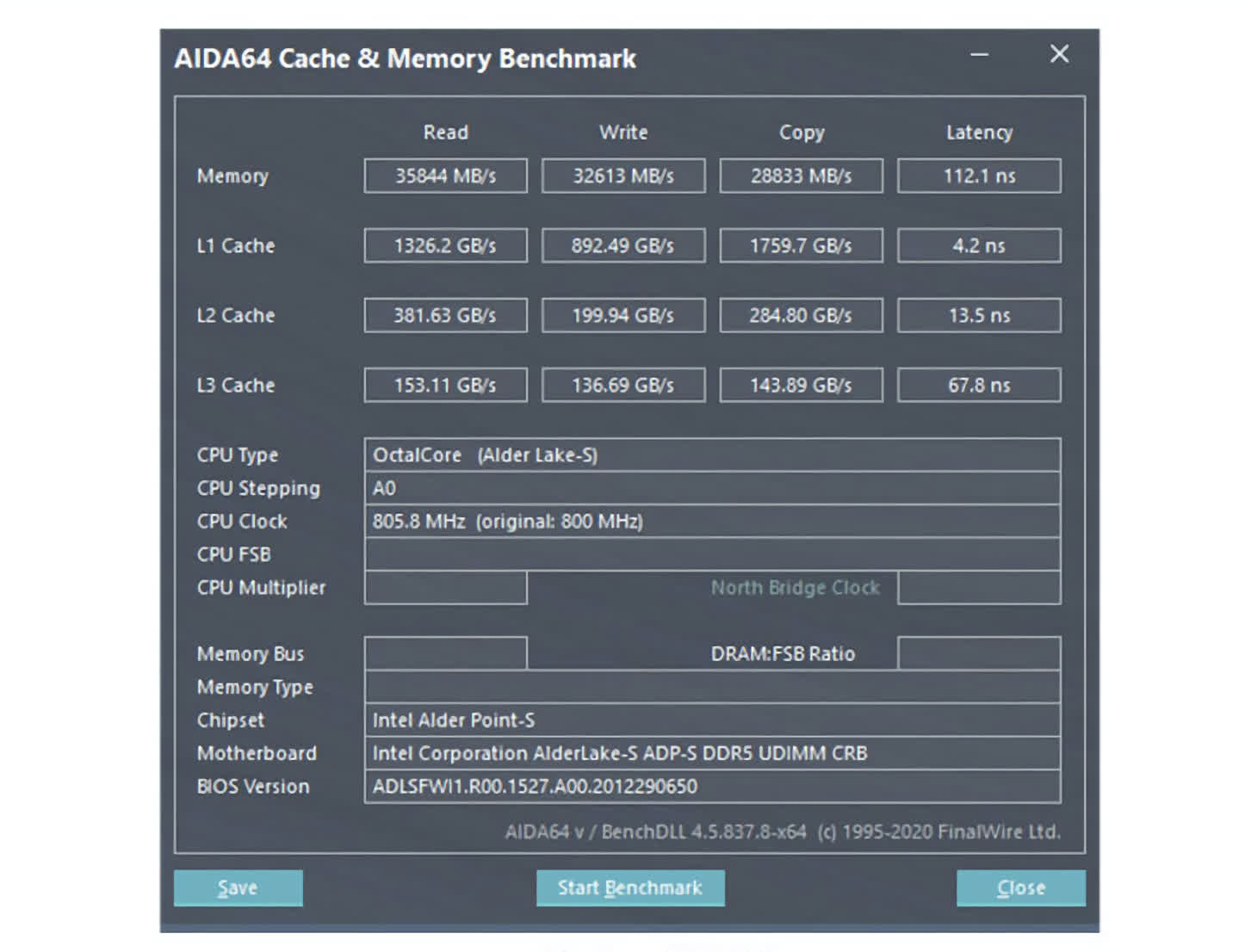
I disagree with the statement that modern memory architectures have much higher read bandwidth vs write bandwidth.

Benchmarks show they are within 30 percent of each other: https://www.techspot.com/images2/news/bigimage/2021/03/2021-...

https://www.anandtech.com/show/2525/5

Re: Reference count, don't garbage collect

#130
Not only does the author ignore the huge progress in conventional garbage collected languages like Java, he also dismisses GC as inherently flawed despite the fact that the common strategy of only having one heap per application has nothing to do with garbage collection. In Pony each actor has its own isolated heap which means the garbage collector will only interrupt a tiny portion of the program for a much shorter period of time. Hence the concept of a stop the world pause is orthogonal to whether you have a GC or not. One could build a stop the world pause into an RC system through cycle detection if desired.
Post reply on HN