Live data from Hacker News

Miguel de Icaza: Learning Unix

tirania.org

121–128 of 128 posts

Re: Miguel de Icaza: Learning Unix

#121
post #38

Earlier quoted context omitted.

and that validates midnight commander as a tool with the unix philosophy how? downvote all you want. but a clone of norton commander was and always will be a joke. ...saw several sysadmins using it to delete files named with dash because they didn't know "--" is posix for stop taking flags. and that's just one bad vice it foments.

> but a clone of norton commander was and always will be a joke why? P.S. - if you can answer without the elitist bullshit, people will probably stop down voting you.

despite it being a GUI tool that can't be piped, that loose all the shell goodness such as command history and text substitution, I already did in my example.

the sysadmins in question used mc to delete weird named files just because they never bothered to learn correct argument passing in bash. they didn't know about quotes for filenames with spaces, they didn't know about '--' flag parsing termination argument. when their badly written script broke, they just manually fixed with mc and call it a day.

it's like seeing someone not using the scroll wheel to scroll. If you think that's elitist so be it. http://www.reddit.com/tb/df8cd
Re: Miguel de Icaza: Learning Unix

#122
post #51

Earlier quoted context omitted.

In an article called "Learning Unix", I think recommending (I assume proprietary) Windows/Mac software, is a bit silly.

Unix is just a bunch of standards that a couple of OSes are implementing, including OS X, not something that adheres to any philosophy about how software should be distributed.

The point is that the "couple of OSes" does not include Windows 7 / Vista / XP.

Re: Miguel de Icaza: Learning Unix

#123

Are most people not touch typers? I've noticed my boss isn't really a touch typer, despite programming since before I was born, but I always assumed the majority of CS people were.

I'm always shocked to see a developer not touch type. I just can't understand those 10% or so, that spend their life essentially editing text and yet can't touch type. It's one of those essential skills that you learn once and reap the benefits for the rest of your life.

Where do you get 10% from? Most programmers are fast on a keyboard, but being fast != touch-typing. Admittedly, not all touch-typists train their fingers to properly remember the numbers row or the set of accompanying punctuations and symbols, they might sometimes need to look at the keyboard to find stuff like tilde, pipe or the underscore.

However, if you catch yourself needing to even just glance at the keyboard while typing basic stuff, you're not a touch-typist, no matter how fast you are.

Many people feel that being fast is good enough. It has been my observation though, that the lag between typos and their fix is considerably shorter (almost instantaneous) for touch-typists (they're looking at the screen as it's happening). Indeed, I'm always a tiny bit annoyed when while sitting next to someone editing code, they accidentally turn on caps and it takes forever for them to realize it (like 10 characters later).

Re: Miguel de Icaza: Learning Unix

#124

Earlier quoted context omitted.

Learning the different things you can do with bash scripts, especially the string operations, made me a lot faster at doing batch tasks from the command-line. For longer-term scripts over a few lines, it's easier to use a powerful language you're comfortable with (maybe one of Perl, Python, Ruby) than to waste time (re)learning shell scripting whenever you need to extend the script.

Since OP's subject is becoming a better Unix hacker, I recommend staying away from Bash's more advanced (or just useful) features. The more Unix you touch, the more you realize you can't rely on Bash to work how you expect it across all different systems (if they have Bash installed). You will end up relying more on sed, awk, grep and your shell scripting will become more generic - but more portable. On the other han…

Except that Perl changes often. There are regular major releases of perl itself, and countless actively maintained modules.

Re: Miguel de Icaza: Learning Unix

#125

Does anyone else find it deliciously ironic that, in such a pro-Unix article, Miguel recommends Mavis Beacon? According to Amazon, it's available only for Windows and OSX :p

I had to spend several years in Middle School with Mavis Beacon and it didn't do anything for my typing abilities. When I was done with my computer classes I still couldn't hit 35 WPM.

Then I picked up computers as a hobby. With all the random typing I did as part of the hobby I quickly found myself in the 70-100 WPM range.

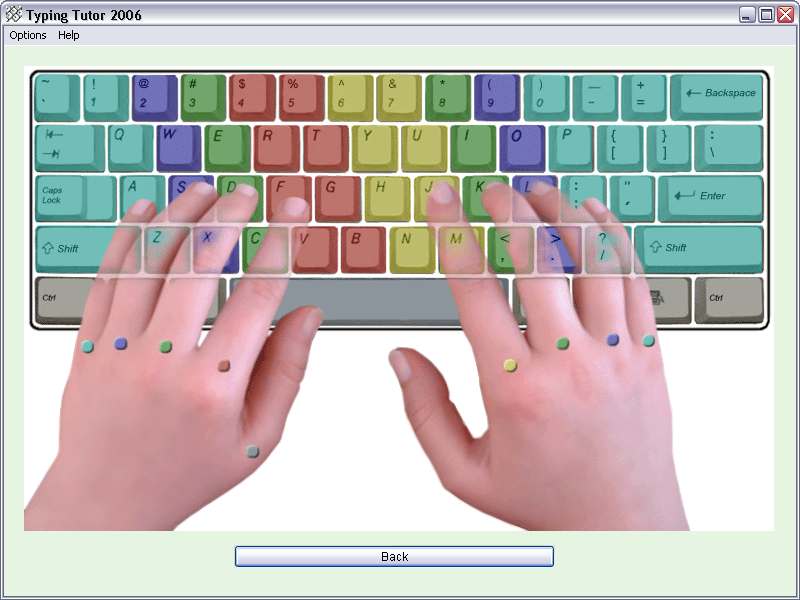
You don't really need a typing tutor program with its learning modules and fluff. You just need to spend time typing. I recommend printing out a color-coded image[1] of a keyboard that shows which fingers to use for which keys and just spending a little time on http://typeracer.com every day trying to stay on home row and follow the color guide.

[1] http://www.tranexp.com/win/05_Finger-placement.jpg

Re: Miguel de Icaza: Learning Unix

#126
post #49
post #26

Earlier quoted context omitted.

You'd be surprised how many senior-level people are hunt and peck typers. I've met several software engineers with 10+ years of experience who don't type with all 10 fingers (assuming they have that many).

Yes. Actually, I don't understand why people emphasize on touch typing here. Engineering is not a data entry job.

Why am I belaboring the tuning thing? Because learning how to tune your guitar properly is basically a tools issue. Many guitarists are perfectly happy to get by with poor tuning, but then they sound bad even if they're playing well. Developers are often content to use whatever tools they've got, without digging in and figuring out how to "tune" the tools for maximum efficiency. Mastering the tools of the trade is an important part of every professional's ability to be effective. - Steve Yegge

http://sites.google.com/site/steveyegge2/practicing-programm...

Re: Miguel de Icaza: Learning Unix

#127

Earlier quoted context omitted.

While I'm still not going to bother with vi, I do have to admit this is probably just another one of those not-widely-known things about "Unix" which deserves some attention. God knows I didn't know about it. Other cute things I have discovered lately: You can actually click in ncurses dialogs running in your terminal, even over SSH, if you run a proper terminal. Coming from a PuTTYish background, that is definitely…

And, if you've set -o vi in bash (etc?), when you're editing a command line and need more than just the limited set of vi commands that make sense on a command line, do this: esc v esc gets you out of input mode, and v takes the current command line that you're editing and opens a full vi/vim session initialized with the command line. After you're done editing it, :wq quits vi and executes the command. If you change…

`set -o vi` is a POSIX shell feature.

Re: Miguel de Icaza: Learning Unix

#128
post #27

I need to remember this one: "And you will offer to buy me a beer, which I will refuse because I rather have you buy me a freshly squeezed orange juice."

That could be considered the "Beer Ware" license for San Francisco in the 21st century. And it should be certified organic/vegan/etc.

I created a "license" and put in on GitHub: https://github.com/felixmiddendorf/ojware-license/blob/maste... http://news.ycombinator.com/item?id=2984233
Post reply on HN